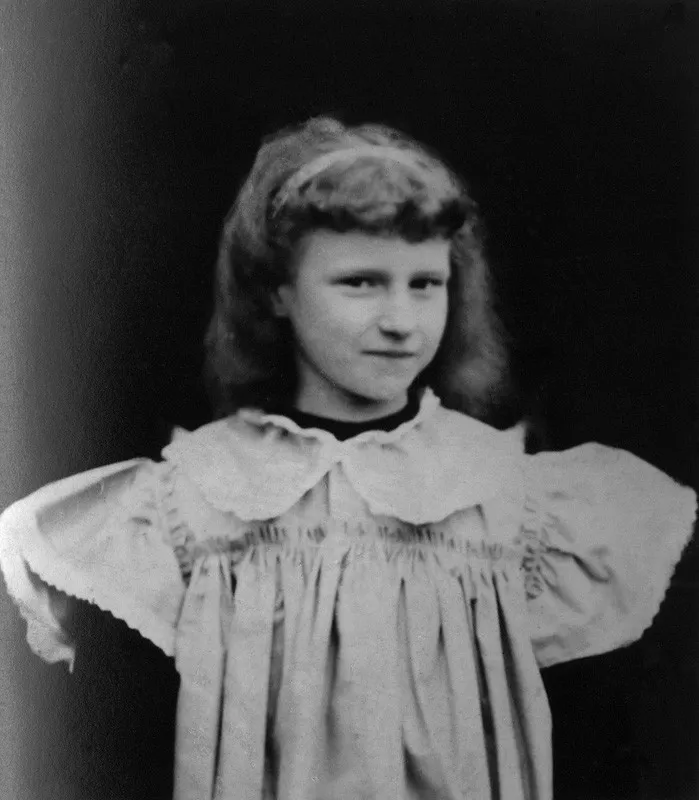
An Introduction to Psychology1 was written, its preface says, "to meet the first needs of non-professional students of psychology", especially those in Workers' Educational Association classes. It aimed to present a point of view in harmony with a biological outlook. Following William McDougall, Isaacs took psychology to be the study of behaviour, understood as purposive activity. She accepted the findings of John B. Watson's behaviourism but rejected a psychology without consciousness. The book's last chapter, on the conscious and the unconscious, describes the unconscious as made up of wishes that have undergone repression. The conflict that leads to repression looks like one between the child's desires and the world outside. From the first, she argues, it is an internal conflict, since the child's own dependence and urge to imitate give adults their power over it. Of the ways out of such conflict she ranks sublimation above reaction formation. She also reports the Freudian view that the content of the unconscious is mainly infantile sexuality.
Intellectual Growth in Young Children2 argues for qualitative records of children's spontaneous activity over set tests and interviews. It insists that an adult is never a neutral presence: "It is not what we are to ourselves and in our own intention that matters; but what the children make of us." For Isaacs the child's world is a dramatic one, and "make-believe may at any moment slip over into genuine inquiry". She distinguishes thought from phantasy without setting them against each other. The egocentrism of the little child, she argues, is an affair of feeling and phantasy rather than of thought. Development is a progressive penetration of feeling and phantasy by experience, and "the young child as such is no more a psychotic than he is a savage". She cites Klein's play technique for the symbolic meaning that engines, fire, water and animals have for children, which feeds their interest in the real world.
The book's third chapter sets these records against Jean Piaget. Isaacs counts his work among the most significant of the time. She argues, though, that he puts down to maturation what is partly the effect of experience, and that her records give positive evidence against his negative findings. In place of fixed stages she describes a continuous process of socialisation, in which different levels of functioning coexist. She also criticises his clinical method. A child does not yet have a firm body of knowledge to hold on to, so an adult's questions can push it below everyday practical reasoning into the deeper layers of magic and phantasy. In her phrase, "Piaget is digging deeper than he realises". She notes as well that he says little about the mental ratio of the children he studied, though she suspects that question may be irrelevant.
Social Development in Young Children3 draws on thirty-one children over three and a quarter years, and on more than 420 letters from mothers and nurses. It keeps the psychological data and the educational problem in separate parts. The records fall into two divisions. The first covers social relations as love and hate in action: primary egocentric attitudes; hostility and aggression; and friendliness and co-operation. Hostility is either individual, driven by possession, power, rivalry or feelings of inferiority, or that of a group towards newcomers, adults or a temporary scapegoat. The second division covers the deeper sources of love and hate: sexuality, guilt and shame, and the record of one child. To the young child other children are "mainly rivals for the love and approval of adults", and much of their hostility is "due to projected guilt". It is "to the family rather than to the herd" that Isaacs looks to understand human social life. She calls Klein "the pioneer" of child analysis and draws on The Psycho-Analysis of Children6, which appeared just before her own book went to press. Yet she holds that analysis and education are distinct tasks, and that knowledge of the unconscious as such is of limited direct use to the practical educator. She denies that the Malting House was a psychoanalytic school and names Dewey as her inspiration. She argues that it is false that the young child learns best by corporal punishment, and that milder methods of training lessen the grip of guilt, though they cannot remove it.