Person
Anna Freud
Pioneer of child analysis and ego psychology; Klein’s chief opponent in the Controversial Discussions.
Influence
Lineage
- 1927 analysed Erik Erikson
In Vienna, from about 1927 until 1933, Anna Freud analysed Erikson while he taught at the Hietzing school and trained at the Vienna Psychoanalytic Institute.
Conflict
- 1927 disputed with Ernest Jones
The dispute turned on child analysis: in May 1927 Jones's British Society held a symposium answering Anna Freud's views, with Jones siding with Melanie Klein; it foreshadowed the later Controversial Discussions.
- 1927 disputed with Melanie Klein
In the 1927 Symposium on Child Analysis Klein answers Anna Freud's Introduction to the Technique of Child Analysis point by point. She rejects an educational, preparatory phase and holds that children develop a transference that can be analysed and an early super-ego.
- 1942 disputed with Melanie Klein
The Controversial Discussions in the British Psychoanalytical Society, 1942–1944.
- 1943 disputed with Susan Isaacs
In the Controversial Discussions of the British Psycho-Analytical Society, Isaacs argued the Kleinian case against Anna Freud and her group; her paper on phantasy opened the scientific discussions in 1943.
- 1960 disputed with John Bowlby
When Bowlby's 'Grief and Mourning in Infancy and Early Childhood' appeared in The Psychoanalytic Study of the Child in 1960, Anna Freud published a critical discussion alongside it, contesting among other things his view that young children mourn much as adults do.
Affinity
- 1935 influenced René Spitz
In Vienna in 1935–1936 Spitz was among the younger analysts gathered around Anna Freud and attended her seminar on child analysis.
- 1939 influenced Heinz Hartmann
Hartmann's 1939 paper starts from Anna Freud's account of the ego's defensive activity, which he calls the first exhaustive treatment of an important side of ego functioning, and draws its examples largely from her work.
Gallery
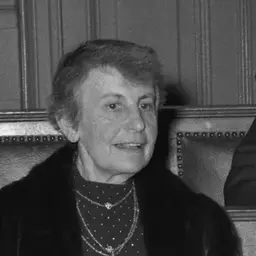
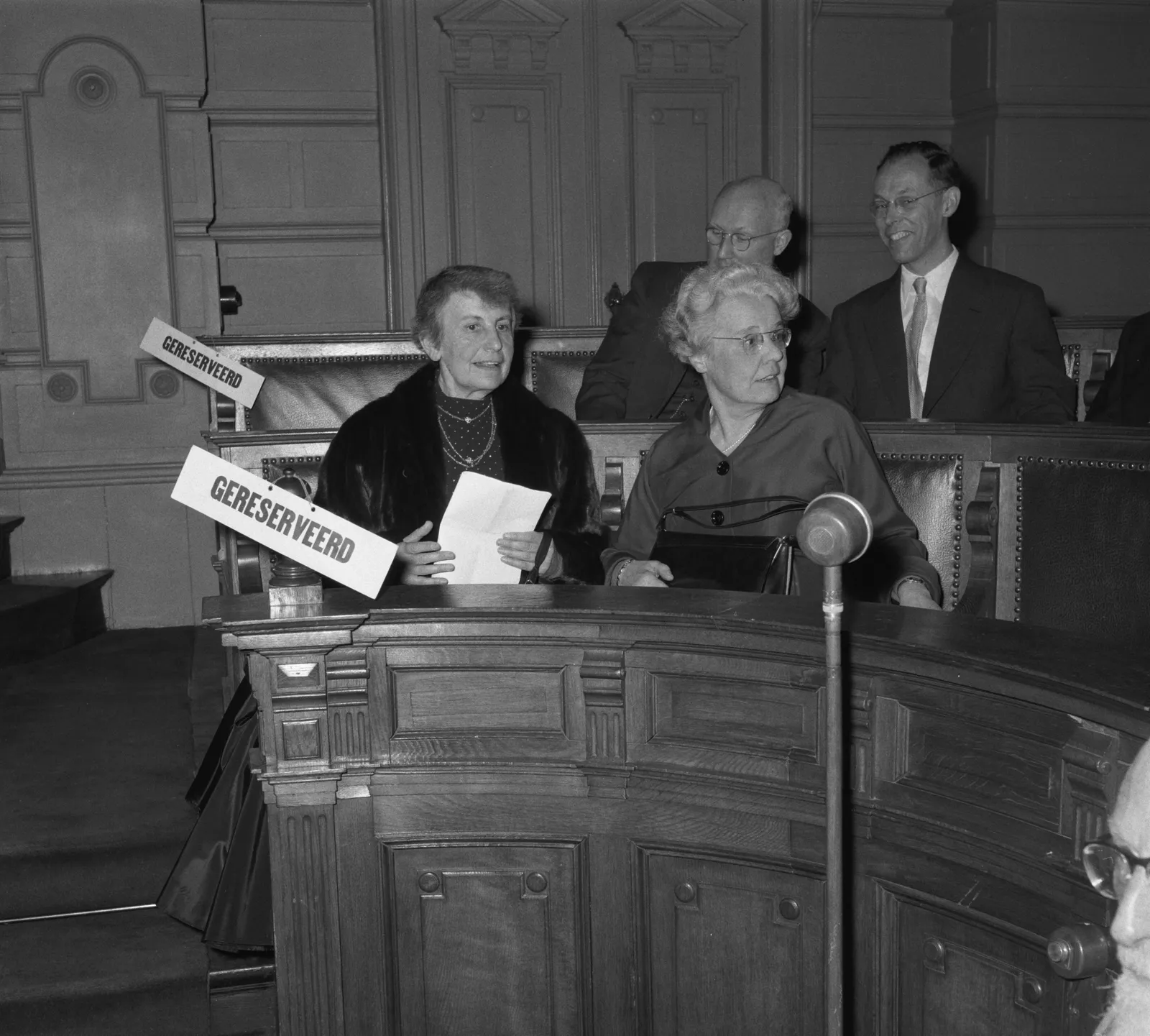
Anna Freud (left) with Dr Maria C. MacKenzie-van der Noorda at a commemoration of Sigmund Freud's birth, photographed by Herbert Behrens for Anefo, 13 April 1956 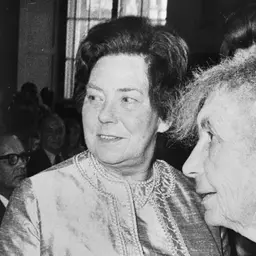
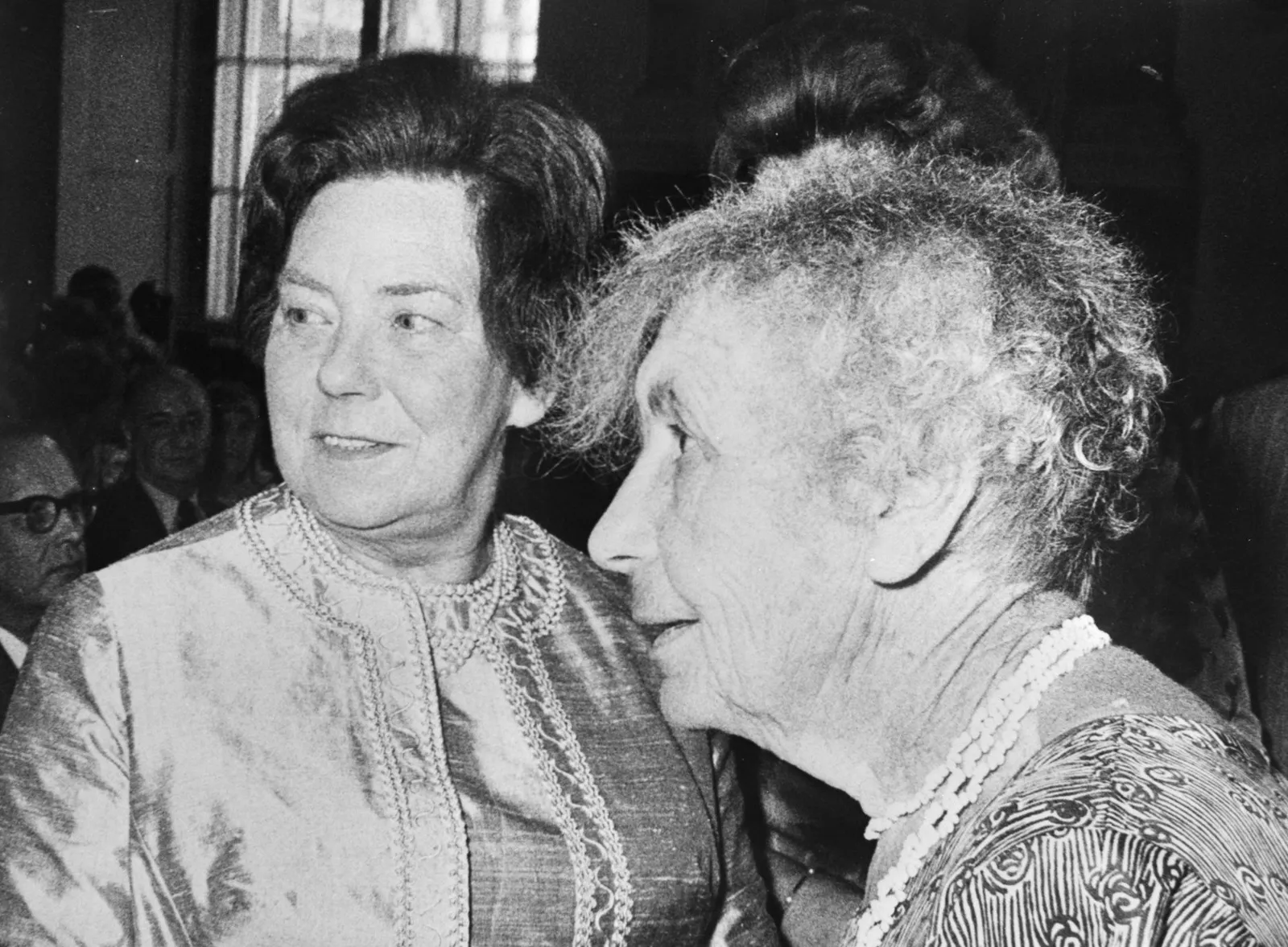
Anna Freud (right) with Hertha Firnberg at the 27th International Psychoanalytical Congress in Vienna, 28 July 1971; Anefo photograph (Nationaal Archief)
References
- The Life and Work of Sigmund Freud1953Evidence for a relation
- Erik Erikson: Faculty of Arts and Sciences Memorial Minute2002Evidence for a relation
- Identity's Architect: A Biography of Erik H. Erikson1999Evidence for a relation
- Ego Psychology and the Problem of Adaptation1939Evidence for a relation
- The Nature and Function of Phantasy1948Evidence for a relation
- Symposium on Child-Analysis1927Evidence for a relation