Person
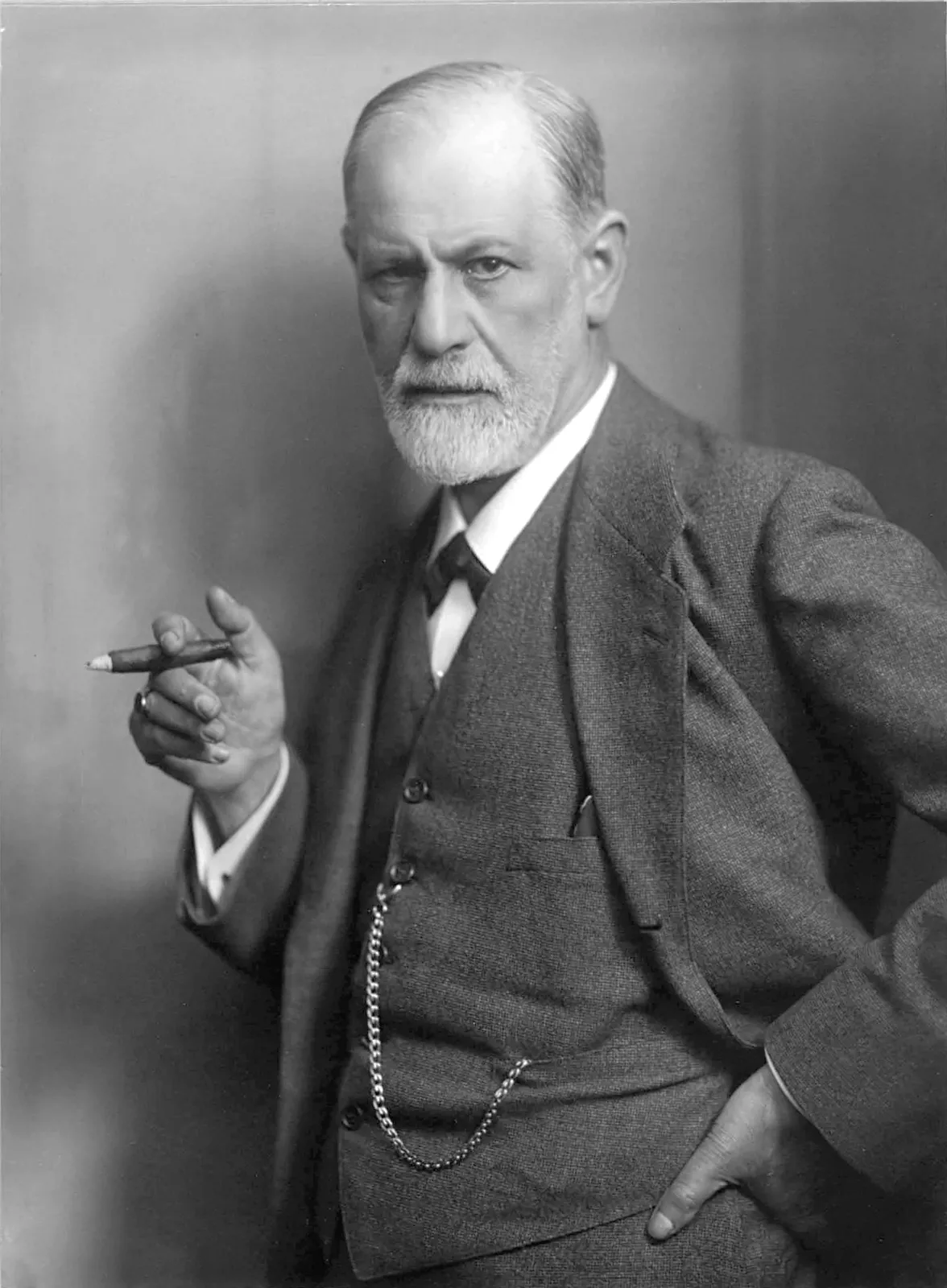
Sigmund Freud
Viennese neurologist who founded psychoanalysis.
- Born
- 1856
- Died
- 1939
- Known for
- Influenced
introduced
- Defense 1894 Introduces defence in “Die Abwehr-Neuropsychosen” (1894): faced with an incompatible idea, the ego sets out to fend it off, and the attempt gives rise to hysterical, obsessional or hallucinatory symptoms. In Studies on Hysteria he recalls how clinical work led him to the idea.
- Transference 1895 Describes the patient attaching to the physician ideas that belong elsewhere: a ‘false connection’.
- Free association 1895 In his chapter on the psychotherapy of hysteria, Freud gives up hypnosis for concentration and the pressure of his hand, and binds the patient to report every image or idea that comes, without selection and uninfluenced by criticism or affect. In the case of Emmy von N. he records her asking him to stop asking where things came from and let her tell what she had to say.
developed
- Defense 1895 Describes defence as turning a strong idea into a weak one by stripping it of its affect, and tentatively extends the concept to every form of hysteria.
- Transference 1905 In the postscript to the Dora case, traces the end of the treatment to a transference he had not mastered in time.
- Condensation 1905 Applies condensation in a clinical dream analysis: in the Dora case he treats the jewel-case of her first dream as a product of condensation and displacement and a compromise between opposed currents.
influenced
- Otto Rank 1907 Rank's first book, Der Künstler (1907), presents itself as built on Freud's teachings.
- Lou Andreas-Salomé 1912 After meeting Freud at the Weimar congress of 1911, Andreas-Salomé spent 1912–13 in Vienna attending his lectures and the Wednesday meetings, recorded in her diary In der Schule bei Freud; her open letter of 1931 for his seventy-fifth birthday sets out what she took from his work.
- Heinz Hartmann 1939 Hartmann presented his ego psychology as taking seriously a widening of the theory of the ego already begun in several places by Freud, and he drew on Freud's ideas of alloplastic and autoplastic change for his account of adaptation.