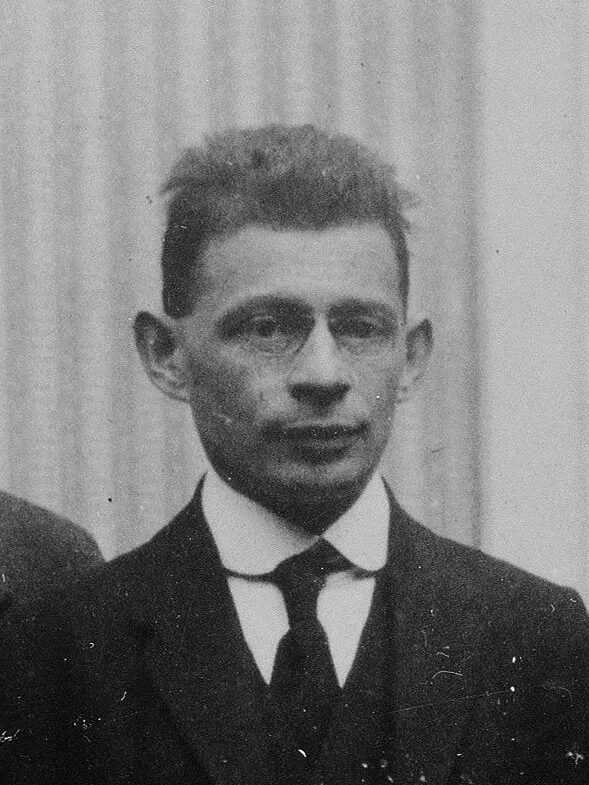
Person
Otto Rank
Austrian psychoanalyst, born Otto Rosenfeld in Vienna, who from 1906 was secretary of the Vienna Psychoanalytic Society and one of Freud's closest collaborators, editing the journals Imago and the Internationale Zeitschrift and applying psychoanalysis to myth, literature and art. His book The Trauma of Birth (1924), which traced anxiety to the separation of birth rather than to the Oedipal situation, led to his break with Freud. He then worked in Paris and New York, developing a 'will therapy' centred on the patient's creative will, the therapeutic relationship and the ending of treatment.
- Born
- 1884
- Died
- 1939
- Known for
- Influenced
collaborated with
- Sigmund Freud 1909 Rank worked closely with Freud from 1906 to the mid-1920s: Freud suggested and contributed to the hero-myth book, and Rank edited the journal Imago under him.
- Sándor Ferenczi 1924 Rank and Ferenczi co-wrote Entwicklungsziele der Psychoanalyse (1924), which argued for an analysis centred on present experience in the transference.
- Jessie Taft 1936 Taft translated Rank's Will Therapy and Truth and Reality (1936) and, after his death, wrote his first biography (1958).
introduced
- Double 1914 Rank's 1914 Imago study made the double a psychoanalytic theme, reading it as a narcissistic defence against death.
- Birth trauma 1924 Rank set out the birth trauma as the root of anxiety and of the unconscious in Das Trauma der Geburt (1924).
- Will therapy 1929 Rank named and laid out will therapy in the second volume of his Technik der Psychoanalyse (1929).
reworked
- Acting out 1924 With Ferenczi, Rank reverses the weighting of Freud's 'Remembering, Repeating and Working-Through' (1914), which treated the wish to relive in place of remembering as resistance: what cannot be remembered can only be repeated in the treatment, so repetition, actively encouraged and then turned into present memory, is given the main role in technique.
- Free association 1924 With Ferenczi, Rank rejects analyses that collect associations and translate them one by one, as if they were the substance of the work. Associations only show where, and how deep, the operative affects lie. An analyst who merely lets the patient associate and interprets each association reduces the analysis to an association experiment.
- Repression 1924 Rank roots the whole process of repression in the trauma of birth. The anxiety of birth is the first barrier set against the striving to restore the lost intrauterine pleasure, and in it he recognises the primal repression, which later repressions and the forgetting of earliest memories repeat.