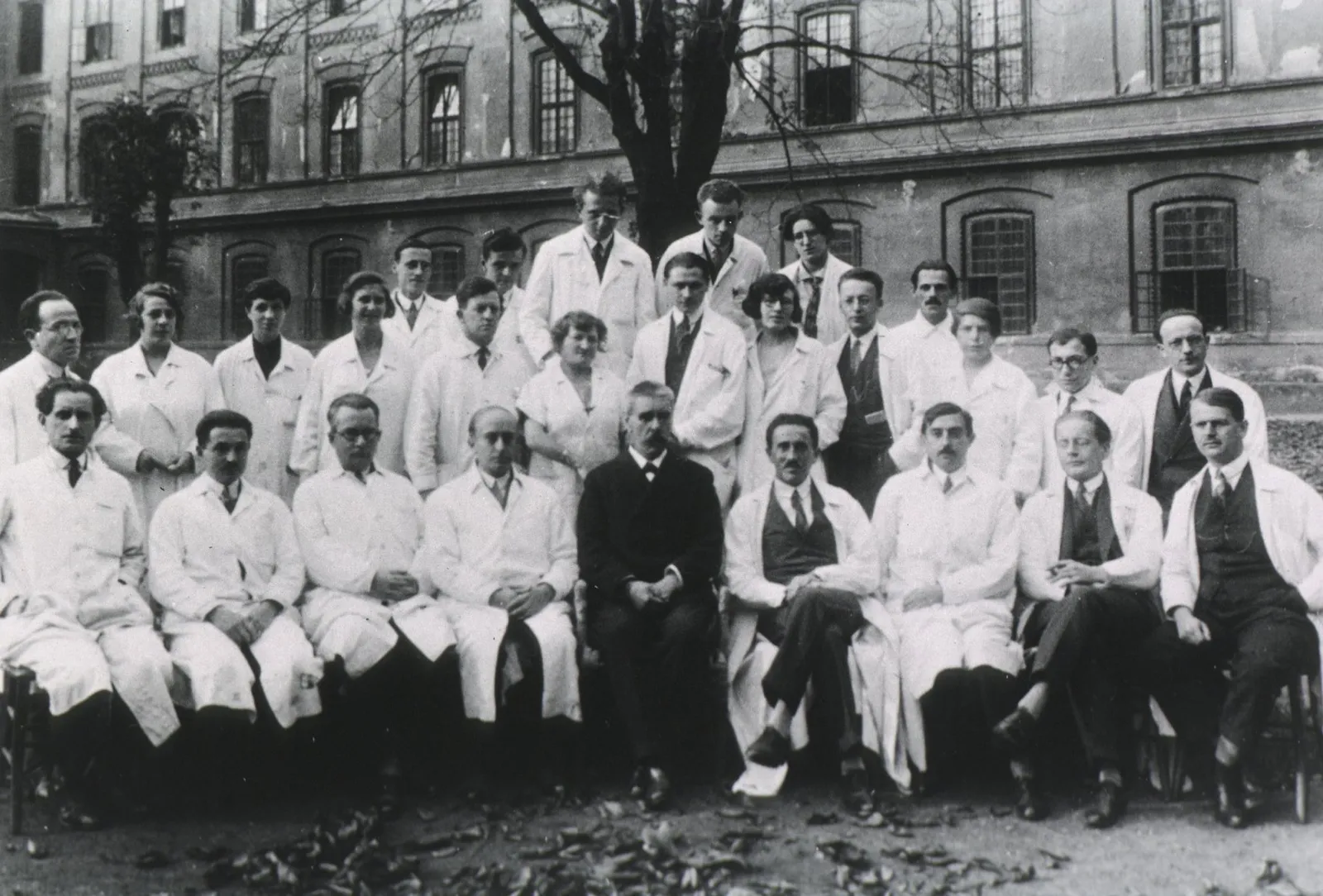
Person
Heinz Hartmann
Austrian-born American psychiatrist and psychoanalyst (1894–1970), regarded as the founder of ego psychology. In "Ich-Psychologie und Anpassungsproblem", read to the Vienna Psychoanalytic Society in 1937 and published in 1939, he described a conflict-free sphere of the ego and made adaptation to an "average expectable environment" a central problem of psychoanalytic theory. After emigrating to New York he worked with Ernst Kris and Rudolph Loewenstein on a general theory of the ego, developing the ideas of ego autonomy and neutralization, and he served as president of the International Psychoanalytical Association in the 1950s.
- Born
- 1894
- Died
- 1970
- Influenced
developed
- Ego psychology 1939 In "Ich-Psychologie und Anpassungsproblem" Hartmann called for widening Freud's ego psychology to the ego functions that cannot be derived from the drives, and his later papers, collected in "Essays on Ego Psychology" (1964), built this into a general theory of the ego.
- Adaptation 1939 Hartmann took Freud's ideas of alloplastic and autoplastic change as guides, added the choice of a new environment as a third route, and called the ego the individual's specific organ of adaptation.
introduced
- Conflict-free ego sphere 1939 Hartmann proposed the term, as a provisional name, in the paper he read to the Vienna Psychoanalytic Society in 1937 and published in 1939.
- Average expectable environment 1939 The 1939 paper repeatedly measures adaptation against "durchschnittlich zu erwartende" (average expectable) situations and describes the newborn as adapted from the first day to its average expectable surroundings.
- Ego autonomy 1939 Hartmann named an area of "autonomous ego development" in 1939 and set out the distinction between primary and secondary autonomy in his papers of the 1950s, collected in "Essays on Ego Psychology".
influenced
- David Rapaport 1958 Rapaport translated Hartmann's 1939 monograph into English (1958) and, in his historical survey of psychoanalytic ego psychology (1959), treated Hartmann's work as the basis of the field he set out to systematise.
- Erik Erikson 1959 In his introduction to Erikson's "Identity and the Life Cycle" (1959), David Rapaport placed Erikson's psychosocial theory within the ego psychology that Hartmann founded, linking it to Hartmann's concern with adaptation.
- Edith Jacobson 1964 Jacobson's "The Self and the Object World" (1964) builds on Hartmann's distinction between the ego and the self and on his term self-representation, tracing how self- and object representations form in early development.