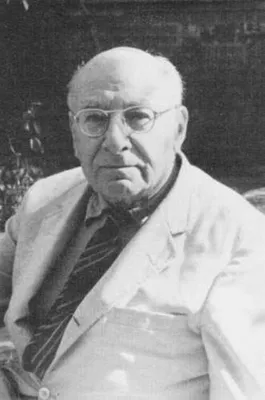
Person
René Spitz
René Spitz was a psychoanalyst born in Vienna and raised in Hungary, who at Sándor Ferenczi's urging became one of the first to undergo a training analysis with Freud; he worked in Vienna, Berlin and Paris before emigrating to New York in 1939, and spent his last decades in Denver. A pioneer of direct and filmed observation of infants, he described hospitalism and anaclitic depression in babies deprived of maternal care, work that fed into Bowlby's account of maternal deprivation. In The First Year of Life he traced how the infant's first object relation takes shape through stages marked by the smiling response, eight-month anxiety and the gesture of 'no', which he called the organizers of the psyche.
- Born
- 1887
- Died
- 1974
- Known for
- Influenced
- John Bowlby
influenced by
- Anna Freud 1935 In Vienna in 1935–1936 Spitz was among the younger analysts gathered around Anna Freud and attended her seminar on child analysis.
- Sándor Ferenczi As a young man in Budapest Spitz attended Ferenczi's lectures, and it was at Ferenczi's urging that he went to Freud for analysis.
introduced
- Anaclitic depression 1946 Spitz coined the term in the 1946 paper he wrote with Katherine Wolf.
- Organizers of the psyche 1959 Spitz set out his principle of organizers in A Genetic Field Theory of Ego Formation (1959) and built The First Year of Life around it.
- Eight-month anxiety Spitz named the infant's fear of strangers eight-month anxiety, called it the first true anxiety and made it the mark of the libidinal object proper.
disputed with
- Samuel R. Pinneau 1955 Pinneau's 1955 critique of Spitz's studies of hospitalism and anaclitic depression drew a reply from Spitz in the same issue of the Psychological Bulletin.
- John Bowlby 1958 In 1958 Bowlby named Spitz among the analysts who, having observed infants' social responsiveness closely, still gave primacy in theory to the needs for food and warmth and treated the tie to the mother as secondary.