Person
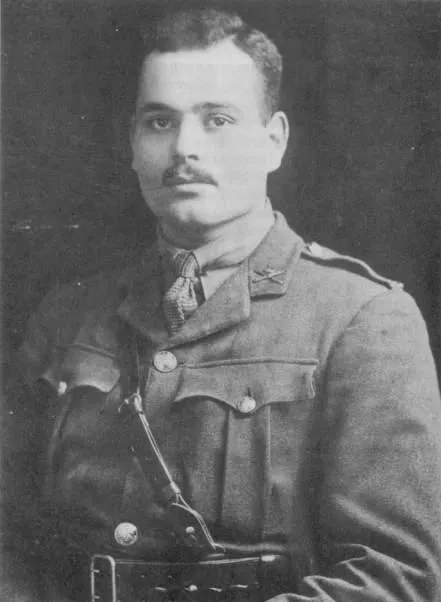
Wilfred Bion
British psychoanalyst, born in India, whose work with groups at the Tavistock Clinic and in wartime army hospitals, and later with psychotic patients in the Kleinian tradition, grew into a psychoanalytic theory of thinking. He described the basic assumptions that divert a group from its task, the alpha function that turns raw experience into material for thought, and the relation of container and contained, and in his late work turned to the unknowable reality of an experience, which he called O.
- Born
- 1897
- Died
- 1979
- Influenced
analysed by
- John Rickman 1938 Bion's training analysis with Rickman began in 1938 and was cut short by the Second World War.
- Melanie Klein 1946 After the war Bion went into analysis with Melanie Klein, from about 1946 into the early 1950s.
introduced
- Basic assumption 1952 Worked out in Bion's papers on groups from 1948 to 1951 and in 'Group dynamics: a re-view' (1952), collected in Experiences in Groups (1961).
- Attacks on linking 1959
- Ego-destructive superego 1959 In 'Attacks on Linking' (1959), Bion describes an understanding breast that envy and hate have turned into a destroyer of the infant's projective identifications. Once internalised, it acts as a severe and ego-destructive superego.
influenced
- Thomas H. Ogden Bion's theories of reverie, container-contained, alpha function and dreaming are the main foundation of Ogden's work from the late 1990s on.
- André Green Green first met Bion in 1976. Bion's ideas, together with Winnicott's, informed his views of borderline states and of analytic technique.
- Hanna Segal Segal and Bion both belonged to the small group of Klein's pupils who analysed psychotic patients. In her later papers Segal followed Bion in tracing disturbed symbol formation to pathological rather than merely excessive projective identification, and linked her theory of symbols to his alpha and beta elements.