Person
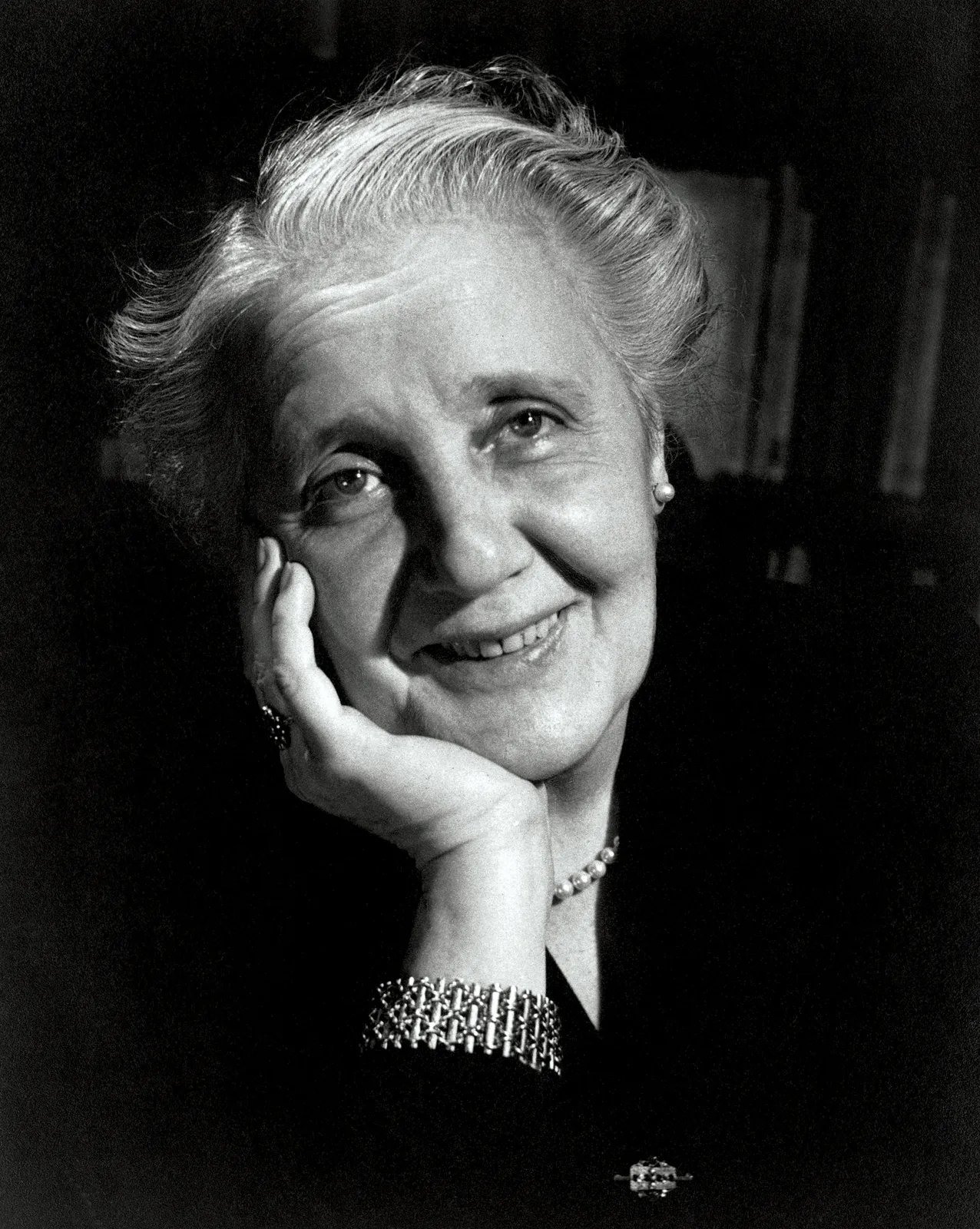
Melanie Klein
Pioneer of child analysis whose theory of early object relations founded the Kleinian school.
- Born
- 1882
- Died
- 1960
- Influenced
introduced
- Play technique 1926 Klein worked out the play technique with her first child patients in Budapest and Berlin and set out its principles in 1926: the child's play, treated like free association, is interpreted directly. In 1955 she looked back on its history and on how it led to her theory.
- Splitting 1929 In 1929 Klein first describes the child splitting its super-ego and imagos into separate good and threatening figures, which it projects into the roles of its play. From 1935 to 1946 she makes this the splitting of the object, the breast first, into good and bad. Her precursors are Rado's good and bad mother-imago (1928) and Freud's splitting of the ego (1927, 1938), which is a different idea.
- Depressive position 1935 Klein first used the term in this 1935 paper and elaborated it in 'Mourning and its Relation to Manic-Depressive States' (1940).
influenced
- Ernest Jones 1927 Jones invited Klein to London in 1926; her early analyses of children shaped his views on female development and the early Oedipus complex.
- Donald Winnicott 1935 Klein's account of early infantile life shaped Winnicott's membership paper 'The Manic Defence' (1935) and his early analytic thinking, even as he later moved away from her.
- Ronald Fairbairn Fairbairn built on Klein's ideas of internal objects and the depressive position, while moving away from her reliance on instincts.
developed
- Epistemophilic instinct 1928 Klein takes up Freud's instinct for knowledge and ties it to the early Oedipus conflict and to sadistic phantasies about the inside of the mother's body (1928). In 1931 she traces intellectual inhibition to the anxiety this bond creates.
- Symbolism 1930 Through the analysis of Dick, Klein argues that anxiety about sadistic phantasies drives the child to move its interest from the mother's body to ever new objects. Symbol formation is therefore the basis of the child's relation to the outside world, and of its sublimations.
- Introjection 1946 Klein makes introjection, together with projection, one of the ego's first means of dealing with anxiety: the introjected good breast becomes a core of the ego, while introjected persecutors feed fears from within. Normal development depends on an optimal balance between the two processes; excessive projection is answered by an introjection felt as a forceful entry from outside.