Person
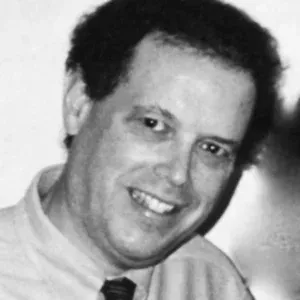
Thomas H. Ogden
American psychoanalyst and writer, born in 1946, who trained in psychiatry at Yale, spent a year at the Tavistock Clinic in London, and practises and teaches in San Francisco. Drawing on Klein, Winnicott and above all Bion, he described an analytic third, a subjectivity that analyst and patient create together, proposed an autistic-contiguous position more primitive than Klein's two positions, and made the analyst's reverie a central instrument of analytic work. His later writing presents analysis as helping the patient dream undreamt experience and so come more fully into being, a turn he calls ontological psychoanalysis. He has also written on psychoanalytic writing and on literature, and has published three novels.
- Born
- 1946
- Influenced by
developed
- Projective identification 1979 Ogden described projective identification as at once an unconscious fantasy, a mode of communication, a primitive object relation and a pathway for psychological change. He set out three phases: a fantasy of putting part of oneself into another person; interpersonal pressure that leads the recipient to feel and act in line with it; and the recipient's processing of what was induced, which the projector can then take back in modified form.
- Potential space 1985 Ogden recast Winnicott's potential space as a dialectical tension between reality and fantasy, and between me and not-me, in which a symbolising, interpreting subject can come into being. He traced its collapse in various forms of psychopathology.
- Reverie 1997 Ogden extended Bion's maternal reverie into a clinical method. He treats the analyst's apparently stray thoughts, daydreams, feelings and bodily sensations during the session as a way into the analytic third, to be used in forming interpretations.
introduced
- Autistic-contiguous position 1989
- Analytic third 1994 Ogden set out the concept in his 1994 paper and in the same year's book Subjects of Analysis, where a further chapter describes the subjugating third of projective identification.
- Dreaming oneself into existence 2003 The 2003 paper introduces undreamt and interrupted dreams; the 2005 book frames the analyst's task as dreaming the patient's undreamt dreams so that the patient can dream themselves more fully into existence.
influenced by
- Wilfred Bion Bion's theories of reverie, container-contained, alpha function and dreaming are the main foundation of Ogden's work from the late 1990s on.
- Donald Winnicott
- Melanie Klein