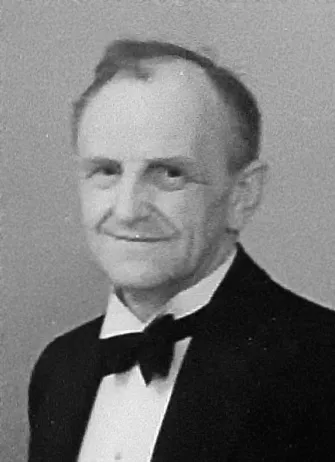
Person
Donald Winnicott
English paediatrician and psychoanalyst, a leading figure of the Independent (Middle) Group of the British Psychoanalytical Society, which he twice served as president. Drawing on decades of work with mothers and infants, he placed the early environment at the centre of emotional development and introduced the transitional object, the good-enough mother, holding, and the distinction between a true and a false self.
- Born
- 1896
- Died
- 1971
- Influenced
analysed by
- James Strachey 1923 Winnicott's first analysis, which lasted about ten years (1923–33).
- Joan Riviere 1936 Winnicott's second analysis (1936–41). Sources differ on when it began, some placing it as late as 1940.
introduced
- Objective countertransference 1949
- Transitional object 1951 Read to the British Psycho-Analytical Society in 1951 and published in 1953; a revised version opens Playing and Reality (1971).
- Good-enough mother 1953 Set out in the transitional objects paper, where the good-enough mother's graduated failure of adaptation leads the infant from illusion to disillusionment.
influenced
- Thomas H. Ogden
- André Green Winnicott shaped Green's thinking on borderline states, analytic technique and the transitional area. The sources differ on when they first met: 1957 in the Carnet PSY biography, the Edinburgh congress of 1961 in Green's own recollection.
- Harold Searles Searles cited Winnicott often, among the British analysts he felt close to, and returned repeatedly to Winnicott's transitional phenomena. Young also reports that Winnicott admired Searles, wrote to him and invited him to England. The influence is affinity and citation; no direct training link is attested.