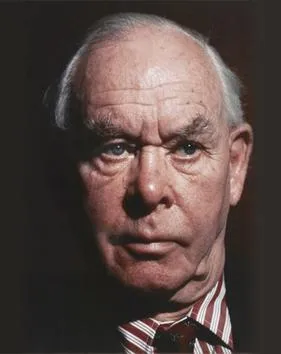
Person
John Bowlby
British psychiatrist and psychoanalyst who spent most of his career working with children and families at the Tavistock Clinic in London. His 1951 report for the World Health Organization argued that a young child needs a warm and continuous bond with its mother or a permanent mother-substitute, and that losing it can do lasting harm. From the late 1950s, drawing on ethology and control theory as well as psychoanalysis, he formulated attachment theory, which he set out in the trilogy Attachment and Loss (1969–1980).
- Born
- 1907
- Died
- 1990
- Influenced
- Stephen A. Mitchell
introduced
- Maternal deprivation 1951 Bowlby's 1951 report for the World Health Organization defined maternal deprivation and drew together the evidence for its harm, including earlier work by Spitz, Goldfarb and others and his own 1944 study of juvenile thieves, which linked early separation from the mother to an 'affectionless' character.
- Attachment theory 1958 Bowlby first set out the theory in 'The Nature of the Child's Tie to His Mother' (1958), followed by papers on separation anxiety (1959) and on grief and mourning (1960), and gave it its full form in the first volume of Attachment and Loss (1969).
- Internal working model 1969 Bowlby adapted the idea of an internal model of the world from Kenneth Craik's The Nature of Explanation (1943) and made working models of self and attachment figures a core part of attachment theory.
disputed with
- Joan Riviere 1957 Riviere objected when Bowlby read 'The Nature of the Child's Tie to His Mother' to the British Psychoanalytical Society in 1957, before its publication in 1958.
- René Spitz 1958 In 1958 Bowlby named Spitz among the analysts who, having observed infants' social responsiveness closely, still gave primacy in theory to the needs for food and warmth and treated the tie to the mother as secondary.
- Anna Freud 1960 When Bowlby's 'Grief and Mourning in Infancy and Early Childhood' appeared in The Psychoanalytic Study of the Child in 1960, Anna Freud published a critical discussion alongside it, contesting among other things his view that young children mourn much as adults do.
developed
- Separation anxiety 1959 In 'Separation Anxiety' (1959) and in the second volume of Attachment and Loss (1973), Bowlby recast separation anxiety as the response of an activated attachment system to the absence of the attachment figure, building on James Robertson's observations of protest, despair and detachment.
- Secure base 1988 Bowlby took up Ainsworth's notion of the secure base and, in his late lectures collected as A Secure Base (1988), applied it to parenting and to psychotherapy, where the therapist offers the patient such a base.