Book
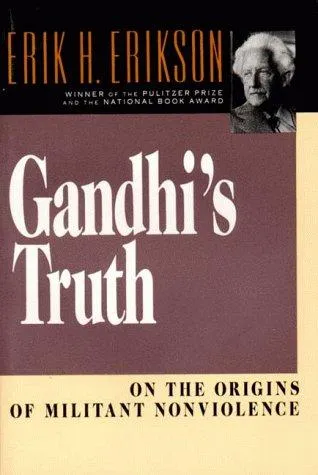
Gandhi's Truth: On the Origins of Militant Nonviolence
Copyright Life + 70 years In copyright The last author or translator died in 1994; protected through 2064.United States Status unknown Published in 1969; its copyright notice and renewal have not been checked.
A psychohistorical study of Mohandas Gandhi in middle life, centred on the textile strike at Ahmedabad in 1918. Erikson asks how Gandhi came to move the people of India both spiritually and politically, so that, in the publisher's words, he became the revolutionary innovator of militant nonviolence and India the motherland of large-scale civil disobedience. The book traces how Gandhi's generativity, the concern of middle life with what one establishes and guides for those who come after, and his method of nonviolent resistance grew out of his personal history and out of the historical situation of his time. With Young Man Luther it set the pattern of psychohistory. It received the Pulitzer Prize and the National Book Award in 1970.
Read more- By
- Erik Erikson
- Published
- 1969
- In
- New York: W. W. Norton
- Language
- English