The graph of concepts, people and works

Drawing the graph…

psychopedia
Legend

Nodes

Relations

At rest every relation is a thin grey line. Its colour shows on hover and in focus.

Person

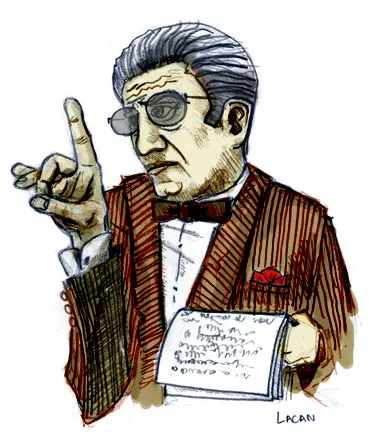
Jacques Lacan

1901–1981

French analyst who reread Freud through linguistics and structuralism.

Jacques Lacan (13 April 1901 – 9 September 1981) was a French psychiatrist and psychoanalyst who, under the banner of a "return to Freud", reread Sigmund Freud through structural linguistics and anthropology. His best-known thesis holds that the unconscious is structured like a language. From 1953 until shortly before his death he taught through an annual Seminar in Paris, and his papers were gathered in Écrits1 (1966), which made him a public figure in France. In this work he recast Freud's condensation and displacement as metaphor and metonymy, introduced the Name-of-the-Father as the signifier of symbolic law, whose foreclosure he held to be the condition of psychosis, and reworked transference, sublimation and aphanisis. Throughout, he attacked the ego psychology of Heinz Hartmann, Ernst Kris and his own former analyst, Rudolph Loewenstein.

Lacan's career was marked by institutional conflict. He left the Paris Psychoanalytic Society in the split of 1953. Ten years later the International Psychoanalytical Association made his removal from the list of training analysts the price of admitting the Société Française de Psychanalyse, chiefly because of his variable-length sessions. He then founded his own school, the École freudienne de Paris, which he dissolved in 1980. Several of those he analysed or taught, among them Jean Laplanche, Jean-Bertrand Pontalis and André Green, broke with him, and Green became one of his sharpest critics. Others, such as Julia Kristeva, built on his account of the symbolic order while departing from it.

Life and training

Lacan trained in medicine as a psychiatrist. According to Adrian Johnston's entry on him in the Stanford Encyclopedia of Philosophy, he began publishing in the late 1920s, while still a student of psychiatry; Éditions du Seuil collected a selection of these early texts in 2023 as Premiers écrits. In 1932 he published his doctoral thesis in psychiatry, De la psychose paranoïaque dans ses rapports avec la personnalité (On Paranoid Psychosis in Its Relations to the Personality), which remained his only book until Écrits. In the same years he moved among the Surrealists and Dadaists and attended Alexandre Kojève's seminars on Hegel's Phenomenology of Spirit. In 1938 he contributed a substantial essay on a wide range of analytic topics to the Encyclopédie française.

During the 1930s Lacan entered analytic training, including a training analysis with Rudolph Loewenstein that the war interrupted. Johnston records that the two disagreed about whether the analysis had ever been completed: Lacan decided that it was over and did not return to Loewenstein. Loewenstein, who emigrated to the United States, later formed with Hartmann and Kris the trio of authors at the head of ego psychology.

In 1936 Lacan first presented his theory of the mirror stage at the IPA congress in Marienbad, where the association's president, Ernest Jones, cut the presentation short; that version is lost. The surviving text, "The Mirror Stage as Formative of the I Function", was delivered at the IPA congress in Zurich in 1949 and later collected in Écrits. The Second World War gave Lacan experience of military psychiatry in France and in England, and he recounted his visit to England in "British Psychiatry and the War" (1947). His post-war papers include "Logical Time and the Assertion of Anticipated Certainty" (1945), "Presentation on Psychical Causality" (1946) and "Aggressiveness in Psychoanalysis" (1948). From the late 1940s he became conversant with the structuralism of Saussure and of his heirs Lévi-Strauss and Jakobson.

Career

In 1953 Lacan joined the analysts who left the Paris Psychoanalytic Society (SPP) and founded the Société Française de Psychanalyse (SFP). Johnston names the SPP's move toward a medicalized model of analytic training as one of the main causes of the break. In the same year Lacan delivered the Rome discourse, "The Function and Field of Speech and Language in Psychoanalysis", which Johnston calls "the lengthy founding manifesto of Lacanianism"; there, in the text collected in Écrits1, he first named the father's name as the support of the symbolic function. Also in 1953 he gave his first annual Seminar, on Freud's Papers on Technique (1953–1954). The Seminar then ran without interruption for twenty-seven years: at the Hôpital Sainte-Anne from 1953 to 1963, before an audience mostly of analysts; at the École Normale Supérieure from 1964 to 1969; and at the Faculty of Law opposite the Panthéon from 1969 to 1980. Green, who first met Lacan at Sainte-Anne in 1953, followed the Seminar through most of the 1960s and lectured there in 1965 and 1967 (Against Lacanism2).

From 1953 to 1963 the SFP sought admission to the International Psychoanalytical Association. In 1963 the IPA made it a condition that Lacan be struck from the society's list of training analysts, citing above all his variable-length sessions, which departed from the fixed-length session of IPA practice. The SFP accepted the condition and split over it. Laplanche, who had been in analysis with Lacan from his return from a year at Harvard in 1946–1947 until 1963, sided with the majority and was among the founders of the Association Psychanalytique de France; Pontalis left with him (Forming new knots3).

Lacan abandoned the seminar he had planned for 1963–1964 on the Names-of-the-Father after its opening session of 20 November 1963. He moved to the École Normale Supérieure, and in 1964 gave the seminar later published as The Four Fundamental Concepts of Psychoanalysis4, on the unconscious, repetition, transference and the drive. He opened it by discussing his "excommunication" from the IPA and comparing himself to Spinoza, expelled from his community as a heretic. He then founded the École freudienne de Paris, which, in Johnston's account, gave him a setting in which to experiment with new approaches to analytic teaching and training. Green describes two of its institutions, the passe and the journal Scilicet, in which only Lacan signed his articles (Against Lacanism2).

Écrits1, a volume of some nine hundred pages published by Éditions du Seuil in 1966, gathered texts written between 1936 and 1966. It became a bestseller in France and established Lacan's public image as "the French Freud", as well as his reputation for difficulty. From the late 1960s, and above all in the 1970s, his teaching turned to logic, topology, knot theory and the "matheme". In Seminar XX, Encore (1972–1973), he theorized sexual difference as "sexuation", summed up in the formula "Il n'y a pas de rapport sexuel" (there is no sexual relationship). In 1980 Lacan disbanded the École freudienne, a decision that Johnston describes as controversial and as the trigger of factional conflict among his followers. He died in 1981. His son-in-law Jacques-Alain Miller, who had first met him as a listener at the 1964 seminar, founded the École de la Cause freudienne as its successor and, as editor of the Seminar, has retained publishing control over Lacan's texts.

Theory

Lacan presented his work as a return to Freud and himself, in Johnston's description, as the lone defender of a Freudian orthodoxy in danger of being eclipsed by the post-Freudians. His central thesis, that the unconscious is structured like a language, speaks of un langage, the logic of syntax and meaning in general, and not of une langue, a particular natural language; whatever he later revised in the comparison, he held that the unconscious is structured and not a chaotic id. The papers collected in Écrits1 turn this thesis against ego psychology, arguing that to strengthen an autonomous and adapted ego, as Hartmann, Kris and Loewenstein proposed, betrays Freud's discovery of the unconscious.

Johnston treats three registers, the Imaginary, the Symbolic and the Real, as the framework of most of Lacan's thought. Lacan revised them repeatedly, and in the 1970s figured their mutual dependence as a Borromean knot, in which breaking one ring sets all three free. The Imaginary is the register of the ego and of the images subjects form of themselves and of others, and is central to the mirror stage. The Symbolic is the order of language, law, custom and ritual into which subjects are born, the big Other. The Real is what resists symbolization, the limit of the other two registers. To these Lacan added objet petit a, the object-cause of desire, which makes empirical objects desirable while none of them matches it. Scholars sometimes divide his teaching into an early period dominated by the Imaginary, a middle one by the Symbolic and a late one by the Real, a periodization that Johnston says should be taken with several grains of salt.

In "The Instance of the Letter in the Unconscious" (1957, collected in Écrits1), Lacan turned Jakobson's distinction between the metaphoric and metonymic poles of language into a psychoanalytic one. Metaphor is the substitution of one signifier for another in the signifying chain, the hidden signifier remaining linked to the rest of the chain, and is the structure of condensation and of the symptom. Metonymy is the connection of signifier to signifier along the chain, and is the structure of displacement, by which the unconscious gets round censorship. Hence his formula that the symptom is a metaphor and desire a metonymy. In Seminar XI he restated condensation as a signifying operation with the effect of metaphor, referring back to the 1957 paper (The Four Fundamental Concepts of Psychoanalysis4).

The Name-of-the-Father, first named in the Rome discourse as the support of the symbolic function, identifies the father with the law. In his 1958 essay on the treatment of psychosis Lacan cast it in the form of his metaphor: the Name-of-the-Father takes the place of the mother's desire, and the substitution produces the phallic signification. When this signifier is foreclosed and the paternal metaphor fails, psychosis follows; Lacan held this to be the essential condition of psychosis and what sets it apart from neurosis (Écrits1). From 1963 he spoke of the Names-of-the-Father in the plural.

Lacan reworked a number of clinical concepts in the same terms. Against an analysis of resistances directed at the patient's ego, he located resistance on the analyst's side, as a product of the analyst's own pressure and demand, and read the subject's resistance to suggestion as the wish to keep desire alive (Écrits1). In Seminar XI he located transference in the analyst's position as the "subject supposed to know". He took over Jones's term aphanisis, turning it from the loss of desire into the fading of the subject, who disappears beneath the signifier that represents it. He grouped the parapraxis with the dream and the joke as the formations in which the unconscious first shows itself, as a stumbling or a crack in what is said, and reread Freud's forgetting of the name Signorelli as the disappearance of the signifier "Signor", the absolute master, which he linked to death. He also objected that analysts handle projection and introjection loosely, as if they were simply the reverse of each other, when one belongs to a field dominated by the Symbolic and the other to the Imaginary (The Four Fundamental Concepts of Psychoanalysis4).

In the seminar of 1959–1960, published as The Ethics of Psychoanalysis5, Lacan read Freud's das Ding as the lost and inaccessible Thing around which desire is organised. He moved sublimation away from a change in the drive's aim toward the place of the object: sublimation raises an ordinary object to the dignity of the Thing, and art is organised around the void that the Thing leaves. The same seminar reads Antigone and asks what an ethics of desire would be for psychoanalysis. Johnston notes that Seminar VII is often taken to mark a reorienting turn toward the Real, although the claim of such a turn remains controversial. In Seminar XVII (1969–1970) and the interview "Radiophonie", Lacan set out his theory of the four discourses: those of the master, the university, the hysteric and the analyst.
Influence and reception

From 1964 the Seminar's audience grew sharply in size and range; Johnston names Jean Hyppolite, Michel Foucault, Gilles Deleuze, Luce Irigaray and Kristeva among those who attended. Kristeva followed the Seminar from the late 1960s and built her distinction between the semiotic and the symbolic on, and against, his account of the symbolic order, the mirror stage and the subject of the signifier, in her thesis La Révolution du langage poétique6 (1974).

Several analysts trained in his circle broke with him. Laplanche, whose analysis with Lacan was later counted as his training analysis, and who had studied medicine on Lacan's advice in order to become an analyst, had set out metapsychological differences with him by 1960 and remained opposed to his short sessions (Forming new knots3). Green parted from Lacan in 1967. He tied the break to a long paper of his on narcissism that did not cite Lacan, while a later account ties it to his rejection of the thesis that the unconscious is structured like a language.

In a conversation with Sergio Benvenuto recorded in 1994, Green set out his case against Lacan (Against Lacanism2). He argued that the drive and affect cannot be reduced to language and the signifier, and that the renewal Lacan brought to French psychoanalysis drew on the intellectual scene, from Hegel and Wallon to Saussure, Jakobson and Lévi-Strauss, rather than on clinical problems. In the 1970s, in Green's account, Lacan turned to topology and a logic of the pure signifier, away from affect, the drives and the earliest months of life. Green held that Lacan's theory cannot be separated from his practice. The short, arbitrarily ended session was in his view an exercise of power, and sessions of a few minutes left no time to speak, contradicting the primacy Lacan gave the signifier. He named Laplanche, Pontalis, Anzieu, Rosolato, Aulagnier and Perrier among those who had left Lacan, in his account because they found his practice indefensible. He also argued that the formula of an unconscious structured like a language offered intellectuals a Freud without sexuality or childhood. Benvenuto objected throughout that Green turned a theoretical dispute into a moral one and that, for Lacan, desire is bound to the law; Green answered that an analyst is answerable to patients, so that conduct in the session cannot be set aside in judging a doctrine.

Selected works

Before 1966 Lacan published a single book, his thesis De la psychose paranoïaque dans ses rapports avec la personnalité (1932), which Seuil reissued in 1975 together with his first writings on paranoia. His papers of 1936 to 1966, among them the Zurich text on the mirror stage (1949), the Rome discourse (1953), "The Instance of the Letter in the Unconscious" (1957) and the 1958 essay on the treatment of psychosis, are collected in Écrits1 (1966), whose first complete English translation, by Bruce Fink, appeared in 2006. His teaching survives chiefly in the Seminar, edited by Jacques-Alain Miller and published by Seuil as Le Séminaire; by Johnston's count nineteen of its twenty-five years have appeared in French. They include Freud's Papers on Technique (Seminar I, 1953–1954), The Ethics of Psychoanalysis5 (Seminar VII, 1959–1960, published 1986), The Four Fundamental Concepts of Psychoanalysis4 (Seminar XI, 1964, published 1973), Seminar XVII (1969–1970) and Encore (Seminar XX, 1972–1973). His texts of the 1920s appeared as Premiers écrits in 2023.

Ideas

introduced

  • 1953 Name-of-the-Father
    In the Rome discourse of 1953, Lacan names the father's name as the support of the symbolic function, which identifies the father with the law. In 1958 he develops it as the paternal metaphor.
  • 1957 Metaphor
    In “The Instance of the Letter in the Unconscious” (1957, collected in Écrits), Lacan defines metaphor as one signifier taking another's place in the chain, the hidden one remaining linked to the rest, and makes it the structure of condensation and of the symptom.
  • 1957 Metonymy
    In "The Instance of the Letter in the Unconscious" (1957, collected in Écrits), Lacan turns Jakobson's metonymic pole into a psychoanalytic concept. Metonymy becomes the word-to-word connection along the signifying chain, and he sets it beside metaphor: the symptom is a metaphor and desire is a metonymy.

reworked

  • 1957 Condensation
    Reads condensation as the superimposition of signifiers in which metaphor has its field, and displacement as metonymy (‘L’instance de la lettre dans l’inconscient’, 1957). In Seminar XI (1964) he restates condensation as a signifying operation with the effect of metaphor and refers back to that article.
  • 1958 Resistance
    Against an analysis of resistances aimed at the patient's ego, Lacan locates resistance on the analyst's side: it is produced by the analyst's own pressure and demand, while the subject's resistance to suggestion is read as the wish to keep desire alive.
  • 1960 Sublimation
    In the seminar of 1959–1960 Lacan moves sublimation away from a change of the drive's aim toward the place of the object. Sublimation raises an ordinary object to the dignity of the Thing, the lost and inaccessible das Ding, and art is organised around the void the Thing leaves.
  • 1964 Transference
    Locates transference in the analyst’s position as the ‘subject supposed to know’ (Seminar XI, given 1964, published 1973).
  • 1964 Aphanisis
    Lacan took Jones's word but turned it from the loss of desire into the 'fading' of the subject, who disappears under the signifier that represents it.
  • 1964 Parapraxis
    In Seminar XI Lacan groups the parapraxis with the dream and the witticism as the formations in which the unconscious first shows itself, as a stumbling, a failure, a crack in what is said or written: a gap in which something else, apparently intentional, seeks to be realised. In the same session he rereads Freud's forgetting of the name Signorelli as the disappearance of the signifier 'Signor', the Herr or absolute master, which he links to death.

critiqued

  • 1964 Projection
    Lacan lists projection with identification, idealisation and introjection as terms analysts handle loosely, as if their sense were self-evident. He rejects the common view that projecting and introjecting are simply the reverse of each other: he had long pointed out that one belongs to a field dominated by the symbolic and the other to the imaginary, so that in one dimension at least they never meet. In his earlier seminars it is projection that belongs to the imaginary.
  • 1966 Ego psychology
    Across the papers collected in "Écrits" (1966), Lacan attacked the ego psychology of Hartmann, Kris and Loewenstein, arguing that strengthening an autonomous, adapted ego betrays Freud's discovery of the unconscious.

Influence

Conflict

  • 1963 broke with Jean Laplanche
    When the Société Française de Psychanalyse split in 1963 over the IPA's condition that Lacan be removed as a training analyst, Laplanche sided with the majority and helped found the Association Psychanalytique de France. He had already set out metapsychological differences with Lacan in 1960 and remained opposed to his short sessions.
  • 1963 broke with Jean-Bertrand Pontalis
    Pontalis left Lacan in the 1963 split of the Société Française de Psychanalyse, together with Laplanche, Anzieu and Widlöcher, and joined the Association Psychanalytique de France.
  • 1967 broke with André Green
    After several years at Lacan's seminar, Green parted from him in 1967. Green recalled that the break followed a long paper of his on narcissism that did not cite Lacan; a 2012 account ties it to his rejection of Lacan's thesis that the unconscious is structured like a language.
  • disputed with André Green
    Green argued against Lacan that the drive and affect cannot be reduced to language and the signifier, and that Lacan's later work left clinical experience behind; he also attacked the Lacanian practice of short, arbitrarily ended sessions.

Lineage

  • analysed Jean Laplanche
    Laplanche began his analysis with Lacan after returning from a year at Harvard (1946–47) and continued it until 1963. It was later counted as his training analysis, and on Lacan's advice he studied medicine to become an analyst.

Affinity

  • influenced André Green
    Green followed Lacan's seminar through most of the 1960s, lecturing there in 1965 and 1967, and later said he had been held by Lacanian thought while also being drawn to British clinical psychoanalysis. Accounts date his attendance 1960–1967 (his own) or 1961–1966 (Carnet PSY).
  • influenced Julia Kristeva
    Kristeva attended Lacan’s seminar from the late 1960s and built her semiotic/symbolic distinction on, and against, his account of the symbolic order, the mirror stage and the subject of the signifier.

Works

  • 1966

    Écrits

    Lacan's collected papers, published by Éditions du Seuil in 1966: a volume of some nine hundred pages gathering articles and essays written over three decades, from 1936 to 1966. It includes the text on the mirror stage given at Zurich in 1949; the Rome discourse of 1953, 'The Function and Field of Speech and Language in Psychoanalysis', which has been called the founding manifesto of Lacanianism; 'The Instance of the Letter in the Unconscious' (1957); and the 1958 essay on the treatment of psychosis. Across these papers Lacan pursues his return to Freud by way of structural linguistics, reading the unconscious as structured like a language, and turns against the ego psychology of Hartmann, Kris and Loewenstein. The book became a bestseller in France and made Lacan known as 'the French Freud', while also fixing his reputation for difficulty. Its first complete English translation, by Bruce Fink with Héloïse Fink and Russell Grigg, was published by W. W. Norton in 2006.

    Jacques Lacan Paris: Éditions du Seuil Copyright Life + 70 years In copyright The last author or translator died in 1981; protected through 2051.United States Status unknown Published in 1966; its copyright notice and renewal have not been checked.

  • 1973

    The Four Fundamental Concepts of Psychoanalysis

    The seminar Lacan gave in 1964 at the École Normale Supérieure, after the International Psychoanalytical Association had made his removal from the list of training analysts the condition for admitting the Société Française de Psychanalyse. Established by Jacques-Alain Miller, it was published by Éditions du Seuil in 1973 as Book XI of Le Séminaire, and in English in Alan Sheridan's translation. Speaking to a larger and less specialised audience than before, Lacan set out to bring coherence to four concepts on which psychoanalysis rests: the unconscious, repetition, transference and the drive. He opens with his 'excommunication', and moves from asking whether psychoanalysis is a science to asking what kind of science could include it. The seminar treats the unconscious and repetition, the gaze as objet petit a, transference and the drive, and the field of the Other, where alienation, aphanisis and the subject supposed to know are taken up.

    Jacques Lacan Le Séminaire, Livre XI Copyright Life + 70 years In copyright The last author or translator died in 1981; protected through 2051.United States Status unknown Published in 1973; its copyright notice and renewal have not been checked.

  • 1986

    The Ethics of Psychoanalysis

    Lacan's seminar of 1959–1960, established by Jacques-Alain Miller and published by Éditions du Seuil in 1986 as Book VII of Le Séminaire. Lacan takes up Freud's das Ding as the lost and inaccessible Thing around which desire is organised, and on that basis redefines sublimation: no longer a change in the drive's aim, but the raising of an ordinary object to the dignity of the Thing. Art, in this account, is organised around the void that the Thing leaves. Through a reading of Antigone, the seminar asks what an ethics of desire would be for psychoanalysis. Commentators often read it as the point at which Lacan's teaching turns toward the Real, although whether there was such a turn is disputed.

    Jacques Lacan Le Séminaire, Livre VII (Paris: Seuil) Copyright Life + 70 years In copyright The last author or translator died in 1981; protected through 2051.United States In copyright Published in 1986; protected through 2081.

References

  1. Écrits1966
  2. Against Lacanism: An Interview With André Green1995
  3. Forming new knots: Jean Laplanche, 1924–20122012
  4. The Four Fundamental Concepts of Psychoanalysis1973
  5. The Ethics of Psychoanalysis1986
  6. Revolution in Poetic Language: The Avant-Garde at the End of the Nineteenth Century, Lautréamont and Mallarmé1974
Esc

↑ ↓ to move · Enter to go · Esc to close