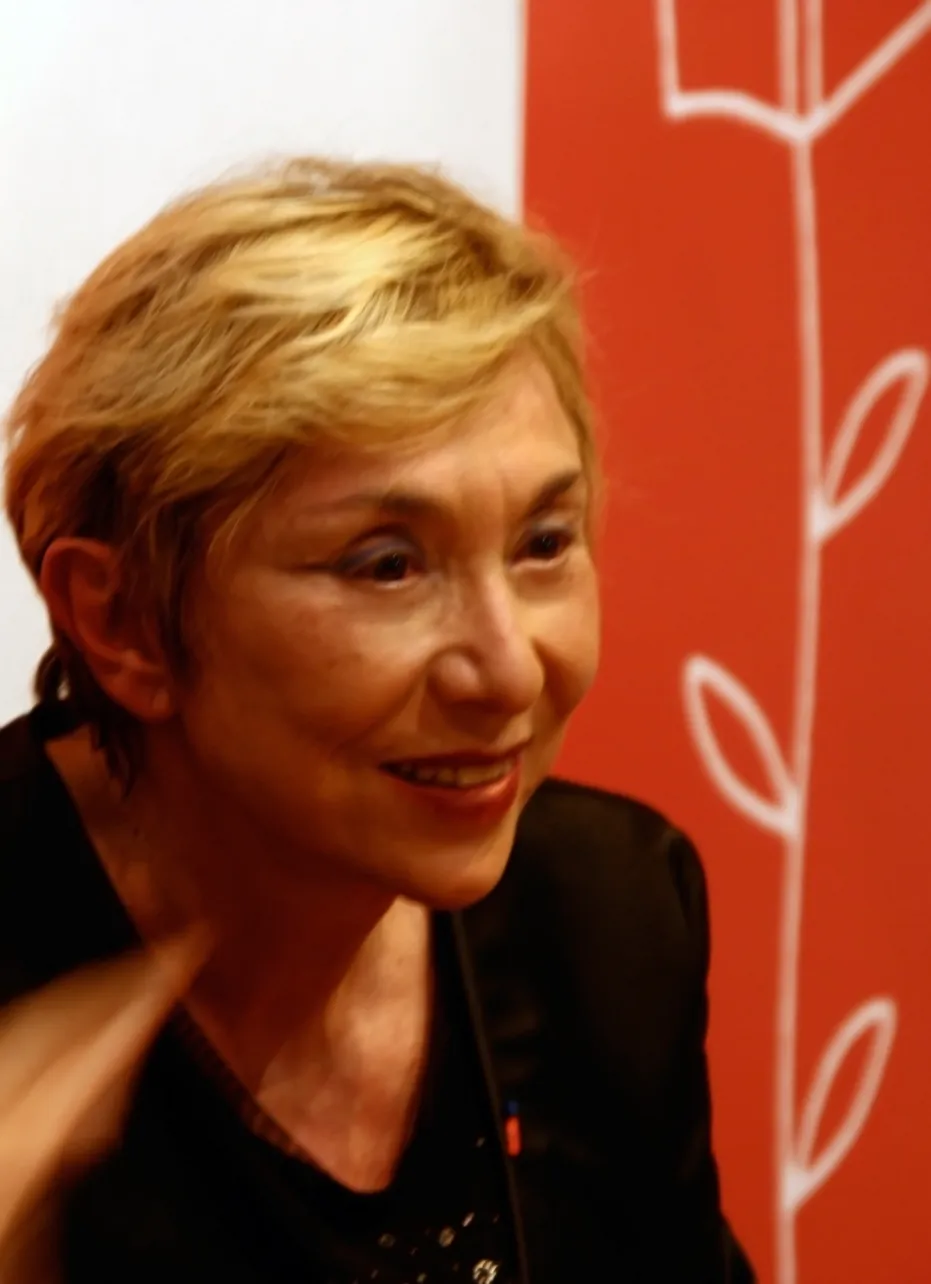
Julia Kristeva (born 1941) is a Bulgarian-born French psychoanalyst, linguist, literary theorist and novelist. She settled in Paris in the mid-1960s and joined the Tel Quel group. In a run of books from Sēmeiōtikē1 (1969) to La Révolution du langage poétique2 (1974) she proposed a theory of the speaking subject that set the semiotic, the rhythmic, drive-bound side of meaning, against the symbolic order of the sign and of syntax. She coined the term intertextuality and introduced the semiotic chora and the subject in process.
After an analysis with Ilse Barande she trained at the Société psychanalytique de Paris, where she became an associate member in 1987 and a full member in 1997. In the 1980s she wrote three psychoanalytic studies: of abjection in Pouvoirs de l'horreur3 (1980), of love in Histoires d'amour4 (1983) and of depression in Soleil noir5 (1987).
Her later work includes a trilogy on female genius whose middle volume is devoted to Melanie Klein, along with novels and essays on revolt, belief and the feminine. She taught for decades at the University of Paris VII and is a training analyst of the Paris society. In 2004 she became the first laureate of the Holberg Prize. Her ideas have been widely taken up, and as widely disputed, in literary studies and feminist theory.