Person
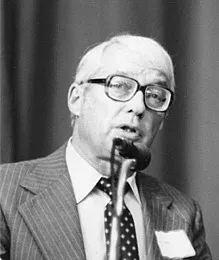
Harold Searles
American psychiatrist and psychoanalyst who spent fifteen years at Chestnut Lodge, a private psychiatric hospital in Maryland, treating schizophrenic patients with intensive psychotherapy. His papers, gathered in Collected Papers on Schizophrenia and Related Subjects (1965) and Countertransference and Related Subjects (1979), are known for their candid use of the analyst's own feelings, including love, hatred and confusion, as information about the patient. He also wrote on the human relation to the nonhuman environment and on borderline patients.
- Born
- 1918
- Died
- 2015
- Influenced
- Thomas H. Ogden
introduced
- Effort to drive the other person crazy 1959 Searles's 1959 paper in the British Journal of Medical Psychology, reprinted in his Collected Papers (1965). It treats the effort to undermine another person's trust in their own feelings and perceptions as an element both in the aetiology of schizophrenia and in its psychotherapy.
- Nonhuman environment 1960 Searles's first book, The Nonhuman Environment (1960), argued that a person's relatedness to animals, landscape and things is a basic and ambivalent part of psychological life, in normal development and in schizophrenia.
- Patient as therapist to the analyst 1975 Set out in the 1975 paper 'The Patient as Therapist to His Analyst', reprinted in Countertransference and Related Subjects (1979). It holds that an innate psychotherapeutic striving, first aimed at the parents, is among the strongest human strivings, and that the patient seeks to heal the analyst.
reworked
- Oedipus complex 1959 In 'Oedipal Love in the Countertransference' (1959), Searles described his own romantic and erotic feelings toward recovering patients and held that such responses, felt and contained by the analyst, help the analysis of the Oedipus complex succeed. Ogden reads this as a reconception of what that analysis requires.
influenced by
- Frieda Fromm-Reichmann Searles joined Chestnut Lodge in 1949, where Fromm-Reichmann was then practising intensive psychotherapy with psychotic patients. His understanding of psychosis was shaped by her there.
- Donald Winnicott Searles cited Winnicott often, among the British analysts he felt close to, and returned repeatedly to Winnicott's transitional phenomena. Young also reports that Winnicott admired Searles, wrote to him and invited him to England. The influence is affinity and citation; no direct training link is attested.