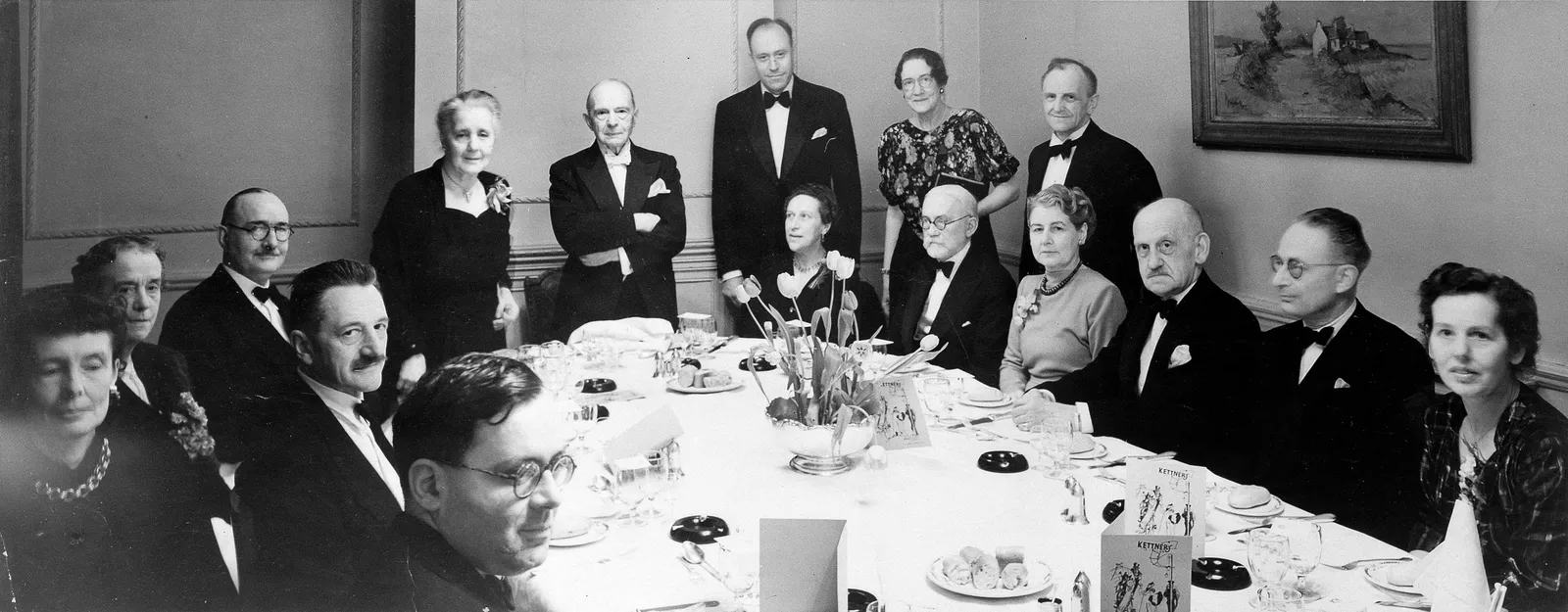
Donald Woods Winnicott (1896–1971) was an English paediatrician and psychoanalyst. He was one of the leading figures of the Middle, later Independent, Group of the British Psycho-Analytical Society, and twice its president. For some forty years he worked as a physician at Paddington Green Children's Hospital in London. He brought what he saw in thousands of consultations with mothers and infants into psychoanalytic theory, and carried psychoanalysis back into paediatrics.
Trained under James Strachey, Joan Riviere and Melanie Klein, Winnicott began within Kleinian thought and moved away from it from the 1940s. He came to place the infant's early environment, above all the mother's adaptation to her baby, at the centre of emotional development.
His best-known ideas include the transitional object and the intermediate area of experience, the good-enough mother, primary maternal preoccupation, the holding environment, and the distinction between a true self and a false self. Others are the capacity to be alone, potential space and the use of an object. His paper on hate in the countertransference opened a line of thinking about the analyst's feelings. His late book Playing and Reality1 (1971) made playing and cultural experience central to psychoanalysis.