Book
Studies on Hysteria
Studien über Hysterie
What it shows
- 1895
Sigmund Freud introduced Transference
Describes the patient attaching to the physician ideas that belong elsewhere: a ‘false connection’.
- 1895
Sigmund Freud collaborated with Josef Breuer
- 1894
Sigmund Freud introduced Defense
Introduces defence in “Die Abwehr-Neuropsychosen” (1894): faced with an incompatible idea, the ego sets out to fend it off, and the attempt gives rise to hysterical, obsessional or hallucinatory symptoms. In Studies on Hysteria he recalls how clinical work led him to the idea.
- 1895
Sigmund Freud developed Defense
Describes defence as turning a strong idea into a weak one by stripping it of its affect, and tentatively extends the concept to every form of hysteria.
- 1895
Defense diverges from Hypnoid state
Freud sets his defence hysteria, in which a psychical force keeps the idea from the ego, against Breuer’s hypnoid hysteria, in which the idea is left outside the ego by the state in which it arose and meets no resistance; he suspects that defence is the more basic of the two.
Show all 16 Show fewer
- 1895
Resistance derives from Defense
Freud identifies the resistance met in treatment with the same force of the ego that first repelled the incompatible idea: resistance is defence as it shows itself in the work of recall.
- 1895
Sigmund Freud introduced Free association
In his chapter on the psychotherapy of hysteria, Freud gives up hypnosis for concentration and the pressure of his hand, and binds the patient to report every image or idea that comes, without selection and uninfluenced by criticism or affect. In the case of Emmy von N. he records her asking him to stop asking where things came from and let her tell what she had to say.
Free association diverges from Cathartic method
Free association grew out of Breuer's cathartic method and departed from it. Finding that many patients could not be hypnotised, Freud set out to reach the pathogenic memories without hypnosis, then gave up other means of suggestion too, and let patients associate freely.
- 1893
Josef Breuer introduced Cathartic method
Breuer devised the method while treating Anna O. in 1880–82. The 'Preliminary Communication' of 1893, which he wrote with Freud and which opens the Studies, reports that symptoms vanished for good once the precipitating memory was awakened with its affect and put into words. Freud calls it Breuer's method of cure by inquiry and abreaction under hypnosis.
- 1895
Sigmund Freud introduced Repression
The Preliminary Communication with Breuer (1893) already speaks of things the patient intentionally 'repressed' from conscious thought. In his own parts of Studies on Hysteria Freud makes repression a mechanism: an idea incompatible with the dominant mass of ideas of the ego is pushed out of association, becomes pathogenic, and the same force of the ego reappears in treatment as resistance to its recall.
- 1895
Repression derives from Defense
Repression comes out of Freud's earlier theory of defence: in 1895 hysteria arises from the repression of an incompatible idea 'from the motive of defence'. Freud later let 'repression' stand for defence as a whole, and in 1926 he says so himself, bringing defence back as the general term of which repression is one kind.
- 1893
Josef Breuer introduced Hypnoid state
The thesis that hypnoid states are the basis and condition of hysteria first appeared in the Preliminary Communication (1893); in his theoretical chapter of Studies on Hysteria Breuer defends the term “hypnoid” as naming the inner likeness of states akin to self-hypnosis.
- 1895
Sigmund Freud introduced Resistance
In his chapter on the psychotherapy of hysteria, Freud infers from the effort that pressing patients to recall cost him that his work had to overcome a psychical force in the patient that opposes the pathogenic ideas becoming conscious, and names it resistance.
- 1905
Sigmund Freud critiqued Hypnoid state
Freud distanced himself from the hypnoid state in stages. In 1895 he reports never having met a genuine hypnoid hysteria, since every case he took up turned into defence hysteria. In the Dora case (1905) he says he has given up only the stress on the hypnoid state, credits the idea wholly to Breuer, and calls the term superfluous and misleading. In 1909 he tells his Clark University audience that the notion proved obstructive and had been dropped.
- 1893
Hypnoid state derives from Dissociation
The hypnoid state was put forward to account for the splitting of consciousness that French psychiatry had described as double conscience. The Preliminary Communication holds that this split exists in rudiment in every hysteria, says the authors here agree with Binet and the two Janets, and groups the tendency to dissociation with the abnormal states it calls hypnoid. Breuer's theoretical chapter values hypnoid states above all for their power to bring about the splitting of the psyche.
- 1895
Josef Breuer developed Dissociation
In his theoretical chapter of Studies on Hysteria Breuer accepts, after the French researchers, that a splitting of mental activity occurs, and devotes a section to unconscious ideas and the splitting of the psyche. He prefers to speak of a splitting of the psyche rather than of consciousness, and makes hypnoid states its main condition in the major hysterias.
Cited in
Gallery
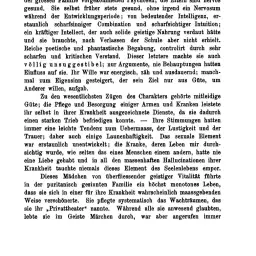
Opening page of the case histories in Studien über Hysterie: Josef Breuer's "Fräulein Anna O.", first edition, Franz Deuticke, 1895, p. 15