Book
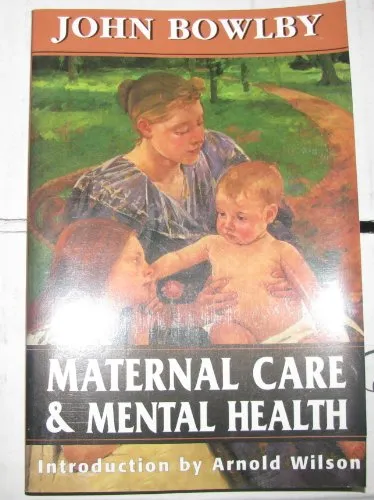
Maternal Care and Mental Health
Maternal Care and Mental Health is the report John Bowlby wrote for the World Health Organization in 1950–51 as its contribution to a United Nations study of homeless children: children orphaned or separated from their families and cared for in institutions, foster homes or other group care within their own countries. Drawing on visits to France, the Netherlands, Sweden, Switzerland, the United Kingdom and the United States, and on the clinical and research literature of child psychiatry and child guidance, Bowlby argues that what the infant and young child needs for mental health is "a warm, intimate, and continuous relationship" with the mother or a permanent mother-substitute, one in which both find satisfaction. The lack of such a relationship he calls maternal deprivation. It is partial when a child lives with a mother unable to give loving care, or is looked after by someone other than the mother; it is almost complete when, as in many institutions, residential nurseries and hospitals, no one person cares for the child in a personal way. Part I reviews three kinds of evidence. The first is direct observation of children in institutions, hospitals and foster homes (Spitz and Wolf, Goldfarb, Burlingham and Anna Freud, Roudinesco and Appell, and others). The second is retrospective study of disturbed and delinquent adolescents and adults, including Bowlby's own study of juvenile thieves with an "affectionless" character. The third is follow-up studies. Bowlby grants that few of these studies are conclusive alone, but finds that together they agree well enough to establish that prolonged deprivation in early childhood can do grave and lasting harm to character. He explains this by analogy with the critical periods of embryology, and in the terms of psychoanalytic ego psychology: until the child internalizes the functions of ego and superego, the mother performs them, so deprivation during the phases in which a relationship is formed and sustained arrests their growth. Part II turns to prevention. Children tend to fare better even in poor homes than in good institutions, and deprived children tend to become parents who deprive their own children. The first aim must therefore be to keep families together with economic, social and psychiatric help. After that the report recommends early adoption for the children of unmarried mothers, supervised foster care, and small family-like group homes rather than large institutions. It also asks for humane hospital practices, such as admitting mothers with young children and encouraging frequent visits. The report closes by urging governments to accept that mother-love matters as much to mental health as vitamins and proteins do to physical health, and to act without waiting for complete evidence.
- By
- John Bowlby
- Published
- 1951
- In
- World Health Organization Monograph Series, No. 2 (Geneva: WHO, 1951); first printed in the Bulletin of the World Health Organization, vol. 3 (1951), pp. 355–534
- Language
- English