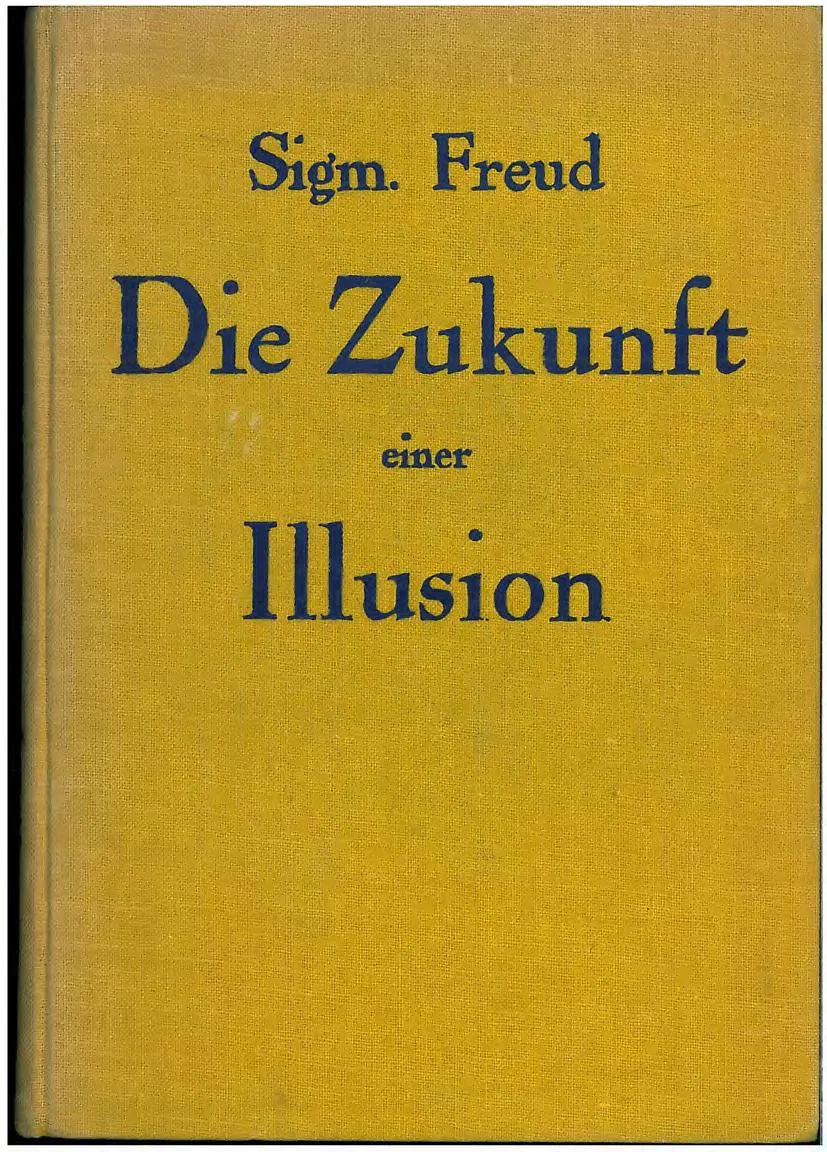
Book
The Future of an Illusion
Die Zukunft einer Illusion
The Future of an Illusion (1927) is Freud's sustained psychoanalytic critique of religion as a cultural institution. It starts from the problem of civilisation. Culture protects people against nature and regulates their relations with one another, but it rests on compulsory labour and the renunciation of drives, so the people who bear its demands are hostile to it. Besides coercion, culture defends itself with psychical possessions that reconcile people to their sacrifices: the internalisation of prohibitions in the super-ego, ideals, art, and above all religious ideas. Freud traces these ideas to human helplessness before nature, fate and death, which revives the infant's helplessness and its longing for a protecting father. The forces of nature are humanised and given a father's features as gods. Religious doctrines are illusions: beliefs whose dominant motive is wish-fulfilment. An illusion differs from an error, and also from a delusion, because it need not contradict reality. The credentials of religious doctrines are weaker than those of any other teaching, and appeals to revelation, to credo quia absurdum or to Vaihinger's philosophy of 'as if' cannot bind reason. In a running dialogue with an imagined opponent, Freud argues that resting cultural prohibitions on God endangers them as belief declines, and he proposes grounding them in reason instead. Religion also preserves, in distorted form, a historical truth about the murdered primal father. It resembles a universal obsessional neurosis of humanity, which humanity may outgrow as children outgrow theirs. Freud pleads for an 'education to reality' and concedes that his own hope may be an illusion. He closes by defending science as no illusion.
- Published
- 1927
- In
- Leipzig, Vienna and Zurich: Internationaler Psychoanalytischer Verlag
- Language
- German