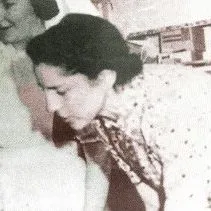
Person
Esther Bick
Psychoanalyst born in Galicia, who studied psychology in Vienna and settled in Britain in 1938, where she worked in the Kleinian tradition. At the Tavistock Clinic she founded the method of psychoanalytic infant observation, in which trainees observe a baby with its family weekly over a long period, and made it part of the training of child psychotherapists. In 'The experience of the skin in early object-relations' (1968) she described the skin as the infant's first experience of being held together, and the 'second skin' of muscular tension or ceaseless activity with which an infant who lacks such containment holds itself together.
- Born
- 1902
- Died
- 1983
- Known for
- Adhesive identification
- Influenced
influenced
- Thomas H. Ogden Bick's account of the skin as a primal container, and of the 'second skin' formations that arise when it fails, informed Ogden's description of the surface sensations that organise the autistic-contiguous mode.
- Donald Meltzer Bick's work on the psychic skin and on adhesive forms of identification underlies Meltzer's model of autistic states and of two-dimensional mental functioning.
supervised
- Donald Meltzer Bick was one of the supervisors of Meltzer's child cases during his training in London.
developed
- Adhesive identification Bick coined the term from her observations of infants who cling to surfaces when no containing object holds them together. Her 1986 paper took the idea further.