Person
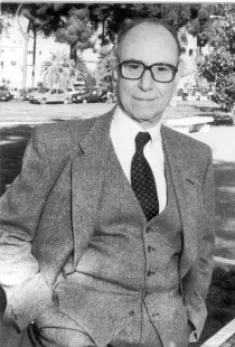
André Green
French psychoanalyst, born in Cairo, who trained in psychiatry at the Sainte-Anne hospital in Paris and became a leading figure of the Société psychanalytique de Paris, which he presided over from 1986 to 1989. He followed Lacan's seminar in the 1960s and broke with him in 1967, then built a Freudian metapsychology open to Winnicott and Bion, centred on affect, representation and the negative. He is known for the dead mother complex, negative narcissism, the work of the negative and his clinical theory of borderline states.
Read more- Born
- 1927
- Died
- 2012
- Known for
- Influenced by
developed
- Oedipus complex 1969 In Un Œil en trop (1969) Green read the negative side of the Oedipus complex, matricide, jealousy and sacrifice, in the tragedies of Aeschylus, Shakespeare and Racine.
- Work of the negative 1993 The phrase comes from Hegel, and Lacan had brought it into psychoanalysis; Green made it the organising concept of his 1993 book, gathering under it repression, negation, disavowal, splitting and negative hallucination, and their destructive forms.
- Negative hallucination Taking up Freud's notion, Green made the negative hallucination of the mother the basis of the framing structure: the mother's erased presence becomes an empty frame within which the child can represent and think.
introduced
- Blank psychosis 1973 Green and Jean-Luc Donnet put forward blank psychosis in L'Enfant de ça (1973): a psychotic core without delusion or hallucination, marked by blankness and paralysis of thought.
- Negative narcissism Green postulated a death narcissism, which he called negative narcissism, beside the life narcissism that seeks the unity of the ego: it aims at the ego's abolition, an aspiration to zero. The papers collected in his 1983 book develop it.
- Disobjectalising function Green named the disobjectalising function as the work of the death drive: an undoing of investment that strips objects, and finally the ego, of their value, set against the objectalising function of the life drives.
influenced by
- Jacques Lacan Green followed Lacan's seminar through most of the 1960s, lecturing there in 1965 and 1967, and later said he had been held by Lacanian thought while also being drawn to British clinical psychoanalysis. Accounts date his attendance 1960–1967 (his own) or 1961–1966 (Carnet PSY).
- Donald Winnicott Winnicott shaped Green's thinking on borderline states, analytic technique and the transitional area. The sources differ on when they first met: 1957 in the Carnet PSY biography, the Edinburgh congress of 1961 in Green's own recollection.
- Wilfred Bion Green first met Bion in 1976. Bion's ideas, together with Winnicott's, informed his views of borderline states and of analytic technique.