Book
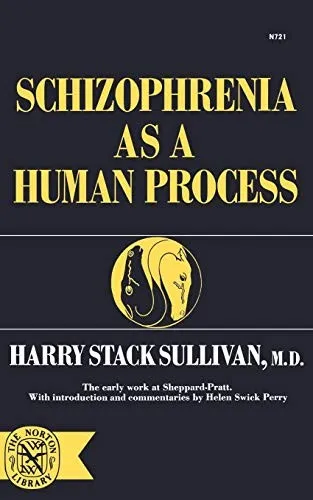
Schizophrenia as a Human Process
Schizophrenia as a Human Process is a posthumous collection of Harry Stack Sullivan's papers on schizophrenia, most of them written between 1924 and the early 1930s out of his clinical research at the Sheppard and Enoch Pratt Hospital in Towson, Maryland, where he worked from 1922 to 1930, from 1925 as director of clinical research. Until then the record of that work was scattered across journals; Helen Swick Perry gathered the papers for the first time, with an introduction and commentaries placing each in the growth of his thought, and W. W. Norton published the volume in 1962. Among them are “Schizophrenia: Its Conservative and Malignant Features” (1924), “The Onset of Schizophrenia” (1927), “Tentative Criteria of Malignancy in Schizophrenia”, “Research in Schizophrenia”, “Socio-Psychiatric Research” and “The Modified Psychoanalytic Treatment of Schizophrenia” (1931). Against the Kraepelinian picture of dementia praecox as a fixed organic deterioration, Sullivan treats schizophrenia as a human way of meeting a crisis in living: even the strangest thinking and symbols of a patient remain within the human range and can be understood with enough contact. The illness typically breaks out in panic, after a collapse of self-esteem before experiences the person cannot integrate, often in the area of sexual adjustment and relations with peers. Its early regressive features are conservative, attempts to reintegrate experience through older modes of thought, while its malignant features mark a turn toward lasting dissociation and deterioration; some patients come out of an episode more capable than before. The outcome depends heavily on the human setting: the papers describe the special ward for young male patients that Sullivan organised apart from the hospital's routine, staffed by attendants he chose, and a psychotherapy modified from psychoanalysis that lowers anxiety and builds a relationship instead of relying on free association. The collection documents the clinical origins of Sullivan's interpersonal psychiatry.
Read more- Published
- 1962
- Language
- English