Article
Fantasy and the Origins of Sexuality
Fantasme originaire, fantasmes des origines, origines du fantasme
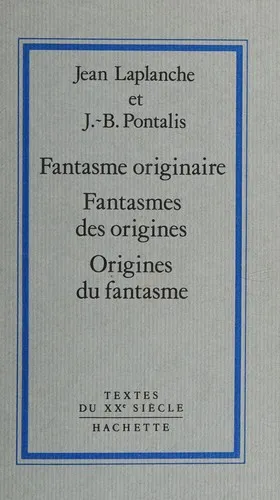
An essay by Jean Laplanche and Jean-Bertrand Pontalis, first published in Les Temps modernes (no. 215, April 1964), translated into English in the International Journal of Psycho-Analysis in 1968 and issued as a book by Hachette in 1985. It starts from Freud's difficulty, in the Wolf Man case, in deciding whether the primal scene had been lived or imagined, a difficulty that led him to seek a foundation beyond both individual experience and imagination in inherited primal fantasies. The authors recover this neglected concept and read the primal fantasies (the primal scene, seduction and castration) as fantasies of origins: like myths, each stages an answer to the enigma of the origin of the subject, of sexuality, or of the difference between the sexes. They describe fantasy as a scenario with multiple entries, in which the subject is present in the scene rather than in a fixed place, and they set Freud's notion beside the Kleinian conception of unconscious phantasy. Laplanche later called the essay the historical recovery of a concept with which he no longer agreed.
- Published
- 1964
- In
- Les Temps modernes, no. 215
- Language
- French