The graph of concepts, people and works

Drawing the graph…

psychopedia
Legend

Nodes

Relations

At rest every relation is a thin grey line. Its colour shows on hover and in focus.

Person

Susan Isaacs

1885–1948

Also known as Susan Sutherland IsaacsSusan FairhurstSusan Sutherland Fairhurst
+3 more Susan S. BrierleySusan BrierleyUrsula Wise

British educational psychologist and psychoanalyst. As the first principal of the experimental Malting House School in Cambridge she recorded how young children think and get along with one another, and from 1933 she headed the new Department of Child Development at the Institute of Education in London. In the Controversial Discussions of the British Psycho-Analytical Society she was Melanie Klein's sharpest advocate: her paper 'The Nature and Function of Phantasy' (read in 1943, published in 1948) defined unconscious phantasy as the mental expression of the drives, at work from the beginning of life.

Susan Sutherland Isaacs (1885–1948), born Susan Fairhurst, was a British educational psychologist and psychoanalyst. Her first book, An Introduction to Psychology1 (1921), appeared under her first married name, Susan S. Brierley, and her advice to parents appeared under the pen name Ursula Wise. From 1924 to 1927 she ran the experimental Malting House School in Cambridge. Its records were the basis of Intellectual Growth in Young Children2 (1930) and Social Development in Young Children3 (1933). The first of these books contested Jean Piaget's account of fixed stages in children's thinking. In 1933 she became head of the new Department of Child Development at the Institute of Education, University of London.

Isaacs joined the British Psycho-Analytical Society in 1921. She was analysed by J. C. Flügel, Otto Rank and Joan Riviere, and from the mid-1920s she was a supporter of Melanie Klein. In the Controversial Discussions she read the first of the Kleinian scientific papers, "The Nature and Function of Phantasy" (read 1943, published 1948). It held that unconscious phantasy is the mental expression of the drives: active from the beginning of life, and the primary content of all unconscious mental processes. The paper was reprinted in the Kleinian group's Developments in Psycho-Analysis4 (1952). Riccardo Steiner calls it her main theoretical contribution, and Thomas Ogden has read it as the outline of a revised theory of thinking. She died in London in 1948.

Life and training

The biography published by the Melanie Klein Trust gives her birth as 24 May 1885, near Bolton in Lancashire. Steiner's entry in the International Dictionary of Psychoanalysis gives 24 March instead. She was the second-youngest of eight children of William Fairhurst, a saddler who became a local journalist and Methodist lay preacher, and Miriam Sutherland. Her mother died when Susan was six. As a teenager she declared herself an agnostic and a socialist, and her father took her out of school. She later took her mother's surname, Sutherland.

At twenty-three she entered the University of Manchester on a two-year course, moved into honours philosophy and graduated with a first. She went on to research children's psychology at Newnham College, Cambridge. She then taught at Darlington Training College and lectured in logic at Manchester. In 1914 she married the botanist William Brierley and moved to London. They separated in 1918, and after their divorce in 1922 she married Nathan Isaacs, a metal merchant. She had met him while teaching a Workers' Educational Association class, and he later wrote the appendix on children's "why" questions in Intellectual Growth in Young Children2. Until 1933 she was also a tutor in psychology at the University of London.

The sources tell her psychoanalytic training differently. The Melanie Klein Trust dates a brief treatment with Flügel to 1920. After it she went to Vienna hoping to be analysed by Sigmund Freud, and had three months of analysis with Otto Rank instead. The Psychoanalytikerinnen lexicon places the analysis with Rank in Berlin, before the one with Flügel. The sources agree that she then had a more formal analysis with Joan Riviere. Steiner and the Psychoanalytikerinnen lexicon date it from 1922; other accounts place it after Klein settled in London in 1926. Isaacs dedicated Social Development in Young Children3 to Riviere, "who has taught me to understand my own childhood". She became an associate member of the British Psycho-Analytical Society in 1921 and a full member in 1923. That year she published her first psychoanalytic paper, on sex differences, and began to see adult and child patients. The Klein Trust says she completed her formal training in 1938.

Career

The Malting House School in Cambridge was founded and paid for by Geoffrey and Margaret Pyke, and Isaacs was its first principal. Her records run from October 1924 to Christmas 1927. The school opened with ten boys aged between two and nearly five. By its last term it had twenty children aged two to eight, from professional families and with a mean mental ratio of 131 (Intellectual Growth in Young Children2). The staff were to provoke the children's own inquiry rather than instruct them, and to bring the real world within their direct experience, an aim Isaacs related to John Dewey. Freedom had limits. The staff stepped in where safety required, kept a framework of routine, and did not allow bullying of weaker or younger children or any cruelty to animals. Isaacs had met Klein on Klein's first visit to Britain in 1925, and Klein visited the school in its first year. According to the historian Michal Shapira, its rules were changed on her advice, since she held that complete freedom was too frightening for young children. Piaget also visited. The school closed after Pyke went bankrupt in 1929.

From 1929 to 1936 Isaacs answered readers' letters in the weekly Nursery World as Ursula Wise, writing about 3,000 words a week. Shapira found that most of the letters came from mothers rather than nurses. Her book for parents, The Nursery Years5 (1929), presented play as the child's work and held that the infant has an emotional life from birth. By Shapira's count it had been reprinted nineteen times and had sold about 100,000 copies by 1971.

In 1933 she became head of the new Department of Child Development at the Institute of Education of the University of London. In the Klein Trust's account, the department had an international reputation within six years. Breast cancer was diagnosed in 1935, and she went on teaching and writing through further treatment. During the Second World War she directed a survey of evacuated children in Cambridge, which she edited as The Cambridge Evacuation Survey (1941), and Klein lived with her there for a time. She sat on the Training Committee of the British Psycho-Analytical Society in 1944–45. In 1948 she was made a CBE for services to education, and she published Childhood and After and a collection of her Ursula Wise columns. She died in London on 12 October 1948. John Rickman wrote her obituary in the International Journal of Psycho-Analysis.

Psychology and education

An Introduction to Psychology1 was written, its preface says, "to meet the first needs of non-professional students of psychology", especially those in Workers' Educational Association classes. It aimed to present a point of view in harmony with a biological outlook. Following William McDougall, Isaacs took psychology to be the study of behaviour, understood as purposive activity. She accepted the findings of John B. Watson's behaviourism but rejected a psychology without consciousness. The book's last chapter, on the conscious and the unconscious, describes the unconscious as made up of wishes that have undergone repression. The conflict that leads to repression looks like one between the child's desires and the world outside. From the first, she argues, it is an internal conflict, since the child's own dependence and urge to imitate give adults their power over it. Of the ways out of such conflict she ranks sublimation above reaction formation. She also reports the Freudian view that the content of the unconscious is mainly infantile sexuality.

Intellectual Growth in Young Children2 argues for qualitative records of children's spontaneous activity over set tests and interviews. It insists that an adult is never a neutral presence: "It is not what we are to ourselves and in our own intention that matters; but what the children make of us." For Isaacs the child's world is a dramatic one, and "make-believe may at any moment slip over into genuine inquiry". She distinguishes thought from phantasy without setting them against each other. The egocentrism of the little child, she argues, is an affair of feeling and phantasy rather than of thought. Development is a progressive penetration of feeling and phantasy by experience, and "the young child as such is no more a psychotic than he is a savage". She cites Klein's play technique for the symbolic meaning that engines, fire, water and animals have for children, which feeds their interest in the real world.

The book's third chapter sets these records against Jean Piaget. Isaacs counts his work among the most significant of the time. She argues, though, that he puts down to maturation what is partly the effect of experience, and that her records give positive evidence against his negative findings. In place of fixed stages she describes a continuous process of socialisation, in which different levels of functioning coexist. She also criticises his clinical method. A child does not yet have a firm body of knowledge to hold on to, so an adult's questions can push it below everyday practical reasoning into the deeper layers of magic and phantasy. In her phrase, "Piaget is digging deeper than he realises". She notes as well that he says little about the mental ratio of the children he studied, though she suspects that question may be irrelevant.

Social Development in Young Children3 draws on thirty-one children over three and a quarter years, and on more than 420 letters from mothers and nurses. It keeps the psychological data and the educational problem in separate parts. The records fall into two divisions. The first covers social relations as love and hate in action: primary egocentric attitudes; hostility and aggression; and friendliness and co-operation. Hostility is either individual, driven by possession, power, rivalry or feelings of inferiority, or that of a group towards newcomers, adults or a temporary scapegoat. The second division covers the deeper sources of love and hate: sexuality, guilt and shame, and the record of one child. To the young child other children are "mainly rivals for the love and approval of adults", and much of their hostility is "due to projected guilt". It is "to the family rather than to the herd" that Isaacs looks to understand human social life. She calls Klein "the pioneer" of child analysis and draws on The Psycho-Analysis of Children6, which appeared just before her own book went to press. Yet she holds that analysis and education are distinct tasks, and that knowledge of the unconscious as such is of limited direct use to the practical educator. She denies that the Malting House was a psychoanalytic school and names Dewey as her inspiration. She argues that it is false that the young child learns best by corporal punishment, and that milder methods of training lessen the grip of guilt, though they cannot remove it.
Unconscious phantasy

The Controversial Discussions of the British Psycho-Analytical Society, in the early 1940s, turned on one question: were the views of Klein and her followers compatible with psychoanalysis as Anna Freud and her colleagues from Vienna and Berlin understood it? According to Steiner, Klein chose Isaacs to give the first scientific paper for her clear theoretical mind and her academic background in psychology, logic and education. "The Nature and Function of Phantasy" was read on 27 January 1943. It was the first of four Kleinian papers put before a committee of Edward Glover, Marjorie Brierley and James Strachey, chaired by Ernest Jones. The third paper, "On Regression", was given by Isaacs and Paula Heimann on 17 December 1943.

In The Nature and Function of Phantasy7 Isaacs widened Freud's notion of unconscious phantasy, spelling it with "ph" to mark its unconscious character. Phantasy is the mental expression of the instincts: "There is no impulse, no instinctual urge or response which is not experienced as unconscious phantasy." In a break with Freudian tradition, she held that phantasy is present from the beginning of life. It arises from the earliest bodily experience and works as a primitive form of thinking, out of which object relations, language and self-awareness grow. External reality is taken into phantasy step by step, but phantasy's source stays in the impulses, and it expresses psychic reality rather than simple wish-fulfilment. She distinguished the abstract mechanism of introjection from the phantasy of incorporating an object, the phantasy being the way the mechanism is lived. She described the transference as "almost entirely a construct of unconscious phantasy", so that its changes in the session let the analyst read the patient's phantasies. Steiner adds that she tried, where she could, to link these ideas to academic psychology and epistemology.

An abridged version of the paper appeared in the International Journal of Psycho-Analysis in 1948. It was reprinted in Developments in Psycho-Analysis4 (1952), the Kleinian group's book, edited by Riviere with a preface by Jones. The book also contains papers by Klein, Heimann and Riviere, and the chapter on regression that Isaacs wrote with Heimann.

Influence and reception

Steiner writes that the Malting House books were "immediately acknowledged as a new way of looking at the development of children", and that they influenced Piaget himself. He also credits the Ursula Wise columns, which drew mainly on Klein, with changing how children in Britain were brought up. Shapira's 2017 study of the columns describes Isaacs teaching her readers to "speak Kleinian" by putting Klein's ideas into ordinary language. The columns also opposed the behaviourist and punitive methods of John Watson and Truby King. Shapira concludes that Isaacs was "an essential link between expert theories and popular child-rearing culture". The Melanie Klein Trust writes that in her lifetime she was admired for her intellectual gifts and excelled as a writer and teacher.

Within psychoanalysis, Steiner calls her theoretical contributions fundamental to the Controversial Discussions, and the Melanie Klein Trust calls the phantasy paper a pivotal contribution to them. The Kleinian positions she set out were contested by Anna Freud's group, which Steiner says Glover joined as one of Klein's fiercest critics. In Steiner's account, the Discussions ended in a compromise that kept the Society together as three groups: Freudians, Kleinians and Independents.

Thomas Ogden gave the paper a close reading, published in 2011 and collected in Creative Readings8 (2012). He argues that it contributes to a radically revised psychoanalytic theory of thinking. Perhaps her most important idea, in his reading, is that phantasy is the process that creates meaning: all meanings in unconscious life exist as phantasy, whether feelings, impulses, defences or bodily experiences. Ogden extends her ideas in three ways. He treats phantasying as the whole of unconscious thinking. He treats the transference as a form of phantasying, in which past emotional events too disturbing to be experienced at the time are thought for the first time. And he holds that phantasy serves a need to know the truth of one's experience. He relates her concept to Wilfred Bion's alpha function, and contrasts it with Ronald Fairbairn's view of unconscious internal object relationships.

Selected works

Her books include An Introduction to Psychology1 (1921, as Susan S. Brierley), The Nursery Years5 (1929), The Biological Interests of Young Children (1929), Intellectual Growth in Young Children2 (1930, with an appendix by Nathan Isaacs), The Children We Teach (1932), Social Development in Young Children3 (1933), The Psychological Aspects of Child Development (1935), The Cambridge Evacuation Survey (as editor, 1941) and Childhood and After (1948). Her main psychoanalytic paper is The Nature and Function of Phantasy7 (read 1943, published 1948). It was reprinted in Developments in Psycho-Analysis4 (1952), with her chapter on regression written with Heimann.

Ideas

  • 1943 developed Unconscious phantasy
    In 'The Nature and Function of Phantasy', read in 1943 at the opening of the Controversial Discussions and published in 1948, Isaacs widened Freud's notion of unconscious phantasy: phantasy is the mental expression of every drive, is active from the beginning of life, and is the primary content of all unconscious mental processes.
  • 1943 developed Transference
    Isaacs treats the transference as made almost wholly of unconscious phantasy, so that its changes in the session let the analyst read the patient's phantasies.
  • 1943 developed Introjection
    Isaacs distinguishes the abstract mechanism of introjection from the phantasy of incorporating an object, and treats the phantasy as the way the mechanism is lived by the subject.

Influence

Conflict

  • 1930 disputed with Jean Piaget
    In Intellectual Growth in Young Children (1930) Isaacs set her Malting House records against Piaget's stage theory, arguing that he put down to maturation ways of thinking that depend largely on experience and that appear much earlier under favourable conditions.
  • 1943 disputed with Anna Freud
    In the Controversial Discussions of the British Psycho-Analytical Society, Isaacs argued the Kleinian case against Anna Freud and her group; her paper on phantasy opened the scientific discussions in 1943.

Lineage

  • analysed by Otto Rank
    A short analysis of about three months in the early 1920s. The sources disagree on the details: the Melanie Klein Trust says she went to Vienna hoping to be analysed by Freud and settled for Rank after a brief treatment with Flügel in 1920, while Psychoanalytikerinnen places the analysis in Berlin and before Flügel.
  • analysed by J. C. Flügel
    The Melanie Klein Trust dates a brief treatment with Flügel to 1920, before her analysis with Rank; Psychoanalytikerinnen has her continue with Flügel after Rank.
  • analysed by Joan Riviere
    A more formal personal analysis in London, which Isaacs undertook after joining Klein's circle. The sources give different start dates: 1922 in Psychoanalytikerinnen, 1927 in other accounts. She dedicated Social Development in Young Children (1933) to Riviere.

Affinity

  • influenced by Melanie Klein
    Klein's ideas already shaped the Malting House School, which she visited in its first year, and Isaacs's theory of phantasy builds on Klein's clinical findings with young children.
  • collaborated with Melanie Klein
    Isaacs worked with Klein on the Kleinian case in the Controversial Discussions and on the joint book Developments in Psycho-Analysis, published in 1952 after her death.
  • collaborated with Paula Heimann
    Isaacs and Heimann wrote the chapter 'Regression' together for Developments in Psycho-Analysis (1952), the joint book of the Kleinian group.
  • collaborated with Joan Riviere
    Besides being her analyst, Riviere was Isaacs's co-author in Developments in Psycho-Analysis (1952), which Riviere edited.

Works

  • 1921

    An Introduction to Psychology

    Susan Isaacs's first book, published under the name Susan S. Brierley. Its preface says it was written to meet the first needs of non-professional students of psychology, especially those in Workers' Educational Association classes, and from a point of view in harmony with a biological outlook. Part I sets out the scope and method of psychology: its definitions, methods and fields of inquiry. Following William McDougall, Isaacs takes psychology to be the study of behaviour understood as purposive activity. She accepts the findings of behaviourism but rejects John B. Watson's psychology without consciousness. Part II takes up general problems: the 'wish', organism and environment, and three chapters on instinct and intelligence. It closes with a chapter on the conscious and the unconscious. There she presents the unconscious as made up of repressed wishes, and argues that the conflict leading to repression, though it seems to set the child against the outer world, is from the start an internal one. She ranks sublimation above reaction formation as an outcome of such conflict, and reports the Freudian view that the unconscious consists mainly of infantile sexuality. A reading list, which includes Freud's On Dreams, ends the book.

    Susan Isaacs London: Methuen and Co. (published under the name Susan S. Brierley) Copyright Life + 70 years Public domain The last author or translator died in 1948; public domain since 2019.United States Public domain Published in 1921; public domain since 2017.

  • 1929

    The Nursery Years: The Mind of the Child from Birth to Six Years

    The Nursery Years (London: George Routledge and Sons, 1929) is Susan Isaacs's short book for parents on the mental life of children from birth to six. Isaacs observes that the physical care of infants had passed from custom to science, while the care of their minds was still left to mood, habit and moral principle. Since the most important events of a child's mental life happen before school, it is parents who need to understand why a child behaves as it does, and to bring intelligence as well as affection to the task. Drawing on psychoanalysis and on the developmental research of Gesell, Binet, Burt and Terman, she presents play as the child's work and the means by which it grows, and holds that the infant has a rich emotional life from birth, with wants, fears, anger, love and hate. She traces the early centrality of the mouth, the meaning of feeding as love, the biting phase and the feeling invested in the bowel and in toilet training, and asks for patience, gradual weaning and calm prevention rather than punishment. Developmental norms, built from the observation of many children, help parents neither baby the child nor demand too much of it. Chapters on the child from two to six, in relation to the world and to its parents, are followed by answers to common problems, advice on playthings and a short list of don'ts for parents. Enlarged in 1932, the book was reprinted many times until 1971 and became Isaacs's most widely read work for parents.

    Susan Isaacs London: George Routledge and Sons Copyright Life + 70 years Public domain The last author or translator died in 1948; public domain since 2019.United States Public domain Published in 1929; public domain since 2025.

  • 1930

    Intellectual Growth in Young Children

    Susan Isaacs's account of how young children discover, reason and think, drawn from the records she kept as principal of the Malting House School in Cambridge from October 1924 to Christmas 1927. The children came from professional families and were well above average in mental ratio; in the last term there were twenty of them, aged two to eight. Notes were taken during the children's spontaneous activity and written up the same day, and Isaacs argues for such qualitative records over set tests. The school aimed to provoke the children's own inquiry and bring the real world within their direct experience, within limits of safety and routine and with no bullying or cruelty to animals. The book traces how the child's dramatic play and phantasy pass into genuine inquiry, and holds that egocentrism belongs to feeling and phantasy rather than to thought. Its third chapter sets the records against Jean Piaget: Isaacs finds reasoning appearing earlier than he allows, a continuous process of socialisation rather than fixed stages, and a clinical method that reaches into phantasy. A chapter on the children's interest in animals discusses their care, dissection and the adults' own inconsistency about killing. An appendix by Nathan Isaacs analyses children's 'why' questions.

    Susan Isaacs and Nathan Isaacs London: George Routledge and Sons (with an appendix on children's 'why' questions by Nathan Isaacs) Copyright Life + 70 years In copyright The last author or translator died in 1966; protected through 2036.United States Public domain Published in 1930; public domain since 2026.

  • 1933

    Social Development in Young Children: A Study of Beginnings

    The companion volume to Intellectual Growth in Young Children, dedicated to Joan Riviere. Susan Isaacs draws on her records of thirty-one children at the Malting House School over three and a quarter years, and on more than four hundred letters from mothers and nurses, to describe the beginnings of children's social life. Part I gives the psychological data. The records are arranged under social relations, as love and hate in action, and under the deeper sources of love and hate. The first heading covers egocentric attitudes, individual and group hostility, and friendliness and co-operation. The second covers sexuality, guilt and shame, and the record of a single child. A chapter then sets out the theory of development. Drawing on Melanie Klein's child analysis, Isaacs treats other children as first of all rivals for the love of adults, reads much hostility as projected guilt, and looks to the family rather than the herd to understand social life. She finds guilt arising whatever the upbringing: harsh treatment intensifies it and milder methods lessen its hold. Part II takes up the educational problem. It holds that education and psychoanalysis are distinct processes, and discusses the problems and crises of early social development, arguing that the young child does not learn best by corporal punishment.

    Susan Isaacs London: George Routledge and Sons Copyright Life + 70 years Public domain The last author or translator died in 1948; public domain since 2019.United States Status unknown Published in 1933; its copyright notice and renewal have not been checked.

  • 1948

    The Nature and Function of Phantasy

    Read to the British Psycho-Analytical Society in 1943 as the opening paper of the Controversial Discussions, and later reprinted in Developments in Psycho-Analysis (1952).

    Susan Isaacs International Journal of Psycho-Analysis 29: 73–97 Copyright Life + 70 years Public domain The last author or translator died in 1948; public domain since 2019.United States Status unknown Published in 1948; its copyright notice and renewal have not been checked.

  • 1952

    Developments in Psycho-Analysis

    A collection of papers by Melanie Klein, Paula Heimann, Susan Isaacs and Joan Riviere, edited by Riviere with a preface by Ernest Jones and published by the Hogarth Press in 1952. The publisher presents it as a survey of the advances in psychoanalytic knowledge that came from Klein's work, whose main discoveries concern the earliest phases of mental life. Its central thesis is that unconscious feeling and impulse, called phantasy, is the source of all human behaviour, however much it is changed on its way into outward action or conscious thought. On this account Freud first stated the idea but left problems open, and Klein's steady attention to unconscious phantasy brought them nearer to a solution. After a general introduction, the chapters treat psychical conflict in earliest infancy (Riviere), the nature and function of phantasy (Isaacs), introjection and projection in early infancy, regression (Heimann and Isaacs), the emotional life of the infant, the observation of young infants' behaviour, anxiety and guilt, schizoid mechanisms (Klein), and the life and death instincts. Several began as papers of the Controversial Discussions or in the International Journal of Psycho-Analysis. The book is addressed to students of psychoanalysis, workers in related medical fields, child psychologists and the informed lay public.

    Melanie Klein, Paula Heimann, Susan Isaacs, and Joan Riviere London: Hogarth Press and the Institute of Psycho-Analysis (International Psycho-Analytical Library, no. 43); edited by Joan Riviere, with a preface by Ernest Jones Copyright Life + 70 years In copyright The last author or translator died in 1982; protected through 2052.United States Status unknown Published in 1952; its copyright notice and renewal have not been checked.

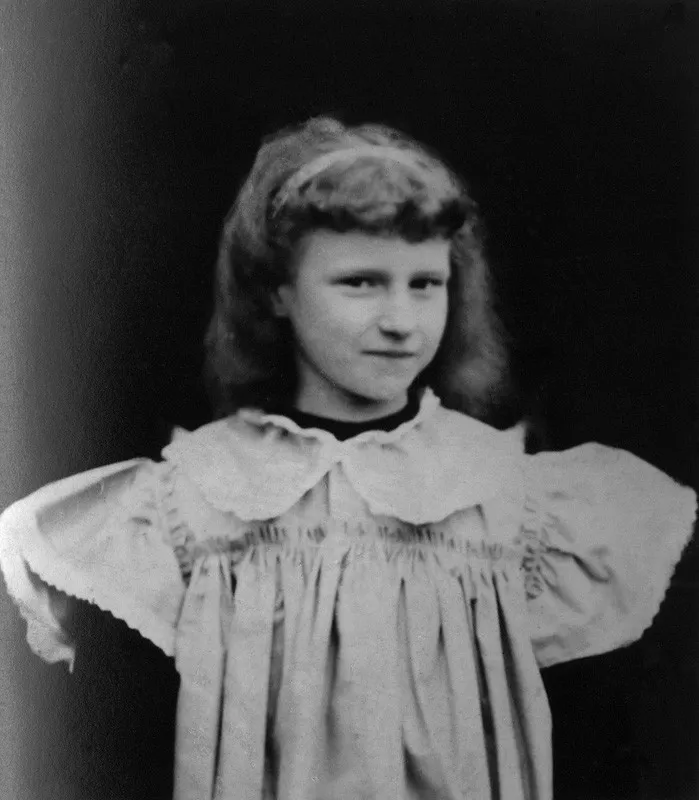
  • Susan Isaacs (then Susan Fairhurst) as a child, photographed by an unknown photographer in the 1890s; copy negative by Elliott & Fry (National Portrait Gallery, London)
    Susan Isaacs (then Susan Fairhurst) as a child, photographed by an unknown photographer in the 1890s; copy negative by Elliott & Fry (National Portrait Gallery, London) Image credit: 1890Public domainWikimedia Commons

References

  1. An Introduction to Psychology1921
  2. Intellectual Growth in Young Children1930
  3. Social Development in Young Children: A Study of Beginnings1933
  4. Developments in Psycho-Analysis1952
  5. The Nursery Years: The Mind of the Child from Birth to Six Years1929
  6. The Psycho-Analysis of Children1932
  7. The Nature and Function of Phantasy1948
  8. Creative Readings: Essays on Seminal Analytic Works2012
Esc

↑ ↓ to move · Enter to go · Esc to close