The graph of concepts, people and works

Drawing the graph…

psychopedia
Legend

Nodes

Relations

At rest every relation is a thin grey line. Its colour shows on hover and in focus.

Person

Melanie Klein

1882–1960

Pioneer of child analysis whose theory of early object relations founded the Kleinian school.

Melanie Klein (1882–1960) was a psychoanalyst born in Vienna who worked in Budapest, Berlin and, from 1926, London, and whose theory of early object relations founded the Kleinian school. Analysed first by Sándor Ferenczi and later by Karl Abraham, she devised the play technique, treating a child's play as the equivalent of free association and interpreting it directly (The Psychological Principles of Infant Analysis1). From her child analyses she drew a theory of the first year of life that placed a harsh super-ego and the Oedipus complex far earlier than Sigmund Freud had placed them, and that described the infant's mind as peopled by internal objects in unconscious phantasy.

Her concepts of the depressive position (1935) and the paranoid-schizoid position (1946), of splitting, projective identification, the manic defence, reparation, envy and gratitude, form the core of Kleinian theory. Her disagreements with Anna Freud, opened in the 1927 Symposium on Child Analysis2 and fought out in the Controversial Discussions of 1942–1944, shaped the British Psycho-Analytical Society. Among those she analysed were Hanna Segal, Herbert Rosenfeld, Wilfred Bion and Donald Meltzer. Her work was taken up, contested or reworked by Donald Winnicott, Ronald Fairbairn, John Bowlby, Otto Kernberg, Thomas Ogden and Julia Kristeva.

Life and training

Melanie Reizes was born in Vienna on 30 March 1882, the youngest of four children. Her father, Moriz Reizes, was a doctor from an orthodox Jewish family in Lemberg; her mother was Libussa Reizes, née Deutsch. Her sister Sidonie died in 1886 and her brother Emmanuel in 1902. She passed the gymnasium entrance examinations in 1898 and had long meant to study medicine and become a psychiatrist. At seventeen she became engaged to her second cousin Arthur Klein, a student of chemical engineering, and the engagement ended those plans. They married on 31 March 1903 and had three children: Melitta (1904), Hans (1907) and Erich (1914). The family lived in Rosenberg and Krappitz before moving to Budapest around 1910. In these years Klein suffered recurrent depressions.

In 1914, in Budapest, she read Freud's On Dreams and began an analysis with Ferenczi. She heard Freud speak at the Budapest congress of 1918. In July 1919 she presented a study of her son Erich to the Hungarian Psychoanalytic Society, and soon afterwards became a member. The expanded paper, her first publication, appeared in 1921 as Eine Kinderentwicklung3 (in English, The Development of a Child, 1923). In it the boy is called Fritz, and the paper follows his sexual enlightenment.

In the autumn of 1919, during the White Terror, she left Budapest. In 1920 she met Joan Riviere at the congress in The Hague.

Early in 1921 Klein settled in Berlin. She became an associate member of the Berlin Psychoanalytic Society in 1922 and a full member in February 1923. In 1923 she took on her first child analysis, of "Rita", aged two and a half, under Abraham's supervision. In 1924 she treated the children she later called Peter, Ruth, Trude and Erna, and her paper at the Salzburg congress that year was controversial. She began an analysis with Abraham early in 1924; it ended with his death on Christmas Day 1925. She separated from Arthur Klein in April 1924. Alix Strachey came to admire her work. In July 1925, encouraged by Ernest Jones, she gave a series of lectures in London at the Stephens' home in Gordon Square.

London, 1926–1939

In September 1926, at Jones's invitation, Klein settled in London, where she began analysing Jones's wife and children. Her ideas fed directly into Jones's The Early Development of Female Sexuality4.

In 1927 Anna Freud's lectures in Berlin set out an approach to child analysis opposed to Klein's, and Jones arranged a symposium in the British Society in reply, to Freud's displeasure. Klein's contribution to the Symposium on Child Analysis2 answered Anna Freud point by point. She rejected an educational, reassuring preparatory phase. She held that children develop a full transference, negative as well as positive. And because the child's super-ego was already severe, she argued, child analysis could go as deep as the analysis of adults.

Klein was elected a member of the British Society on 2 October 1927. That year she read Early Stages of the Oedipus Conflict5 at the Innsbruck congress. In 1929 she began treating "Dick", the subject of The Importance of Symbol-Formation in the Development of the Ego6, read at the Oxford congress. Her first book, The Psycho-Analysis of Children7, appeared in 1932 in German in Vienna and in English from the Hogarth Press, translated by Alix Strachey. Its first part sets out the play technique at different ages; the second sets out her theory of the early super-ego, of Oedipal tendencies in the first year, and of the place of sadism and anxiety in development.

The 1930s brought personal blows. From 1933 her daughter Melitta attacked her publicly and allied herself with Edward Glover. In April 1934 her son Hans died in a mountain accident in the Tatras.

On 16 January 1935 Klein presented A Contribution to the Psychogenesis of Manic-Depressive States8, the paper that introduced the depressive position. In the same period she analysed Paula Heimann (from 1935) and Roger Money-Kyrle (from 1936). On James Strachey's advice she supervised Winnicott from 1935, and she also supervised Bowlby in the 1930s. In 1936 she and Riviere gave two public lectures, published together as Love, Hate and Reparation9. Klein's part, "Love, Guilt and Reparation", follows how guilt over phantasied harm moves the wish to make reparation, through love, family life, friendship, work and creativity. She presented her paper on mourning at the Paris congress of 1938. Sigmund and Anna Freud arrived in London on 6 June 1938.

War and the Controversial Discussions

On the outbreak of war Klein moved to Cambridge and then to Pitlochry in Scotland (1940–1941). There she revised Mourning and its Relation to Manic-Depressive States10. In late April 1941 she began a four-month analysis of a ten-year-old boy, "Richard". Its session-by-session record, the fullest account of her child technique, was published after her death as Narrative of a Child Analysis11. She returned to London in September 1941.

Between February and June 1942 a series of Extraordinary Meetings of the British Society was held, at which Anna Freud and Glover challenged Klein's views. From 21 October 1942 these gave way to the Controversial Discussions between the Kleinians and the Viennese Freudians around Anna Freud. The discussions opened in 1943 with Susan Isaacs's paper The Nature and Function of Phantasy12, which set out the Kleinian concept of unconscious phantasy. Glover resigned in January 1944. The last discussion, on 1 March 1944, concerned Klein's paper on the emotional life of the infant.

Segal and Rosenfeld, both analysed by Klein, qualified in 1945. That year Klein published The Oedipus Complex in the Light of Early Anxieties13.

Later years

On 4 December 1946 Klein read Notes on Some Schizoid Mechanisms14, introducing the paranoid-schizoid position and projective identification. In the same year the British Society came to be organised into "A", "B" and "Middle" groups. From about 1946 into the early 1950s she analysed Bion. Her collected papers appeared as Contributions to Psycho-Analysis 1921–194515 in 1948.

In 1952, Developments in Psycho-Analysis16, with papers by Klein, Heimann, Isaacs and Riviere, edited by Riviere and with a preface by Jones, set out Kleinian theory as it stood after the Controversial Discussions. It included Klein's Some Theoretical Conclusions Regarding the Emotional Life of the Infant17 and a revised version of the schizoid mechanisms paper. Meltzer was in analysis with her from 1954 until her death.

On 1 February 1955 she founded the Melanie Klein Trust, with Bion, Heimann, Betty Joseph, Money-Kyrle and Segal as trustees. The same year she, Heimann and Money-Kyrle edited New Directions in Psycho-Analysis18, a collection marking her seventieth birthday. In July 1955 she read "A Study of Envy and Gratitude" at the Geneva congress. It was among the most controversial of her papers, and with the help of Elliott Jaques she expanded it into the book Envy and Gratitude19 (1957). In November 1955 she asked Heimann to step down as a trustee, and Heimann left the Kleinian group.

From 1956 she worked with Jaques on organising her notes on Richard. In 1959 she read "On the Sense of Loneliness" at the Copenhagen congress. An autobiography she began in 1953 was left unfinished and was published in 2016. She died of colon cancer on 22 September 1960.

Theory

Klein's theory grew out of her technique. In The Psychological Principles of Infant Analysis1 she argued that play expresses the child's phantasies symbolically, as dreams do, and can be interpreted like free association. She also argued that Oedipal tendencies and a strict super-ego appear far earlier than had been assumed. Looking back in The Psycho-Analytic Play Technique20, she described several elements of the method: the playroom, the child's own set of small toys, and interpretation that includes the negative transference. She also described how the technique led her to her theory of early anxieties, internal objects and positions.

Personification in the Play of Children21 showed that the characters children invent in play reduce to a few roles: a persecuting super-ego, the id or ego, and a helping figure. The super-ego, she argued, is split into its identifications and projected outwards; this is the first use of splitting in her work. The analyst has to accept every role offered, including the hostile ones.

In Early Stages of the Oedipus Conflict5 she dated the onset of the Oedipus conflict and of the super-ego to the frustrations of weaning towards the end of the first year, when oral and anal sadism are at their height. She proposed a "femininity phase" in both sexes, and traced the epistemophilic instinct to curiosity about the mother's body. She pursued that theme in A Contribution to the Theory of Intellectual Inhibition22. In The Psycho-Analysis of Children the early super-ego is harsh and pregenital, against Freud's view that the super-ego is the heir of the Oedipus complex.

The analysis of Dick, a four-year-old whose symbol formation had almost come to a halt, led her to argue that anxiety drives symbol formation by moving interest on to new objects (The Importance of Symbol-Formation6). In Infantile Anxiety-Situations Reflected in a Work of Art and in the Creative Impulse23 the wish to make good the injury done to the mother first appears. That wish later became her concept of reparation.

The 1935 psychogenesis paper8 introduced the depressive position, which she dated to around the middle of the first year. The infant comes to experience the mother as a whole person who is both loved and hated, rather than as split good and bad part-objects, a notion taken from Abraham's idea of partial love. This brings depressive anxiety and guilt for the loved object, and the wish to make reparation. The paper also described the manic defence, made up of omnipotence, denial and triumphant control. It set reparation within the depressive position and distinguished it from manic reparation.

Mourning and its Relation to Manic-Depressive States10 extended this account to mourning. Normal mourning, she argued, is a modified and transitory manic-depressive state. A real loss revives the fear of having lost the good internal objects, and mourning succeeds by reinstating them; the infantile neurosis is the means by which the depressive position is worked through. Triumph, control and contempt obstruct this Working through. She saw the depressive position as never finally achieved: it is reworked throughout life and alternates with the paranoid-schizoid position.

The 1945 paper on the Oedipus complex, drawing on the cases of Richard and Rita, revised her earlier account in the light of the depressive position. It held that love and the wish for reparation, as well as sadism, shape the early Oedipus situation, and ended with a point-by-point comparison with Freud.

In Notes on Some Schizoid Mechanisms14 she described the paranoid-schizoid position of the first three or four months. At this stage an ego that exists from birth, but lacks cohesion, meets persecutory anxiety rooted in the death instinct and felt as a fear of annihilation. It defends itself by splitting both the object and itself, and by idealization, denial and omnipotence. In projective identification, split-off parts of the self, good as well as bad, are projected "into" the mother rather than merely "on to" her, so that she is identified with them; in excess this leaves the ego depleted. The introjected good breast becomes a focal point of the ego. She placed the fixation points of schizophrenia in this position and those of manic-depressive illness in the depressive one, and held that normal splitting is a forerunner of repression. She took the word "schizoid" from Fairbairn, hence "paranoid-schizoid", while rejecting his neglect of anxiety, aggression and the death instinct. The term projective identification appears once in the 1946 paper; the sentence explicitly proposing it as a name was added in the version revised for Developments in Psycho-Analysis.

A Contribution to the Theory of Anxiety and Guilt24 set the two anxieties side by side, against Freud's late theory of anxiety: persecutory anxiety is fear for the self, depressive anxiety is fear and guilt for the object. Some Theoretical Conclusions (1952) gave her most systematic account of the first year. The Origins of Transference25 rooted transference in the earliest object relations and treated it as a "total situation" carried from the past into the present.

In Envy and Gratitude19, her last major theoretical work, she proposed a primary envy of the good, feeding breast, distinguished it from greed, and paired it with gratitude as an expression of the life instinct.
Influence and reception

Within the Kleinian group, Segal became Klein's foremost expositor, in Introduction to the Work of Melanie Klein26 and the short study Klein27, and extended her ideas on symbolism in Notes on Symbol Formation28. Rosenfeld's Analysis of a Schizophrenic State with Depersonalization29 was the first clinical paper to use the newly named projective identification, and in Psychotic States30 he extended her account of envy to narcissism. Meltzer's The Kleinian Development31 presented Freud, Klein and Bion as stages of one method, and read Narrative of a Child Analysis week by week as the turning point of her thought. Klein also supervised Martha Harris.

Klein's relations with the British independents were close and contested. Winnicott's membership paper "The Manic Defence" drew on her work. In The Maturational Processes and the Facilitating Environment32 he reworked the depressive position as the capacity for concern; in a 1962 appraisal he credited her contribution but faulted her for underrating the infant's dependence on the environment. Fairbairn drew on her in A Revised Psychopathology of the Psychoses and Psychoneuroses33, and she in turn took up his account of schizoid states. Bowlby, whom she had supervised, came to stress real events, separation and loss, against her emphasis on phantasy. Isaacs, whose Malting House School Klein had visited in its first year, gave the Kleinian concept of phantasy its fullest statement.

Beyond Britain, Kernberg drew on her account of primitive defences in his theory of borderline organisation in Object Relations Theory and Clinical Psychoanalysis34, within an ego-psychological framework that he held her theory lacked. In On Projective Identification35 Ogden described her concept as at once an unconscious phantasy, a mode of communication, a primitive object relation and a pathway for psychological change. In The Matrix of the Mind36 he recast the depressive position as the birth of a historical subject, held in continuous tension with more primitive modes of experience. Kristeva devoted the middle volume of her trilogy on female genius, Le Génie féminin: Melanie Klein37, to her, presenting her as the most original innovator in psychoanalysis after Freud and taking up the archaic mother, matricide and the depressive position, themes that run through Kristeva's work from Soleil noir onward.

Selected works

Klein's first paper was Eine Kinderentwicklung3 (1921). Her early technique and its theory are set out in The Psychological Principles of Infant Analysis1 (1926), the Symposium on Child Analysis2 (1927), Early Stages of the Oedipus Conflict5 (1928), Personification in the Play of Children21 (1929), The Importance of Symbol-Formation in the Development of the Ego6 (1930) and the book The Psycho-Analysis of Children7 (1932).

The depressive position is developed in A Contribution to the Psychogenesis of Manic-Depressive States8 (1935), Love, Hate and Reparation9 (1937, with Riviere), Mourning and its Relation to Manic-Depressive States10 (1940) and The Oedipus Complex in the Light of Early Anxieties13 (1945). The early papers were collected in Contributions to Psycho-Analysis 1921–194515 (1948).

The later theory is found in Notes on Some Schizoid Mechanisms14 (1946), A Contribution to the Theory of Anxiety and Guilt24 (1948), Developments in Psycho-Analysis16 (1952, with Heimann, Isaacs and Riviere), The Origins of Transference25 (1952), The Psycho-Analytic Play Technique20 (1955) and Envy and Gratitude19 (1957). Narrative of a Child Analysis11 appeared posthumously in 1961.

Ideas

introduced

  • 1926 Play technique
    Klein worked out the play technique with her first child patients in Budapest and Berlin and set out its principles in 1926: the child's play, treated like free association, is interpreted directly. In 1955 she looked back on its history and on how it led to her theory.
  • 1929 Splitting
    In 1929 Klein first describes the child splitting its super-ego and imagos into separate good and threatening figures, which it projects into the roles of its play. From 1935 to 1946 she makes this the splitting of the object, the breast first, into good and bad. Her precursors are Rado's good and bad mother-imago (1928) and Freud's splitting of the ego (1927, 1938), which is a different idea.
  • 1935 Depressive position
    Klein first used the term in this 1935 paper and elaborated it in 'Mourning and its Relation to Manic-Depressive States' (1940).
  • 1935 Internal object
    In her 1935 paper on manic-depressive states Klein describes the good and bad objects the infant takes into itself, and makes the fate of the loved internal object central to the depressive position. In 1940 she shows mourning to be the work of re-establishing it within.
  • 1935 Manic defence
    Klein describes the manic defences of omnipotence, denial and triumphant control in her 1935 paper as a way of escaping depressive anxiety. In 1940 she shows how they obstruct mourning.
Show all 13 Show fewer
  • 1935 Part-object
    Taking Abraham's notion of partial love as her starting point, Klein contrasts the infant's relation to part-objects, above all the breast, with the move to the whole object that marks the depressive position (1935). She restates the contrast in her 1952 account of infant emotional life.
  • 1946 Projective identification
    In 'Notes on some schizoid mechanisms' (1946) Klein describes the infant's phantasy of expelling split-off parts of the self into the mother, so that the mother is identified with the hated parts of the self. The term 'projective identification' appears once in the 1946 paper; the sentence explicitly proposing it as a name for these processes was added in the revised version printed in Developments in Psycho-Analysis (1952).
  • 1957 Envy
    Klein first read the theory as 'A Study of Envy and Gratitude' at the Geneva congress in July 1955 and published it in expanded form as Envy and Gratitude (1957). Envy appears in her earlier work on the early Oedipus conflict, but here she makes primary envy of the good breast a concept of its own and pairs it with gratitude.
  • 1957 Gratitude
    In Envy and Gratitude (1957) Klein makes gratitude a psychoanalytic concept: the capacity, grounded in a securely established good object, to enjoy what is received and to wish to give back.
  • Reparation
    Klein spoke of the wish to make good the injury done to the mother in her 1929 paper on a work of art and the creative impulse, and in 1935 set reparation within the depressive position, distinguishing it from manic reparation.
  • Persecutory anxiety
    Klein contrasts paranoid fears for the self with depressive anxiety for the loved object as early as 1935. In 1948 she sets out persecutory anxiety systematically, rooting it in the death instinct felt as a fear of annihilation.
  • Depressive anxiety
    Introduced with the depressive position in 1935 as anxiety and guilt for the loved object. In 1948 Klein set it out systematically against persecutory anxiety.

developed

  • 1928 Epistemophilic instinct
    Klein takes up Freud's instinct for knowledge and ties it to the early Oedipus conflict and to sadistic phantasies about the inside of the mother's body (1928). In 1931 she traces intellectual inhibition to the anxiety this bond creates.
  • 1930 Symbolism
    Through the analysis of Dick, Klein argues that anxiety about sadistic phantasies drives the child to move its interest from the mother's body to ever new objects. Symbol formation is therefore the basis of the child's relation to the outside world, and of its sublimations.
  • 1946 Introjection
    Klein makes introjection, together with projection, one of the ego's first means of dealing with anxiety: the introjected good breast becomes a core of the ego, while introjected persecutors feed fears from within. Normal development depends on an optimal balance between the two processes; excessive projection is answered by an introjection felt as a forceful entry from outside.
  • 1946 Splitting
    In 1946 Klein makes splitting the central defence of the earliest, paranoid-schizoid position. The breast is divided into an idealised good object and a persecuting bad one, and since the ego cannot split its object without splitting itself, the division runs through the self too.
  • 1946 Idealization
    Klein makes idealization one of the earliest defences of the paranoid-schizoid position. Tied to splitting, it exaggerates the good aspects of the breast as a safeguard against fear of the persecuting breast.
Show all 7 Show fewer
  • 1952 Denial
    Counts denial, with splitting, omnipotence and idealization, among the processes that prevail in the first months of life, the paranoid-schizoid position, and traces the transference back to these earliest processes.
  • Unconscious phantasy
    Isaacs credits Klein's analyses of young children with giving unconscious phantasy its growing weight; her own paper gave theoretical form to the concept as Klein used it.

reworked

  • 1928 Oedipus complex
    Klein dates the onset of the Oedipus conflict to the latter part of the first year, set off by the frustration of weaning and coloured by oral and anal sadism (1928). In 1945 she ties it to the depressive position, the wish to make reparation and the internalised good parents.
  • 1928 Super-ego
    Against Freud's view that the super-ego is the heir of the Oedipus complex, Klein finds an early and harsh super-ego in the first years of life. It is built from the introjected objects that the child's own sadism makes frightening. The Psycho-Analysis of Children (1932) sets out this view at length.
  • 1940 Working through
    Klein carries Freud's clinical term into development. For her, working through is not only how a patient overcomes a resistance in treatment: the infant works through the depressive position itself, in the infantile neurosis, and this is part of how the early ego is organized and integrated. Each later loss revives the position, so mourning becomes a renewed working through of it.
  • 1946 Projection
    Klein makes projection one of the first defences of the infant ego, active from the beginning of life and derived, in her view, from the deflection of the death instinct outwards. What is projected is not only an impulse or reproach but split-off parts of the self, good as well as bad, put 'into' the mother rather than 'on to' her so as to injure, control or possess her. In constant interplay with introjection, projection builds up the inner and outer world of good and bad objects.
  • 1952 Transference
    Roots transference in the earliest object relations and treats it as a ‘total situation’ carried from past to present.

Influence

Lineage

analysed by

analysed

  • 1936 Roger Money-Kyrle
    Money-Kyrle had been analysed by Jones and by Freud. He entered analysis with Klein in 1936 and became one of the leading Kleinians of the British Society.
  • 1942 Herbert Rosenfeld
    Rosenfeld began his training analysis with Melanie Klein in 1942 and qualified at the British Psycho-Analytical Society in 1945; his first training case became his 1947 paper on depersonalization.
  • 1946 Wilfred Bion
    After the war Bion went into analysis with Melanie Klein, from about 1946 into the early 1950s.
  • 1954 Donald Meltzer
    Meltzer came to London with the US Air Force in 1954 and went into analysis with Klein, which continued until her death in 1960.
  • Hanna Segal
    After a first year of analysis in Edinburgh with David Matthew, one of Klein's pupils, Segal moved to London during the war and went into analysis with Klein herself, qualifying with the British Psychoanalytical Society in 1945.

supervised

  • 1935 Donald Winnicott
    On Strachey's advice Winnicott sought out Klein as supervisor of his first child analytic case. He qualified as a child analyst in 1935, and she went on supervising his child cases for some years.
  • John Bowlby
    Klein supervised Bowlby's analysis of a child during his training in the 1930s.
  • Martha Harris
    Klein was one of Martha Harris's supervisors during her training.

Affinity

influenced

  • 1927 Ernest Jones
    Jones invited Klein to London in 1926; her early analyses of children shaped his views on female development and the early Oedipus complex.
  • 1935 Donald Winnicott
    Klein's account of early infantile life shaped Winnicott's membership paper 'The Manic Defence' (1935) and his early analytic thinking, even as he later moved away from her.
  • Ronald Fairbairn
    Fairbairn built on Klein's ideas of internal objects and the depressive position, while moving away from her reliance on instincts.
  • Otto F. Kernberg
    Kernberg drew on Klein's account of primitive defences, splitting, projective identification, idealization and devaluation, for his picture of borderline organization, while setting it within an ego-psychological developmental frame that he held Klein's own theory lacked.
Show all 10 Show fewer
  • Susan Isaacs
    Klein's ideas already shaped the Malting House School, which she visited in its first year, and Isaacs's theory of phantasy builds on Klein's clinical findings with young children.
  • Hanna Segal
    Segal built her work on Klein's theory of the paranoid-schizoid and depressive positions and of projective identification, and became its foremost expositor, in the Introduction to the Work of Melanie Klein (1964) and the intellectual biography Klein (1979).
  • Herbert Rosenfeld
    Rosenfeld built his work on psychosis on Klein's account of the paranoid-schizoid position: his first paper (1947) read depersonalization through her newly published notes on schizoid mechanisms, splitting and projective identification, and he went on to extend her theory of envy to narcissism.
  • Donald Meltzer
    Meltzer built on Klein's clinical method and theory of positions. In The Kleinian Development he reads her Narrative of a Child Analysis week by week as the turning point of her thought.
  • Julia Kristeva
    Kristeva drew on Klein’s account of the archaic mother, matricide and the depressive position from Soleil noir onward, and devoted the second volume of Le Génie féminin (2000) to her.

collaborated with

  • 1937 Joan Riviere
    Klein and Riviere gave the two public lectures of 1936 published together as Love, Hate and Reparation (1937): Riviere on hate, greed and aggression, Klein on love, guilt and reparation.
  • 1955 Paula Heimann
    Heimann co-edited New Directions in Psycho-Analysis (1955) with Klein and Money-Kyrle. The collection was published for Klein's seventieth birthday.
  • 1955 Roger Money-Kyrle
    Money-Kyrle co-edited New Directions in Psycho-Analysis (1955) with Klein and Heimann. The collection gathered Kleinian papers on clinical work and on the application of psychoanalysis to society and culture.
  • Susan Isaacs
    Isaacs worked with Klein on the Kleinian case in the Controversial Discussions and on the joint book Developments in Psycho-Analysis, published in 1952 after her death.

influenced by

  • 1946 Ronald Fairbairn
    In her 1946 paper Klein acknowledged Fairbairn's work on schizoid states and took up his term, renaming her paranoid position the paranoid-schizoid position, though she disagreed with much of his theory.

Conflict

  • 1927 disputed with Anna Freud
    In the 1927 Symposium on Child Analysis Klein answers Anna Freud's Introduction to the Technique of Child Analysis point by point. She rejects an educational, preparatory phase and holds that children develop a transference that can be analysed and an early super-ego.
  • 1942 disputed with Anna Freud
    The Controversial Discussions in the British Psychoanalytical Society, 1942–1944.
  • 1955 broke with Paula Heimann
  • 1962 disputed with Donald Winnicott
    From the 1940s Winnicott moved away from Kleinian theory. In his 1962 appraisal he credits Klein's contribution but faults her for underrating the infant's dependence on what the environment provides.
  • disputed with John Bowlby
    Against Klein's emphasis on unconscious phantasy, Bowlby held that what actually happens to a child in its family, separation and loss above all, is a main cause of emotional disturbance, and he set out to show it through research.

Works

  • 1921

    The Development of a Child

    Melanie Klein's first published paper, which appeared in Imago in 1921. She had presented part of it to the Hungarian Psycho-Analytical Society in 1919. The paper follows a young boy, called "Fritz", as he is given a frank and careful sexual enlightenment. Klein records his questions and anxieties, and the inhibitions that eased once his curiosity was answered. These observations led her toward the psychoanalysis of children. An English version, "The Development of a Child", came out in the International Journal of Psycho-Analysis in 1923.

    Melanie Klein Imago 7 (1921), Heft 3, pp. 251–309 Copyright Life + 70 years In copyright The last author or translator died in 1960; protected through 2030.United States Public domain Published in 1921; public domain since 2017.

  • 1923

    The Role of the School in the Libidinal Development of the Child

    In this paper, published in 1923 in the issue of the Internationale Zeitschrift für Psychoanalyse marking Sándor Ferenczi's fiftieth birthday, Melanie Klein draws on material from her analyses of children to show that school carries sexual, symbolic meanings for the child. The school itself, the teacher, and school tasks such as reading, writing and arithmetic are each invested with such meanings. It follows, in her account, that a child's inhibitions and failures at school often arise from the anxiety and guilt attached to those meanings. The paper appeared in English in 1924 in the International Journal of Psycho-Analysis as "The Rôle of the School in the Libidinal Development of the Child".

    Melanie Klein Internationale Zeitschrift für Psychoanalyse 9 (1923), Heft 3, pp. 323–344 Copyright Life + 70 years In copyright The last author or translator died in 1960; protected through 2030.United States Public domain Published in 1923; public domain since 2019.

  • 1923

    Early Analysis

    Zur Frühanalyse (1923; in English, Early Analysis) is an early paper by Melanie Klein, published in Imago, on the part anxiety plays in children's inhibitions and sublimations. Klein argues that ordinary activities such as speaking, playing, moving and learning acquire a symbolic, libidinal meaning for the child. When anxiety becomes attached to that meaning, the activity is inhibited; when the anxiety is worked through in analysis, the activity is freed and can become a sublimation.

    Melanie Klein Imago 9 (1923), Heft 2, pp. 222–259 Copyright Life + 70 years In copyright The last author or translator died in 1960; protected through 2030.United States Public domain Published in 1923; public domain since 2019.

  • 1925

    A Contribution to the Psychogenesis of Tics

    Melanie Klein's 1925 paper, published in the Internationale Zeitschrift für Psychoanalyse, is based on her analysis of a boy who suffered from a tic. She argues that the tic is not merely a narcissistic discharge but is bound up with object relations: with the boy's phantasies about his parents' sexual intercourse, with masturbation, and with the anxiety and guilt attached to them. Once this material had been analysed, the tic disappeared. The paper appeared in English as "A Contribution to the Psychogenesis of Tics".

    Melanie Klein Internationale Zeitschrift für Psychoanalyse 11 (1925), Heft 3, pp. 332–349 Copyright Life + 70 years In copyright The last author or translator died in 1960; protected through 2030.United States Public domain Published in 1925; public domain since 2021.

  • 1926

    The Psychological Principles of Early Analysis

    Melanie Klein's 1926 paper in Imago sets out the principles on which her play technique with small children rests. She treats a young child's play as a symbolic expression of phantasies, wishes and experiences, comparable to the dream, and holds that it can therefore be interpreted in the way free associations are interpreted in the analysis of adults. On the evidence of analyses of very young children, she argues that Oedipal tendencies and a severe superego appear much earlier in development than psychoanalysis had assumed. The paper appeared in English in 1927 in the International Journal of Psycho-Analysis as "The Psychological Principles of Infant Analysis".

    Melanie Klein Imago 12 (1926), Heft 2/3, pp. 365–376 Copyright Life + 70 years In copyright The last author or translator died in 1960; protected through 2030.United States Public domain Published in 1926; public domain since 2022.

Show all 32 Show fewer
  • 1927

    Criminal Tendencies in Normal Children

    A paper by Melanie Klein, published in the British Journal of Medical Psychology in 1927, on the roots of criminality as they appear in the analysis of ordinary children. From their play, Klein reports sadistic phantasies of attacking and robbing their parents, accompanied by intense anxiety and by a cruel superego formed early in life. She reverses the view that the criminal lacks a superego: on her account criminality arises from a superego so harsh that the anxiety it provokes drives the person to act out aggression rather than restrain it.

    Melanie Klein British Journal of Medical Psychology 7 (1927), pp. 177–192 Copyright Life + 70 years In copyright The last author or translator died in 1960; protected through 2030.United States Public domain Published in 1927; public domain since 2023.

  • 1927

    Symposium on Child-Analysis

    Melanie Klein's contribution to the symposium on child analysis held by the British Psycho-Analytical Society in 1927, published in the International Journal of Psycho-Analysis the same year. It answers, point by point, Anna Freud's book on the technique of child analysis. Klein rejects the educative and reassuring attitude Anna Freud recommended towards child patients. She maintains that children form a full transference, negative as well as positive, and that it has to be interpreted. Because the child's super-ego is already severe in early childhood, she argues, the analysis of children can reach as deep as the analysis of adults.

    Melanie Klein International Journal of Psycho-Analysis 8 (1927), pp. 339–370 Copyright Life + 70 years In copyright The last author or translator died in 1960; protected through 2030.United States Public domain Published in 1927; public domain since 2023.

  • 1928

    Early Stages of the Oedipus Conflict

    Paper read by Melanie Klein at the Innsbruck Congress of 1927 and published in 1928, in English and in German as "Frühstadien des Ödipuskonfliktes". Drawing on her analyses of young children, Klein moves the beginnings of the Oedipus conflict and of the super-ego back to the frustrations of weaning towards the end of the first year, a period she sees as dominated by oral and anal sadism. She describes a "femininity phase" through which children of both sexes pass, and an epistemophilic impulse directed at the inside of the mother's body. On her account anxiety and guilt already arise at this early stage, well before the period Freud had assigned to the Oedipus complex.

    Melanie Klein International Journal of Psycho-Analysis 9 (1928), pp. 167–180 Copyright Life + 70 years In copyright The last author or translator died in 1960; protected through 2030.United States Public domain Published in 1928; public domain since 2024.

  • 1929

    Infantile Anxiety-Situations Reflected in a Work of Art and in the Creative Impulse

    In this short paper, published in the International Journal of Psycho-Analysis in 1929, Melanie Klein reads two works of art for what they show of the earliest anxieties. The first is Ravel's opera L'Enfant et les sortilèges, to a libretto by Colette; the second is Karin Michaëlis's account of the painter Ruth Kjär. In both she finds the child's sadistic attack on the mother's body and the dread of retaliation that follows it, which she treats as the earliest anxiety situations. She places the source of the creative impulse in the wish to restore the damaged mother. The Melanie Klein Trust reads the paper as marking a shift from the dread of attack to fear concerning the loved object, and as Klein's first mention of reparation, the idea she later developed at length. The paper was later collected in Love, Guilt and Reparation and Other Works 1921–1945, the first volume of The Writings of Melanie Klein.

    Melanie Klein International Journal of Psycho-Analysis 10 (1929), pp. 436–443 Copyright Life + 70 years In copyright The last author or translator died in 1960; protected through 2030.United States Public domain Published in 1929; public domain since 2025.

  • 1929

    Personification in the Play of Children

    In this 1929 paper in the International Journal of Psycho-Analysis, Klein takes up a mechanism she had pointed to in earlier work: in play, children invent characters and allot them roles. She draws on the analyses of Erna (6), George (6), Rita (2¾) and several other children. However varied the figures are, she shows, they come down to a few roles: the persecuting super-ego, the threatened but itself cruel id or ego, and a helpful figure, such as a 'fairy mamma', who takes the child's side. She explains personification in two steps. The super-ego is split into the identifications introjected at successive stages of development, and these figures are then projected outward. The earliest super-ego is formed on a pregenital pattern and consists of fantastic imagos that devour and cut to pieces. Kinder imagos, rooted in the oral-sucking stage, open the way to genital primacy and to figures closer to the real parents. Splitting and projection spare the ego the strain of holding a unified, tyrannical super-ego together and keeping its truce with the id. The conflict within the psyche can then be moved into the external world, and this easing of anxiety is a main driving force of the transference. Klein then compares how normal, neurotic, paranoiac and schizophrenic children relate to reality. Schizophrenic children cannot truly play, because their projection fails. Paranoiac children subordinate reality to phantasy and personify richly, but mostly as persecutor and persecuted. Normal children keep a better balance between phantasy and reality. She concludes that the dominance of a terrifying super-ego, introjected in the earliest stages of ego development, is a fundamental factor in the genesis of psychosis. Her lesson for technique is that the analyst must take on whatever roles the child assigns, the hostile ones included, without preferring any. Those roles may be given openly in play or hidden in the negative transference. In this way the frightening imagos can be analysed and give way to milder, more realistic identifications. Play technique thus opens childhood psychoses to diagnosis and cure.

    Melanie Klein International Journal of Psycho-Analysis Copyright Life + 70 years In copyright The last author or translator died in 1960; protected through 2030.United States Public domain Published in 1929; public domain since 2025.

  • 1930

    The Importance of Symbol-Formation in the Development of the Ego

    A paper Melanie Klein read at the Oxford Congress of 1929 and published in the International Journal of Psycho-Analysis in 1930. Klein argues that anxiety is what drives symbol formation: the child's sadistic phantasies against the mother's body make the objects of that body feared, so the child's interest shifts to new objects that come to stand for them, and in this way the child's world grows wider. She illustrates the argument with the analysis of "Dick", a four-year-old boy whose excessive early defence against his own sadism had all but stopped symbol formation and, with it, his relation to reality.

    Melanie Klein International Journal of Psycho-Analysis 11 (1930), pp. 24–39 Copyright Life + 70 years In copyright The last author or translator died in 1960; protected through 2030.United States Public domain Published in 1930; public domain since 2026.

  • 1930

    The Psychotherapy of the Psychoses

    A short contribution by Melanie Klein to a discussion on the psychotherapy of the psychoses, published in the British Journal of Medical Psychology in 1930. Klein holds that schizophrenia occurs in children more often than is recognised, but that it takes a different form from the adult illness and is commonly mistaken for backwardness or naughtiness. She locates the roots of psychosis in the earliest phase of sadism and the anxieties it gives rise to, and proposes that the analysis of young children could reach these psychotic states.

    Melanie Klein British Journal of Medical Psychology 10 (1930), pp. 242–244 Copyright Life + 70 years In copyright The last author or translator died in 1960; protected through 2030.United States Public domain Published in 1930; public domain since 2026.

  • 1931

    A Contribution to the Theory of Intellectual Inhibition

    From the analysis of a boy unable to learn, Klein traces intellectual inhibition to anxiety about the inside of the mother's body. In phantasy the child has attacked it and filled it with dangerous objects. The wish to know becomes bound to that dread, so curiosity and the capacity to take in knowledge are checked.

    Melanie Klein International Journal of Psycho-Analysis 12 (1931), pp. 206–218 Copyright Life + 70 years In copyright The last author or translator died in 1960; protected through 2030.United States Status unknown Published in 1931; its copyright notice and renewal have not been checked.

  • 1932

    The Psycho-Analysis of Children

    Melanie Klein's first book was published in 1932, in German in Vienna by the Internationaler Psychoanalytischer Verlag and in English by the Hogarth Press as The Psycho-Analysis of Children, translated by Alix Strachey. It sets out the play technique she had devised for analysing children, which carried psychoanalytic theory and practice into early childhood and made the analysis of very young children possible. Part one, on the technique of child analysis, presents its psychological foundations and the technique of early analysis. It goes on to analysis in the latency period and at puberty, and includes the case of an obsessional neurosis in a six-year-old girl and chapters on neurosis in children and on children's sexual activities. Part two, on early anxiety-situations and their effect on the child's development, draws theory from this clinical work. It covers the early stages of the Oedipus conflict, which Klein places in the first year of life; an early and harsh super-ego and its relation to obsessional neurosis; the part played by sadism and anxiety; and the effect of early anxiety-situations on the development of the ego and on the sexual development of the girl and of the boy. The book thus sought the roots of neuroses and psychoses in children and adults alike. Later editions add a preface to the third edition in which Klein traces how her views on some of its central hypotheses developed. The book has been translated into many languages, Hebrew among them.

    Melanie Klein Vienna: Internationaler Psychoanalytischer Verlag Copyright Life + 70 years In copyright The last author or translator died in 1960; protected through 2030.United States Status unknown Published in 1932; its copyright notice and renewal have not been checked.

  • 1937

    Love, Hate and Reparation

    Love, Hate and Reparation (1937) brings together two lectures by Joan Riviere and Melanie Klein, written for a general audience rather than for analysts. In the first, "Hate, Greed and Aggression", Riviere traces destructive impulses back to the infant's dependence on others. In the second, "Love, Guilt and Reparation", Klein argues that guilt over harm done in phantasy to loved people gives rise to a wish to make reparation, and she follows that wish through adult love, family life, friendship, work and creative activity.

    Melanie Klein and Joan Riviere London: Hogarth Press and the Institute of Psycho-Analysis (Psycho-Analytical Epitomes, no. 2) Copyright Life + 70 years In copyright The last author or translator died in 1962; protected through 2032.United States Status unknown Published in 1937; its copyright notice and renewal have not been checked.

  • 1940

    Mourning and its Relation to Manic-Depressive States

    Melanie Klein's 1940 paper in the International Journal of Psycho-Analysis connects normal mourning with the depressive position of infancy. The mourner, she argues, passes through a modified and transitory manic-depressive state and comes out of it. An actual loss revives the early fear of having lost the loved internal objects, and the work of mourning rebuilds the inner world by reinstating them. The infantile depressive position finds expression in the infantile neurosis, through which it is worked through and gradually overcome. The paper also elaborates the manic defences, among them triumph, control and contempt.

    Melanie Klein International Journal of Psycho-Analysis 21 (1940), pp. 125–153 Copyright Life + 70 years In copyright The last author or translator died in 1960; protected through 2030.United States Status unknown Published in 1940; its copyright notice and renewal have not been checked.

  • 1945

    The Oedipus Complex in the Light of Early Anxieties

    In this 1945 paper in the International Journal of Psycho-Analysis, Melanie Klein revises her account of the Oedipus complex in the light of the depressive position. She draws on material from two child analyses, of a boy she calls "Richard" and a girl she calls "Rita". In her account the early Oedipus situation is shaped by sadism and the fear of retaliation, and also by anxiety for the good object, by love and by the wish to make reparation. Klein then sets her view side by side with Freud's account of the Oedipal development of the boy and the girl, comparing the two point by point.

    Melanie Klein International Journal of Psycho-Analysis 26 (1945), pp. 11–33 Copyright Life + 70 years In copyright The last author or translator died in 1960; protected through 2030.United States Status unknown Published in 1945; its copyright notice and renewal have not been checked.

  • 1946

    Notes on Some Schizoid Mechanisms

    First published in the International Journal of Psycho-Analysis in 1946 and reprinted, revised, in Developments in Psycho-Analysis (1952), this paper is Melanie Klein's account of the months that precede the depressive position she had described in the 1930s. In this earliest phase the infant's anxiety is predominantly persecutory and its defences predominantly schizoid; Klein names it the paranoid position, adding the term schizoid, which she takes from Ronald Fairbairn, and from 1952 calls it the paranoid-schizoid position. She holds that an ego capable of anxiety, defence and object relations exists from birth but lacks cohesion, and that its primary anxiety is a fear of annihilation arising from the death instinct within, which it deflects outward and then meets as persecution. Its chief defence is splitting: the object, at first the breast, is divided into a good and a bad one, and since the ego cannot split the object without being split itself, the same division runs through the self, sustained by idealisation, denial and omnipotent phantasies of annihilating what is bad. Klein here describes projective identification, the phantasy of forcing split-off parts of the self into the mother in order to harm, possess and control her, so that she comes to be felt as those parts; good parts of the self are projected too, which is necessary for good object relations but, in excess, depletes the ego. The paper traces how these mechanisms colour schizoid object relations and the transference, with their detachment and splitting-off of feeling, and argues that when persecutory anxiety and splitting are too strong the depressive position cannot be worked through, so that the fixation points of schizophrenia lie in this first position and are bound up with those of manic-depressive illness. Klein discusses Fairbairn's work at length, accepting much of his account of schizoid phenomena while objecting to his neglect of anxiety, aggression and the death instinct.

    Melanie Klein International Journal of Psycho-Analysis Copyright Life + 70 years In copyright The last author or translator died in 1960; protected through 2030.United States Status unknown Published in 1946; its copyright notice and renewal have not been checked.

  • 1948

    A Contribution to the Theory of Anxiety and Guilt

    Melanie Klein's 1948 paper in the International Journal of Psycho-Analysis on the sources of anxiety and guilt. She roots anxiety in the death instinct operating within the organism, which the ego experiences as a fear of annihilation. She distinguishes two kinds: persecutory anxiety, a fear for the self, and depressive anxiety together with guilt, which are fears for the loved object. Both are traced to the first months of life, and her account is set against Freud's late theory of anxiety. The paper was reprinted as "On the Theory of Anxiety and Guilt" in Developments in Psycho-Analysis (1952).

    Melanie Klein International Journal of Psycho-Analysis 29 (1948), pp. 114–123 Copyright Life + 70 years In copyright The last author or translator died in 1960; protected through 2030.United States Status unknown Published in 1948; its copyright notice and renewal have not been checked.

  • 1948

    Contributions to Psycho-Analysis 1921–1945

    The first collected volume of Melanie Klein's papers, published in London in 1948 by the Hogarth Press and the Institute of Psycho-Analysis as no. 34 of the International Psycho-Analytical Library, with an introduction by Ernest Jones. It opens with her first paper, "The Development of a Child", and continues through her papers on child analysis, the early stages of the Oedipus conflict, symbol formation and manic-depressive states. It closes with "The Oedipus Complex in the Light of Early Anxieties" (1945). Read in sequence, the papers show how her thinking moved from the play technique to the depressive position.

    Melanie Klein London: Hogarth Press and the Institute of Psycho-Analysis (International Psycho-Analytical Library, no. 34) Copyright Life + 70 years In copyright The last author or translator died in 1960; protected through 2030.United States Status unknown Published in 1948; its copyright notice and renewal have not been checked.

  • 1952

    Developments in Psycho-Analysis

    A collection of papers by Melanie Klein, Paula Heimann, Susan Isaacs and Joan Riviere, edited by Riviere with a preface by Ernest Jones and published by the Hogarth Press in 1952. The publisher presents it as a survey of the advances in psychoanalytic knowledge that came from Klein's work, whose main discoveries concern the earliest phases of mental life. Its central thesis is that unconscious feeling and impulse, called phantasy, is the source of all human behaviour, however much it is changed on its way into outward action or conscious thought. On this account Freud first stated the idea but left problems open, and Klein's steady attention to unconscious phantasy brought them nearer to a solution. After a general introduction, the chapters treat psychical conflict in earliest infancy (Riviere), the nature and function of phantasy (Isaacs), introjection and projection in early infancy, regression (Heimann and Isaacs), the emotional life of the infant, the observation of young infants' behaviour, anxiety and guilt, schizoid mechanisms (Klein), and the life and death instincts. Several began as papers of the Controversial Discussions or in the International Journal of Psycho-Analysis. The book is addressed to students of psychoanalysis, workers in related medical fields, child psychologists and the informed lay public.

    Melanie Klein, Paula Heimann, Susan Isaacs, and Joan Riviere London: Hogarth Press and the Institute of Psycho-Analysis (International Psycho-Analytical Library, no. 43); edited by Joan Riviere, with a preface by Ernest Jones Copyright Life + 70 years In copyright The last author or translator died in 1982; protected through 2052.United States Status unknown Published in 1952; its copyright notice and renewal have not been checked.

  • 1952

    Some Theoretical Conclusions Regarding the Emotional Life of the Infant

    Melanie Klein's paper, published in 1952 in Developments in Psycho-Analysis, is her most systematic account of the infant's emotional life in the first year. The volume, edited by Joan Riviere, was where Klein's group set out its views after the Controversial Discussions. Klein first describes the paranoid-schizoid position of the earliest months. In it the object is split into a good one and a bad one, and the infant relates to it through projection, introjection and projective identification. She then describes the depressive position that follows, when the mother is felt to be a whole person who is both loved and hated. Klein links both positions to the Oedipus complex and to the development of the ego.

    Melanie Klein Developments in Psycho-Analysis, ed. Joan Riviere (London: Hogarth Press, 1952) Copyright Life + 70 years In copyright The last author or translator died in 1960; protected through 2030.United States Status unknown Published in 1952; its copyright notice and renewal have not been checked.

  • 1955

    New Directions in Psycho-Analysis: The Significance of Infant Conflict in the Pattern of Adult Behaviour

    New Directions in Psycho-Analysis is a collection edited by Melanie Klein, Paula Heimann and Roger Money-Kyrle and published by Tavistock Publications in London in 1955 to mark Klein's seventieth birthday. It gathers original papers by Klein, her close colleagues and pupils, and others influenced by her ideas, and its subtitle names the theme that joins them: the bearing of the conflicts of infancy on the patterns of adult behaviour. The first part holds clinical and theoretical papers; the second applies Kleinian ideas beyond the consulting room, to art, literature, society and ethics. Klein herself contributes two papers: "The Psycho-Analytic Play Technique", and "On Identification", which reads Julian Green's novel If I Were You as a study of projective identification. The book was reprinted by Karnac in 1993.

    Melanie Klein, Paula Heimann, and Roger Money-Kyrle London: Tavistock Publications Copyright Life + 70 years In copyright The last author or translator died in 1982; protected through 2052.United States Status unknown Published in 1955; its copyright notice and renewal have not been checked.

  • 1955

    The Psycho-Analytic Play Technique: Its History and Significance

    Published in the American Journal of Orthopsychiatry in April 1955, this paper is Melanie Klein's late retrospect on how she came to analyse children through play. She traces the technique from her first child cases in Budapest and Berlin to her later work, and describes its setting: the playroom, and the small toys kept for each child alone. She treats the child's play as material on a par with the free associations of adults, to be interpreted as they are, the negative transference included. She also sets out how the play technique led her to her theory of early anxieties, of internal objects and of the positions.

    Melanie Klein American Journal of Orthopsychiatry 25 (1955), pp. 223–237 Copyright Life + 70 years In copyright The last author or translator died in 1960; protected through 2030.United States Status unknown Published in 1955; its copyright notice and renewal have not been checked.

  • 1957

    Envy and Gratitude

    Klein's last major theoretical work, expanded from the paper "A Study of Envy and Gratitude" that she read at the International Psychoanalytical Congress in Geneva in July 1955. It sets out her theory of primary envy of the good, feeding breast, distinguishes envy from greed, and pairs it with gratitude as an expression of the life instinct.
    Melanie Klein Copyright Life + 70 years In copyright The last author or translator died in 1960; protected through 2030.United States Status unknown Published in 1957; its copyright notice and renewal have not been checked.

  • 1958

    On the Development of Mental Functioning

    Melanie Klein's late paper, published in the International Journal of Psycho-Analysis in 1958, is her last general statement of her metapsychology. She places the conflict between the life and death instincts at the very beginning of mental life, and describes the ego and the superego as built up from good and bad objects taken in by introjection. She locates the earliest and most terrifying persecutory figures in the deep layers of the unconscious, split off from both the ego and the superego and kept apart from the more integrated superego.

    Melanie Klein International Journal of Psycho-Analysis 39 (1958), pp. 84–90 Copyright Life + 70 years In copyright The last author or translator died in 1960; protected through 2030.United States Status unknown Published in 1958; its copyright notice and renewal have not been checked.

  • 1959

    Our Adult World and its Roots in Infancy

    A lecture Melanie Klein gave at Manchester University in May 1959 for an audience of non-specialists, published the same year in Human Relations and later collected in Envy and Gratitude and Other Works 1946–1963. In it Klein sets out her main ideas in plain terms and argues that adult character, relationships and social attitudes bear the mark of the infant's first relation to the mother. She traces into adult life the processes she had described in infancy: splitting and projection, envy and greed, persecutory and depressive anxieties, and the capacity for gratitude and reparation. She then extends these ideas from the individual to groups and to social life. The Melanie Klein Trust recommends the paper as a clear introduction to her thought and as a straightforward outline of the paired concepts of envy and gratitude.

    Melanie Klein Human Relations 12 (1959), pp. 291–303 Copyright Life + 70 years In copyright The last author or translator died in 1960; protected through 2030.United States Status unknown Published in 1959; its copyright notice and renewal have not been checked.

  • 1960

    A Note on Depression in the Schizophrenic

    A short paper by Melanie Klein, her contribution to a congress symposium on depressive illness, published in the International Journal of Psycho-Analysis in 1960. Klein argues that schizophrenic patients suffer from depression too. Their depression differs from the manic-depressive's: it concerns chiefly the loss of parts of the self that have been split off and projected, rather than mainly the loss of a loved object, and this makes it hard to recognise and to reach.

    Melanie Klein International Journal of Psycho-Analysis 41 (1960), pp. 509–511 Copyright Life + 70 years In copyright The last author or translator died in 1960; protected through 2030.United States Status unknown Published in 1960; its copyright notice and renewal have not been checked.

  • 1961

    Narrative of a Child Analysis

    Melanie Klein's last book, published after her death in 1961 as the fourth volume of The Writings of Melanie Klein. It recounts, day by day, her four-month analysis of "Richard", a ten-year-old boy, which ran from April to August 1941, during the Second World War. Working from the detailed notes she wrote after every session, Klein sets out her interpretations of the boy's drawings, play, verbal associations and reports of dreams, and follows how each interpretation bore on the material of the sessions after it. The boy's drawings are reproduced. Notes accompanying the sessions connect the clinical events to her theoretical conclusions and comment on technique, so that the book serves as a guide to the psychoanalysis of children; its publishers present it as a companion to her earlier The Psycho-Analysis of Children.

    Melanie Klein London: Hogarth Press and the Institute of Psycho-Analysis Copyright Life + 70 years In copyright The last author or translator died in 1960; protected through 2030.United States Status unknown Published in 1961; its copyright notice and renewal have not been checked.

  • 1963

    Our Adult World and Other Essays

    A collection of four late essays by Melanie Klein, published in London by William Heinemann Medical Books in 1963, and in New York by Basic Books, three years after her death. The title essay, "Our Adult World and its Roots in Infancy", began as a lecture given at Manchester University in 1959 and appeared that year in Human Relations. Written for a non-specialist audience, it holds that the individual's behaviour in society can be understood psychoanalytically only by tracing how the individual develops from infancy into maturity. "Some Reflections on The Oresteia" reads Aeschylus's trilogy through early guilt, the persecutory super-ego and reparation. "On Identification" examines Julian Green's novel If I Were You. "On the Sense of Loneliness" holds that a longing for complete understanding persists even under the best conditions and gives rise to an inner sense of loneliness. The essays on the Oresteia and on loneliness appeared here for the first time, and all four were later reprinted in Envy and Gratitude and Other Works 1946–1963.

    Melanie Klein London: William Heinemann Medical Books Copyright Life + 70 years In copyright The last author or translator died in 1960; protected through 2030.United States Status unknown Published in 1963; its copyright notice and renewal have not been checked.

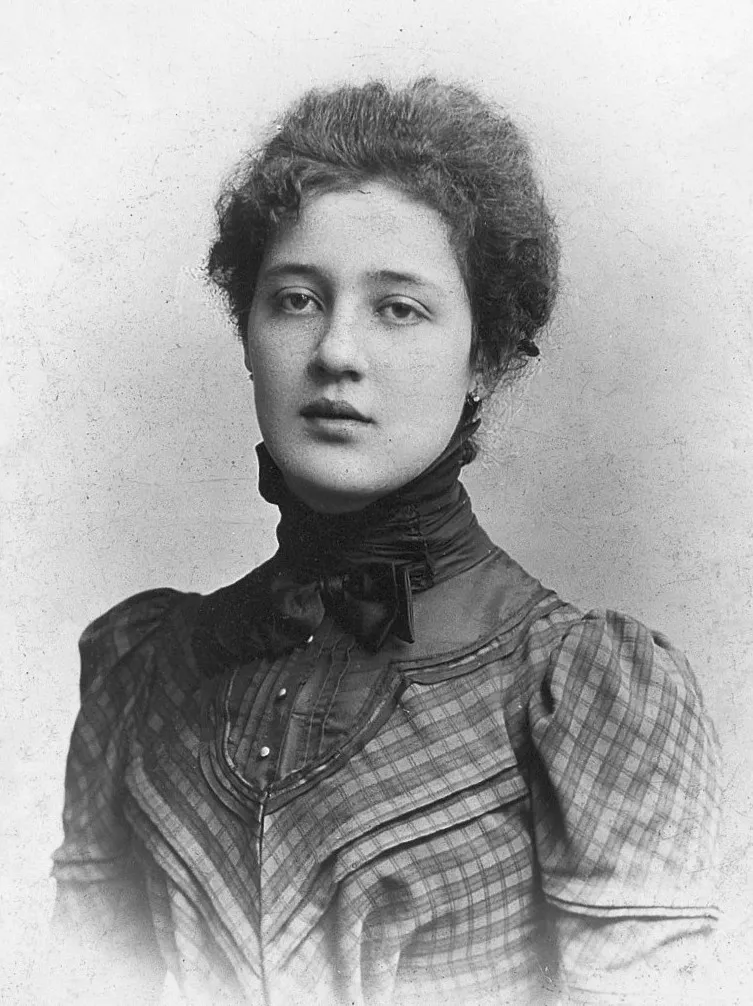
  • Melanie Klein as a young woman, photographed by Carl Pietzner, c. 1900
    Melanie Klein as a young woman, photographed by Carl Pietzner, c. 1900 Image credit: Carl Pietzner, Wellcome CollectionCC BYWikimedia Commons
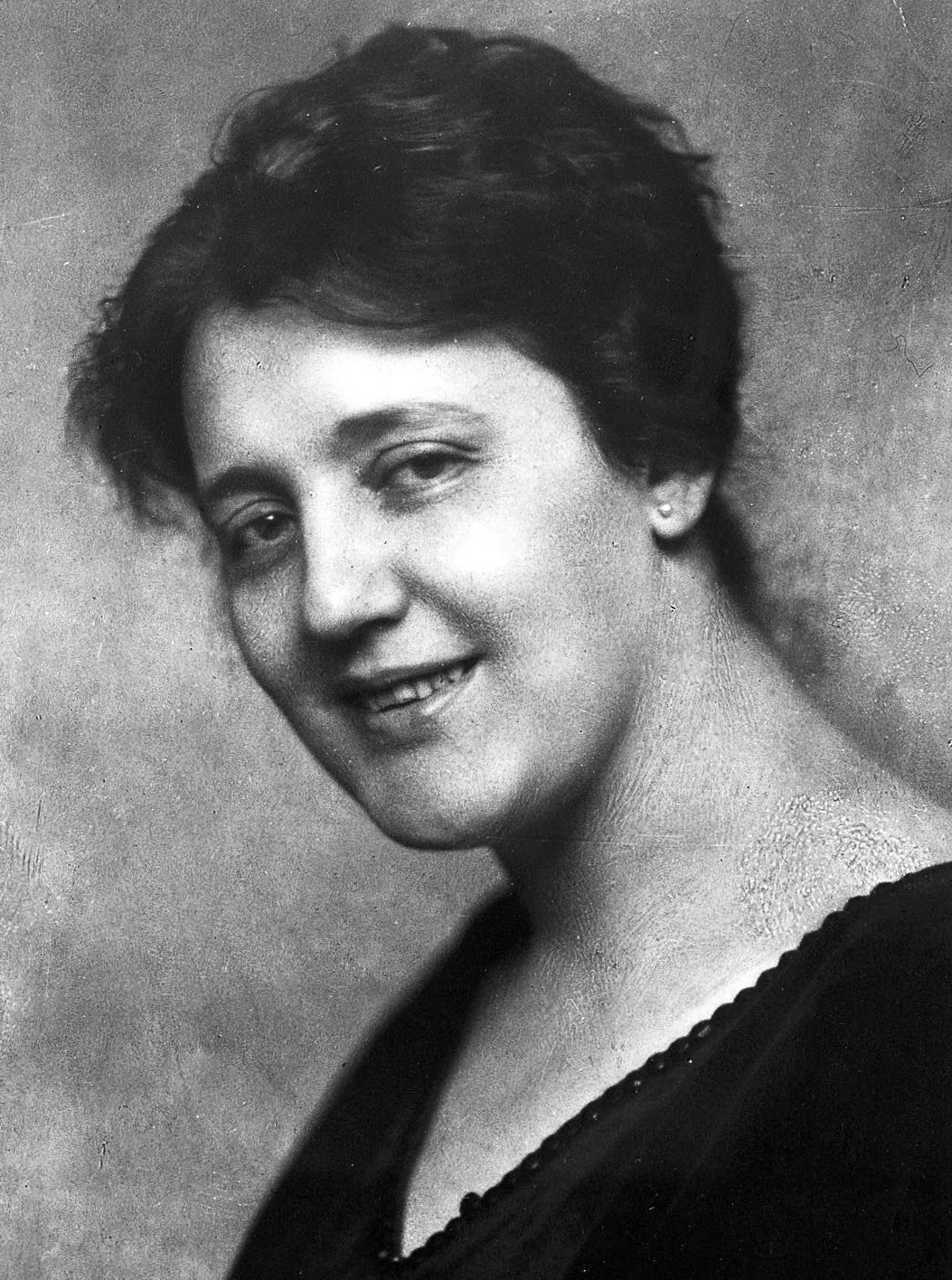
  • Melanie Klein in Budapest, photographed by Aladár Székely, c. 1910–1912
    Melanie Klein in Budapest, photographed by Aladár Székely, c. 1910–1912 Image credit: Székely Aladár, Wellcome CollectionCC BYWikimedia Commons
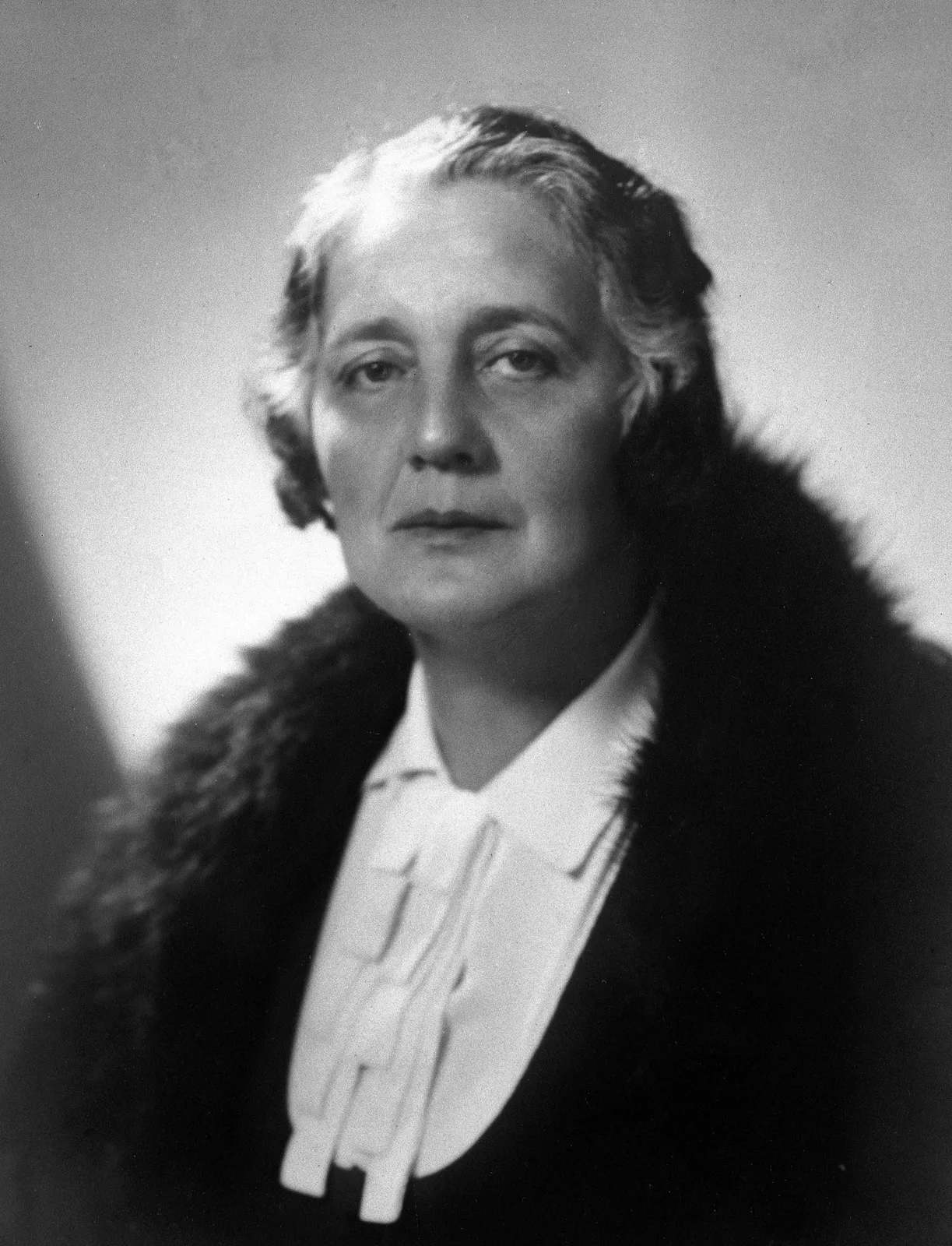
  • Melanie Klein, aged about 45, photographed by the Elliott & Fry studio, London, c. 1927
    Melanie Klein, aged about 45, photographed by the Elliott & Fry studio, London, c. 1927 Image credit: Elliott & Fry, Wellcome CollectionCC BYWikimedia Commons

References

  1. The Psychological Principles of Early Analysis1926
  2. Symposium on Child-Analysis1927
  3. The Development of a Child1921
  4. The Early Development of Female Sexuality1927
  5. Early Stages of the Oedipus Conflict1928
  6. The Importance of Symbol-Formation in the Development of the Ego1930
  7. The Psycho-Analysis of Children1932
  8. A Contribution to the Psychogenesis of Manic-Depressive States1935
  9. Love, Hate and Reparation1937
  10. Mourning and its Relation to Manic-Depressive States1940
  11. Narrative of a Child Analysis1961
  12. The Nature and Function of Phantasy1948
  13. The Oedipus Complex in the Light of Early Anxieties1945
  14. Notes on Some Schizoid Mechanisms1946
  15. Contributions to Psycho-Analysis 1921–19451948
  16. Developments in Psycho-Analysis1952
  17. Some Theoretical Conclusions Regarding the Emotional Life of the Infant1952
  18. New Directions in Psycho-Analysis: The Significance of Infant Conflict in the Pattern of Adult Behaviour1955
  19. Envy and Gratitude1957
  20. The Psycho-Analytic Play Technique: Its History and Significance1955
  21. Personification in the Play of Children1929
  22. A Contribution to the Theory of Intellectual Inhibition1931
  23. Infantile Anxiety-Situations Reflected in a Work of Art and in the Creative Impulse1929
  24. A Contribution to the Theory of Anxiety and Guilt1948
  25. The Origins of Transference1952
  26. Introduction to the Work of Melanie Klein1964
  27. Klein1979
  28. Notes on Symbol Formation1957
  29. Analysis of a Schizophrenic State with Depersonalization1947
  30. Psychotic States: A Psycho-Analytical Approach1965
  31. The Kleinian Development1978
  32. The Maturational Processes and the Facilitating Environment: Studies in the Theory of Emotional Development1965
  33. A Revised Psychopathology of the Psychoses and Psychoneuroses1941
  34. Object Relations Theory and Clinical Psychoanalysis1976
  35. On Projective Identification1979
  36. The Matrix of the Mind: Object Relations and the Psychoanalytic Dialogue1986
  37. Female Genius, Volume II: Melanie Klein2000
Esc

↑ ↓ to move · Enter to go · Esc to close