The graph of concepts, people and works

Drawing the graph…

psychopedia
Legend

Nodes

Relations

At rest every relation is a thin grey line. Its colour shows on hover and in focus.

Person

Julia Kristeva

b. 1941

Also known as Yuliya KrastevaYuliya Stoyanova KrastevaJulia Joyaux

Bulgarian-born French psychoanalyst, linguist, literary theorist and novelist, who came to Paris in 1965, joined the Tel Quel circle and taught for decades at the University of Paris VII. Her theory of the speaking subject set the semiotic, the pre-verbal and drive-laden side of meaning, against the symbolic order of language. She coined the term intertextuality and wrote influential psychoanalytic studies of abjection, love and melancholia. She trained at the Paris Psychoanalytical Society, becoming an associate member in 1987 and a full member in 1997.

Julia Kristeva (born 1941) is a Bulgarian-born French psychoanalyst, linguist, literary theorist and novelist. She settled in Paris in the mid-1960s and joined the Tel Quel group. In a run of books from Sēmeiōtikē1 (1969) to La Révolution du langage poétique2 (1974) she proposed a theory of the speaking subject that set the semiotic, the rhythmic, drive-bound side of meaning, against the symbolic order of the sign and of syntax. She coined the term intertextuality and introduced the semiotic chora and the subject in process.

After an analysis with Ilse Barande she trained at the Société psychanalytique de Paris, where she became an associate member in 1987 and a full member in 1997. In the 1980s she wrote three psychoanalytic studies: of abjection in Pouvoirs de l'horreur3 (1980), of love in Histoires d'amour4 (1983) and of depression in Soleil noir5 (1987).

Her later work includes a trilogy on female genius whose middle volume is devoted to Melanie Klein, along with novels and essays on revolt, belief and the feminine. She taught for decades at the University of Paris VII and is a training analyst of the Paris society. In 2004 she became the first laureate of the Holberg Prize. Her ideas have been widely taken up, and as widely disputed, in literary studies and feminist theory.
Life and training

Kristeva was born Yuliya Stoyanova Krasteva on 24 June 1941 in Sliven, Bulgaria, the daughter of a church accountant. She and her sister attended a French-language school run by Dominican nuns. She went on to study linguistics at the University of Sofia and to work as a journalist, and as a postgraduate she won a research fellowship that took her to France.

Accounts of the date differ. The English Wikipedia and the Routledge Encyclopedia of Philosophy place her arrival in 1965, in December according to the former. Her own website says she has lived and worked in France since 1966, the year Kelly Oliver also gives in the Encyclopedia of Modern Europe.

In Paris she studied at the École pratique des hautes études under Lucien Goldmann, who supervised her doctorate, and Roland Barthes; Oliver also names Claude Lévi-Strauss. She joined the Tel Quel group, formed around the review founded by the novelist Philippe Sollers. She married Sollers, born Philippe Joyaux, on 2 August 1967, and she has also published as Julia Joyaux.

In an interview with Mariano Horenstein she described her way into psychoanalysis. Sollers sent her to Jacques Lacan's seminar, where at first she understood nothing, and at that time she began to read Sigmund Freud and Klein. Lacan later invited her to present her work at the seminar, and she declined. When she looked for an analyst she judged that the two of them knew each other too well.

The phonologist and linguist Ivan Fónagy, who had been analysed by disciples of Sándor Ferenczi, told her she should go to the classical Freudians. He sent her to Ilse Barande of the Société psychanalytique de Paris (SPP), with whom she began an analysis in the 1970s. She has said that she entered analysis to escape abstract language. She decided to become an analyst herself after a journey to China, wanting a commitment that was neither political nor religious but a human relationship.

According to Oliver she completed her training in 1979. At the SPP she became an associate member in 1987 and a full member in 1997, and she is now a full member and training analyst of the society.

In 2018 Bulgaria's Dossier Commission stated that the communist-era State Security had registered her as an agent under the code name "Sabina", supposedly recruited in June 1971, and began publishing her file. Kristeva rejected the claim as "grotesque and false". The journalist Neal Ascherson judged that the intelligence value of the reports in the file was almost nil.

Career

Her first book, Sēmeiōtikē (1969), collected the essays she had written in Paris from 1966 onward. Her state doctoral thesis, defended in 1973, appeared in 1974 as La Révolution du langage poétique; an abridged English translation by Margaret Waller followed in 1984. She taught at Columbia University in the early 1970s and has remained a visiting professor there. Her main post was at the University of Paris VII, where she directed the department of Sciences des textes et documents, and she is now professor emerita at its successor, Université Paris Cité.

From 1980 her books drew on the clinic. Pouvoirs de l'horreur, Histoires d'amour and Soleil noir form what the Holberg Prize committee called a trilogy, offering "original and powerful theories of abjection, love and depression". Étrangers à nous-mêmes (1988) brought her psychoanalytic approach to bear on migration, exile and otherness. Les Nouvelles Maladies de l'âme (1993) returned to the drives and language through cases from her practice.

Between 1999 and 2002 Fayard published her trilogy Le Génie féminin, on Hannah Arendt, Melanie Klein and Colette. Later essays include La Haine et le pardon, Cet incroyable besoin de croire, two books on Dostoevsky (2020 and 2021) and Prélude à une éthique du féminin (2024).

The Routledge Encyclopedia of Philosophy describes her novels as largely detective novels with female protagonists. They run from Les Samouraïs (1990) and Le Vieil Homme et les loups (1991) through Possessions (1996) and Meurtre à Byzance (2004) to Thérèse mon amour (2008) and L'Horloge enchantée (2015). She told Horenstein that she moved her seminar to the adolescent unit of the Cochin hospital, and that work on autism now occupies her.

Besides the first Holberg Prize, in 2004, she received the Hannah Arendt Prize for political thought in 2006 and the Vaclav Havel Prize in 2008. She was elected to the American Academy of Arts and Sciences in 1998 and to the British Academy in 2002. She holds the rank of grand officer of the Légion d'honneur, and in September 2026 received the grand cross of the Ordre national du Mérite. She sat on the Conseil économique et social from 2003, carried out a mission for President Jacques Chirac on citizens with disabilities, and founded the committee of the Simone de Beauvoir Prize.

Semanalysis and the speaking subject

Sēmeiōtikē proposed "semanalysis", a critical science of signification that treats the text as a productive practice rather than a finished structure. Oliver describes it as joining Freud's psychoanalysis to the semiology of Saussure and Peirce, around the question of why we speak. The book's essay on Bakhtin, the word, dialogue and the novel, written in 1966 and published in Critique in 1967, introduced intertextuality: every text is built as a mosaic of quotations, absorbing and transforming other texts.

In La Révolution du langage poétique she distinguished two modalities of signification. The semiotic is the rhythmic, drive-bound articulation of meaning laid down in the infant's tie to the mother. The symbolic is the order of the sign, syntax and judgement, established by what she called the thetic break.

For the space in which the semiotic is organised she borrowed the chora from Plato's Timaeus, redefining it as the mobile, rhythmic articulation of drives that precedes and underlies the sign. The Stanford Encyclopedia of Philosophy glosses it as a pre-spatial relation of fluid, though not entirely unregulated, drives. The same entry notes that she places the semiotic before Lacan's imaginary, so that her thetic phase covers both his imaginary and his symbolic. On her account the drives are not shut out of language but inscribed in it as an alien element.

Every utterance mixes the two modalities, and Oliver stresses that Kristeva insists on the dialectical relation between them. Poetic language, read in Lautréamont and Mallarmé, is where the semiotic returns to unsettle the symbolic. The speaking subject that results is a subject in process, a phrase she first used in a Tel Quel essay of 1972–73 and one that in French also means a subject on trial. The Holberg committee saw in this a way of "bringing the living body back into language".

Speaking to Horenstein, Kristeva described the semiotic as a dimension of emotion and affect, of silence, rhythm, intonation, cries and repetition, rooted in the early relation of mother and child. She also recalled objecting to Lacan that the unconscious is not the signifier of linguistics but that of semiotics.

Abjection, love and melancholia

Pouvoirs de l'horreur gave abjection its psychoanalytic sense. It is the horror with which the emerging subject casts off whatever threatens its borders before an object has been constituted, from bodily waste and the corpse to the archaic maternal body from which the child must separate. In Oliver's summary, the abject is what is excluded to set up "the clean and proper boundaries of the body, the subject, and society or nation", and it is bound to return.

Kristeva ties abjection to Freud's primal repression. The book moves from Freud's case of Little Hans and the question of phobia, through the rules of purity and defilement in Leviticus and their Christian reworking, to a long reading of Céline's writing as a literature of the abject.

Histoires d'amour is a psychoanalytic and historical study of love. It ranges from Narcissus, Plato and the Song of Songs through Christian agape, the troubadours, Don Juan and Romeo and Juliet, and ends with the cult of the Virgin in the essay "Stabat Mater". Kristeva places love between narcissism and idealisation. She recasts primary narcissism as a structure organised around an emptiness, rather than as an objectless state, sustained by a primary identification with the "imaginary father of individual prehistory".

The Stanford Encyclopedia traces this figure to Freud's The Ego and the Id6, where an identification with the father of prehistory comes before any object-cathexis. For Kristeva the imaginary father is not the first object but the first identification. It is linked to love rather than to law, so that the promise of language is first carried by love. She presents analysis as a renewed experience of love in the transference.

Soleil noir treats depression and melancholia as the most archaic expression of a narcissistic wound that cannot be named or symbolised. The melancholic stays bound to the lost maternal "Thing" and cannot complete the separation, a symbolic matricide, through which loss is turned into signs. Drawing on Klein, Kristeva reads this as a failure of the depressive position.

The Stanford Encyclopedia notes that she pairs melancholia with abjection: both arise from narcissistic disorder, and both are at once conditions and limits of subjectivity. For her, infantile matricide is a necessary condition of subjectivity and not a remnant of patriarchal violence. Alongside her clinical cases, the book reads Holbein's Dead Christ, Nerval, Dostoevsky and Duras as ways in which art and language give form to sorrow.

Klein and the feminine

The second volume of Le Génie féminin7 (2000) is devoted to Klein, whom Kristeva presents as the most original innovator in psychoanalysis after Freud. It follows Klein's life and her quarrels in the British Society. It sets out her concepts: the analysis of children through play, early anxiety, the paranoid-schizoid and depressive positions, envy and gratitude, and the matricide on which, in Kristeva's reading, thought depends.

In her interview with Horenstein, Kristeva said that Klein had explored the pre-verbal edge she was herself after, and cited Hanna Segal on the child's entry into language. She added that reparation is only one stage, and that real analytic work begins when reparation is itself put in question. Oliver reads the trilogy as offering women's attention to the life of the senses as a possible remedy for nihilism, with the claim that "the genius of everyday life is women's genius".

The Stanford Encyclopedia describes how, in the essay "Women's Time" (1979), Kristeva distinguished three generations of feminism. The first is universalist and seeks equality, and she placed Simone de Beauvoir in it. The second insists on feminine difference. The third, toward which she leaned, accepts ambiguity and non-identity while respecting the ineluctability of bodily difference. The same entry finds that, unlike Luce Irigaray, she does not think the demands of the Oedipus complex can or should be overcome, and holds that there is no subjectivity beyond sacrifice.

Influence and reception

The Holberg committee credited her "innovative explorations of questions on the intersection of language, culture and literature" with inspiring research across the humanities and social sciences, and with "a significant impact on feminist theory". The Routledge Encyclopedia of Philosophy says that Revolution in Poetic Language established her as a major poststructuralist thinker. Oliver judges that her theory of abjection has had a significant impact on feminist theory across the disciplines, and on literary and art studies.

Her work is the subject of a volume of the Library of Living Philosophers, The Philosophy of Julia Kristeva (2020), and of a Cerisy colloquium in 2021, "Révolte et reliance". Alice Jardine has written her biography, At the Risk of Thinking. A Kristeva Circle has met in Pittsburgh in 2017 and in Sofia in 2022. Within psychoanalysis, André Green reviewed Les Nouvelles Maladies de l'âme in Le Monde in January 1993 under the title "Retour de l'âme".

Her relation to feminism, which the Stanford Encyclopedia calls "unsettled and volatile", has been sharply contested. Judith Butler, in "The Body Politics of Julia Kristeva" (Hypatia, 1988), argued that Kristeva's semiotic ends up consolidating the symbolic and paternal authority. On Butler's reading it treats a maternal instinct as a biological given prior to discourse, naturalising one cultural form of motherhood. It also renders lesbianism culturally unintelligible and forecloses inquiry into how the feminine principles it takes as natural came about. Butler concluded that "recourse to the maternal does not constitute a subversive strategy".

Kelly Oliver, in "Julia Kristeva's Feminist Revolutions" (Hypatia, 1993), granted that Kristeva is known for rejecting feminism. She argued nonetheless that Kristeva's views on difference, identity and maternity are useful for feminist theory and for rethinking politics and ethics.

Criticism has also come from other directions. Alan Sokal and Jean Bricmont devoted a chapter of Impostures intellectuelles (1997) to her early use of mathematics, arguing that its relevance to linguistics was never shown. Gayatri Spivak criticised her book on Chinese women, and Ian Almond her treatment of the Muslim world.

Her relation to Lacan is also described in different ways. In her own account she followed his seminar at Sollers's prompting and was invited to present her work there. The Stanford Encyclopedia entry on psychoanalytic feminism says that she was never his student and did not attend his seminars, and calls her relation to his school far more ambiguous than Irigaray's.

Selected works

Kristeva's first book was Sēmeiōtikē: Recherches pour une sémanalyse (Seuil, 1969), parts of which appeared in English in Desire in Language (1980). Her thesis, La Révolution du langage poétique (Seuil, 1974), was abridged in English as Revolution in Poetic Language (1984).

The psychoanalytic trilogy began with Pouvoirs de l'horreur: Essai sur l'abjection (Seuil, 1980), translated by Leon S. Roudiez as Powers of Horror (1982) and into Hebrew by Noam Baruch (Resling, 2005). It continued with Histoires d'amour (Denoël, 1983), translated by Roudiez as Tales of Love (1987). It closed with Soleil noir: Dépression et mélancolie (Gallimard, 1987), translated by Roudiez as Black Sun (1989) and into Hebrew by Keren Shemesh (Resling, 2006).

They were followed by Étrangers à nous-mêmes (Fayard, 1988), in English Strangers to Ourselves (1991), and by Les Nouvelles Maladies de l'âme (1993). Her trilogy Le Génie féminin (Fayard, 1999–2002) treats Arendt, Klein and Colette; its Klein volume (2000) was translated by Ross Guberman as Melanie Klein (2001).

Ideas

introduced

  • 1967 Intertextuality
    Kristeva coined “intertextualité” in her 1966 essay on Bakhtin, published in Critique in 1967 and reprinted in Sēmeiōtikē (1969), to describe every text as a mosaic of quotations and the transformation of other texts.
  • 1972 Subject in process
    Kristeva introduced the “sujet en procès” in an essay of that title in Tel Quel (nos. 52–53, 1972–73) and developed it in La Révolution du langage poétique (1974), where the subject is both in process and on trial, never fixed by the symbolic order.
  • 1974 The semiotic
    In her 1974 state doctoral thesis Kristeva set the semiotic, the drive-charged, pre-verbal modality of signification, against the symbolic, and made their interplay the basis of her account of poetic language.
  • 1974 Semiotic chora
    Kristeva borrowed the chora from Plato’s Timaeus and redefined it in 1974 as the mobile, rhythmic articulation of drives that precedes and underlies the sign.
  • 1980 Abjection
    Kristeva gave abjection its psychoanalytic sense in Pouvoirs de l’horreur (1980), as the expulsion of what threatens the borders of the emerging subject before the object is constituted.

reworked

  • 1983 Primary narcissism
    In Histoires d’amour Kristeva recasts primary narcissism as a structure rather than an objectless state, organised around an emptiness and sustained by primary identification with the “imaginary father of individual prehistory”.
  • 1987 Depressive position
    In Soleil noir Kristeva reads melancholia as a failure of the depressive position: the subject cannot carry out the necessary matricide and symbolise the loss of the mother in signs.

Influence

Lineage

  • analysed by Ilse Barande
    Kristeva entered analysis with Ilse Barande of the Société psychanalytique de Paris in the 1970s, on the advice of the linguist and analyst Ivan Fónagy.

Affinity

  • influenced by Jacques Lacan
    Kristeva attended Lacan’s seminar from the late 1960s and built her semiotic/symbolic distinction on, and against, his account of the symbolic order, the mirror stage and the subject of the signifier.
  • influenced by Melanie Klein
    Kristeva drew on Klein’s account of the archaic mother, matricide and the depressive position from Soleil noir onward, and devoted the second volume of Le Génie féminin (2000) to her.

Works

  • 1969

    Sēmeiōtikē: Research for a Semanalysis

    Kristeva's first book gathers the essays she wrote in Paris from 1966 onward and sets out 'semanalysis', a critical science of signification that approaches the text as a productive practice rather than as a closed, finished structure. Its essay on Bakhtin, on the word, dialogue and the novel, first printed in Critique in 1967, introduced intertextuality: any text is put together as a mosaic of quotations and is the absorption and transformation of other texts. Selections from the book later appeared in English in Desire in Language (1980).

    Julia Kristeva Paris: Éditions du Seuil Copyright Life + 70 years Status unknown Death year unknown for Julia Kristeva.United States Status unknown Published in 1969; its copyright notice and renewal have not been checked.

  • 1974

    Revolution in Poetic Language: The Avant-Garde at the End of the Nineteenth Century, Lautréamont and Mallarmé

    Kristeva's state doctoral thesis, defended in Paris in 1973 and published in 1974. Drawing on Freud, Lacan, Hegel and linguistics, it distinguishes two modalities at work in all signification: the semiotic, a rhythmic articulation bound to the drives and organised in the chora, and the symbolic, the order of the sign, syntax and judgement, founded by the thetic break. Poetic language, studied in Lautréamont and Mallarmé, is where the semiotic returns to disrupt the symbolic, and its speaking subject is a subject in process, which in French also means a subject on trial. Margaret Waller's abridged English translation appeared in 1984 as Revolution in Poetic Language.

    Julia Kristeva Paris: Éditions du Seuil (Tel Quel) Copyright Life + 70 years Status unknown Death year unknown for Julia Kristeva.United States Status unknown Published in 1974; its copyright notice and renewal have not been checked.

  • 1980

    Powers of Horror: An Essay on Abjection

    Kristeva's essay on abjection: the horror with which the subject casts off whatever threatens the boundary between self and other, from bodily waste and the corpse to the archaic maternal body from which it must separate. The book moves from Freud's case of Little Hans and the problem of phobia, through the laws of purity and defilement in Leviticus and their reworking in Christianity, to a long reading of Céline's prose as a literature of the abject. It opened a sequence of three psychoanalytic studies, continued in Histoires d'amour and Soleil noir. Leon S. Roudiez translated it into English as Powers of Horror (1982), and Noam Baruch into Hebrew (Resling, 2005).

    Julia Kristeva Paris: Éditions du Seuil Copyright Life + 70 years Status unknown Death year unknown for Julia Kristeva.United States In copyright Published in 1980; protected through 2075.

  • 1983

    Tales of Love

    A psychoanalytic and historical study of love that runs from Narcissus, Plato and the Song of Songs through Christian agape, the troubadours, Don Juan and Romeo and Juliet to the cult of the Virgin, treated in the essay 'Stabat Mater'. Kristeva situates love between narcissism and idealisation and traces its origin to a primary identification with an 'imaginary father' who comes before the Oedipal father. She treats analysis as a renewed experience of love within the transference. Leon S. Roudiez translated the book into English as Tales of Love (1987).

    Julia Kristeva Paris: Denoël Copyright Life + 70 years Status unknown Death year unknown for Julia Kristeva.United States In copyright Published in 1983; protected through 2078.

  • 1987

    Black Sun: Depression and Melancholia

    Kristeva's study of depression and melancholia as the most archaic expression of a narcissistic wound that can be neither named nor symbolised. The melancholic remains bound to the lost maternal 'Thing' and cannot complete the separation, a symbolic matricide, through which loss becomes signs. Drawing on Freud, on Klein's depressive position and on her own clinical cases, she reads Holbein's Dead Christ, Nerval, Dostoevsky and Duras as ways in which art and language give form to sorrow. Leon S. Roudiez translated it into English as Black Sun (1989), and Keren Shemesh into Hebrew (Resling, 2006).

    Julia Kristeva Paris: Gallimard Copyright Life + 70 years Status unknown Death year unknown for Julia Kristeva.United States In copyright Published in 1987; protected through 2082.

  • 2000

    Female Genius, Volume II: Melanie Klein

    The middle volume of Kristeva's trilogy on female genius, between the volumes on Hannah Arendt and Colette, is devoted to Melanie Klein, whom Kristeva presents as the most original innovator in psychoanalysis after Freud. It follows Klein's life and her quarrels in the British Society, and sets out her concepts: the analysis of children through play, early anxiety, the paranoid-schizoid and depressive positions, envy and gratitude, and the matricide on which thought depends. Ross Guberman's English translation, Melanie Klein, was published by Columbia University Press in 2001.

    Julia Kristeva Paris: Fayard (Le Génie féminin: la vie, la folie, les mots, vol. 2) Copyright Life + 70 years Status unknown Death year unknown for Julia Kristeva.United States In copyright Published in 2000; protected through 2095.

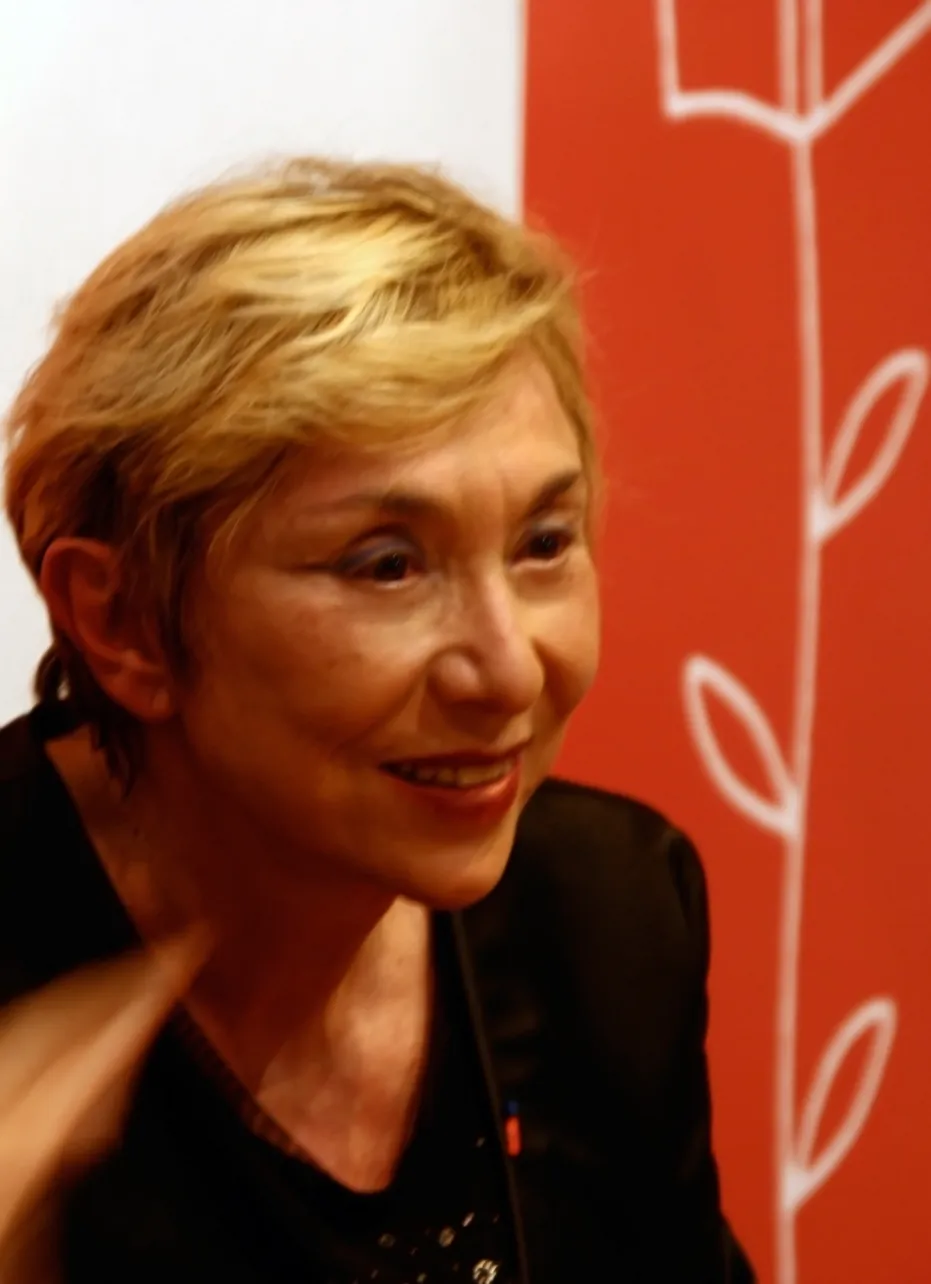
  • Julia Kristeva at a public meeting in Paris, photographed by Harp1980, 18 March 2008
    Julia Kristeva at a public meeting in Paris, photographed by Harp1980, 18 March 2008 Image credit: Harp1980CC BY-SAWikimedia Commons

References

  1. Sēmeiōtikē: Research for a Semanalysis1969
  2. Revolution in Poetic Language: The Avant-Garde at the End of the Nineteenth Century, Lautréamont and Mallarmé1974
  3. Powers of Horror: An Essay on Abjection1980
  4. Tales of Love1983
  5. Black Sun: Depression and Melancholia1987
  6. The Ego and the Id1923
  7. Female Genius, Volume II: Melanie Klein2000
Esc

↑ ↓ to move · Enter to go · Esc to close