Book
Technique of Psychoanalysis
Technik der Psychoanalyse
Technik der Psychoanalyse (Technique of Psychoanalysis) is Otto Rank's three-volume treatise on psychoanalytic treatment, published by Deuticke in Leipzig and Vienna between 1926 and 1931. Read in sequence, the volumes record Rank's passage from a reformer of Freudian technique to the founder of his own "will therapy". Volume I, Die analytische Situation, illustriert an der Traumdeutungstechnik (The Analytic Situation, Illustrated by the Technique of Dream Interpretation, 1926), grew out of a course on practical dream interpretation that Rank gave to English and American analysts in 1921–22. Volume II, Die analytische Reaktion in ihren konstruktiven Elementen (The Analytic Reaction in Its Constructive Elements, 1929), and Volume III, Die Analyse des Analytikers und seiner Rolle in der Gesamtsituation (The Analysis of the Analyst and His Role in the Total Situation, 1931, with a preface written in Paris in 1930), were written after Rank's break with Freud. Jessie Taft translated them into English as Will Therapy (1936). Volume I continues the programme Rank had set out with Sándor Ferenczi in Entwicklungsziele der Psychoanalyse (1924): no systematic technique had yet been published, and the curative agent is lived experience in treatment rather than intellectual recollection. Its central concept is the "analytic situation". Whatever the patient produces is to be related first to the present relationship with the analyst, not mined for history. Behind the Oedipal father transference Rank finds an earlier tie to the mother (Mutterbindung) that does not depend on the analyst's sex, so that for the patient's libido the analytic situation is essentially a mother situation. He therefore extends to every case a device Freud had used with the Wolf Man: fixing a date for the end of treatment (Terminsetzung). Set once the patient's libido has passed over to the analyst, the date lets the patient live the separation as a birth and a weaning, and so dissolves the transference. The analysis is described as a time-limited course of the libido, from detachment from the mother to identification with the analyst as father and ego ideal, and resistance is read as a gauge of that course. The practical part demonstrates the method through dream series from Rank's patients. The dreams are treated as reactions to the analytic situation and grouped by its phases. Motifs once read historically, such as a "family-tree" dream and even Freud's Wolf Man dream, are reinterpreted as images of the consulting room and of the patient's rivals there. Rank closes by warning that analysis may project into the patient's past what in fact happens between doctor and patient. Volume II opens by laying the foundation of a will therapy ("Grundlegung einer Willenstherapie"). The neurotic suffers not, as Freud held, from repressed sexual wishes but from a conflict of will and guilt: a strong will that he denies and cannot affirm without guilt. Freud's agents of cure (making the unconscious conscious, catharsis, transference) keep the patient passive. Resistance should instead be understood as counter-will (Gegenwille), the most valuable expression of will in therapy, and the therapist should act as a counter-will against which the patient's will can grow strong rather than be broken. The fundamental rule becomes "say what you want". Cure comes from a new experience in the present (Neuerleben), beyond repetition and transference. Reconstructing the past, by contrast, serves the denial of the present. The chapters are built on paired opposites: understanding and denial, past and present, sameness and difference, love and compulsion, separation and guilt, fate and self-determination. The treatment culminates in a separation that the patient must will for himself, without a debt of gratitude, so that neurotic guilt becomes the creative guilt of becoming an individual. Rank's criticism here extends to Adler and Jung as well as Freud. Volume III turns to the analyst. The analyst is not a technician applying a remedy but is himself the remedy, a person whom the patient re-creates as an auxiliary ego (Hilfs-Ich). Rank describes his own technique as consisting in having none. He distinguishes "ideological" from "dynamic" therapy. General psychological truths, such as the Oedipus complex, castration and even his own birth trauma, help the individual little, and analytic theories are in part the self-justification of a therapist type. The chapter "Lebensangst und Todesangst" sets out a double anxiety, whose two poles a person moves between throughout life. Fear of life is the fear of individuation and separation, first felt at birth. Fear of death is the fear of losing the individuality so gained. The end phase, with its fixed date, is presented as the therapeutic agent proper, an "education to willing". In it the patient's revolt against continuing the analysis is the first sign of recovery, and the analyst becomes an "auxiliary reality". The book ends with the claim that the only therapy is real life. The treatise is the main statement of Rank's clinical thought. It traces his development from the birth-trauma technique of the mid-1920s to a therapy of will, focused on the present relationship between patient and therapist.
Main ideas
- Building on Entwicklungsziele der Psychoanalyse, Rank holds that no systematic technique had yet been published and that the curative agent is lived experience in treatment, not intellectual recollection.
- The analytic situation: everything the patient produces is to be related first to the present relationship with the analyst rather than mined for the past.
- Beneath the Oedipal father transference lies an earlier tie to the mother, independent of the analyst's sex; for the patient's libido the analytic situation is essentially a mother situation.
- Rank extends Freud's occasional practice of setting a date for the end of treatment (Terminsetzung) to every case; it lets the patient live the separation from the analyst as birth and weaning, and so dissolves the transference.
- Dreams in treatment are reactions to the analytic situation and are read by its phases. Rank reinterprets seemingly historical dreams, Freud's Wolf Man dream among them, as images of the consulting room, and warns that analysis may project into the patient's past what happens between analyst and patient.
- Neurosis is a conflict of will and guilt: the neurotic has a strong will that he denies and cannot affirm without guilt.
- Resistance is counter-will (Gegenwille), the most valuable expression of will in therapy. The therapist should act as a counter-will against which the patient's will grows strong rather than being broken, and the fundamental rule becomes "say what you want".
- Cure comes from a new experience in the present (Neuerleben), beyond repetition and transference; reconstructing the past serves the patient's denial of the present.
- Separation is a basic principle of life. The patient must will the end of treatment and separate himself, without a debt of gratitude, turning neurotic guilt into the creative guilt of becoming an individual.
- The analyst is not a technician but is himself the remedy, an auxiliary ego (Hilfs-Ich) whom the patient re-creates. Dynamic therapy differs in every case, whereas ideological therapy imposes general truths that help the individual little and in part justify the therapist's own type.
- Fear of life, the fear of individuation and separation first felt at birth, and fear of death, the fear of losing one's individuality, are the two poles between which a person moves throughout life; in the neurotic they converge.
- The end phase is the therapeutic agent proper, an "education to willing": the patient's revolt against continuing the analysis is the first sign of recovery, the analyst becomes an "auxiliary reality", and the only therapy is real life.
What it shows
- 1929
Otto Rank introduced Will therapy
Rank named and laid out will therapy in the second volume of his Technik der Psychoanalyse (1929).
- 1931
Otto Rank introduced Life fear and death fear
Rank opposed fear of life to fear of death in the third volume of his Technik der Psychoanalyse (1931).
- 1931
Life fear and death fear derives from Birth trauma
Rank traced the first experience of life fear to the act of birth, recasting his earlier birth-trauma theory as a fear of separation and individuation.
- 1936
Jessie Taft collaborated with Otto Rank
Taft translated Rank's Will Therapy and Truth and Reality (1936) and, after his death, wrote his first biography (1958).
Gallery

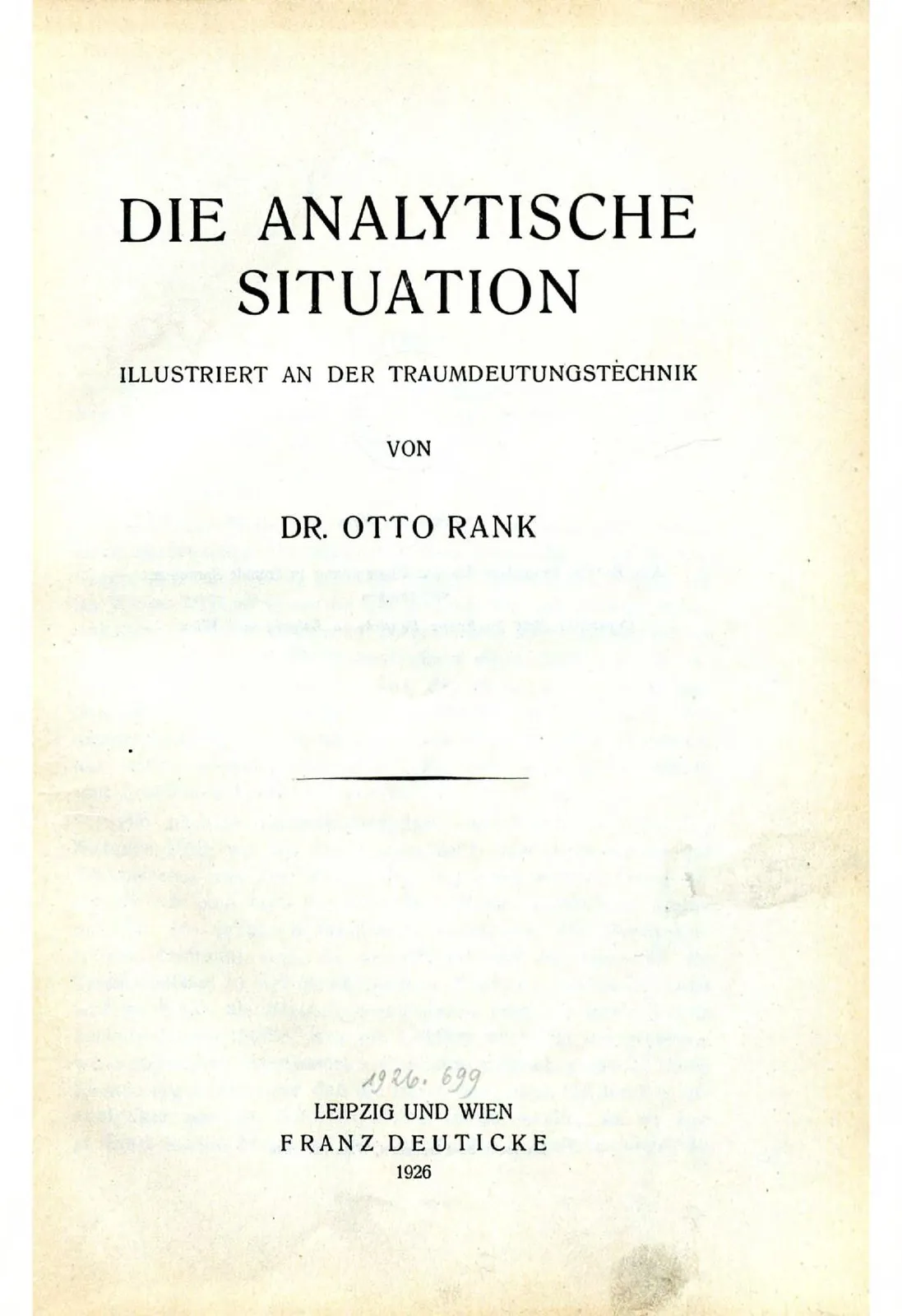
Title page of Volume I of Otto Rank's Technik der Psychoanalyse, Die analytische Situation, illustriert an der Traumdeutungstechnik (Leipzig and Vienna: Franz Deuticke, 1926) 
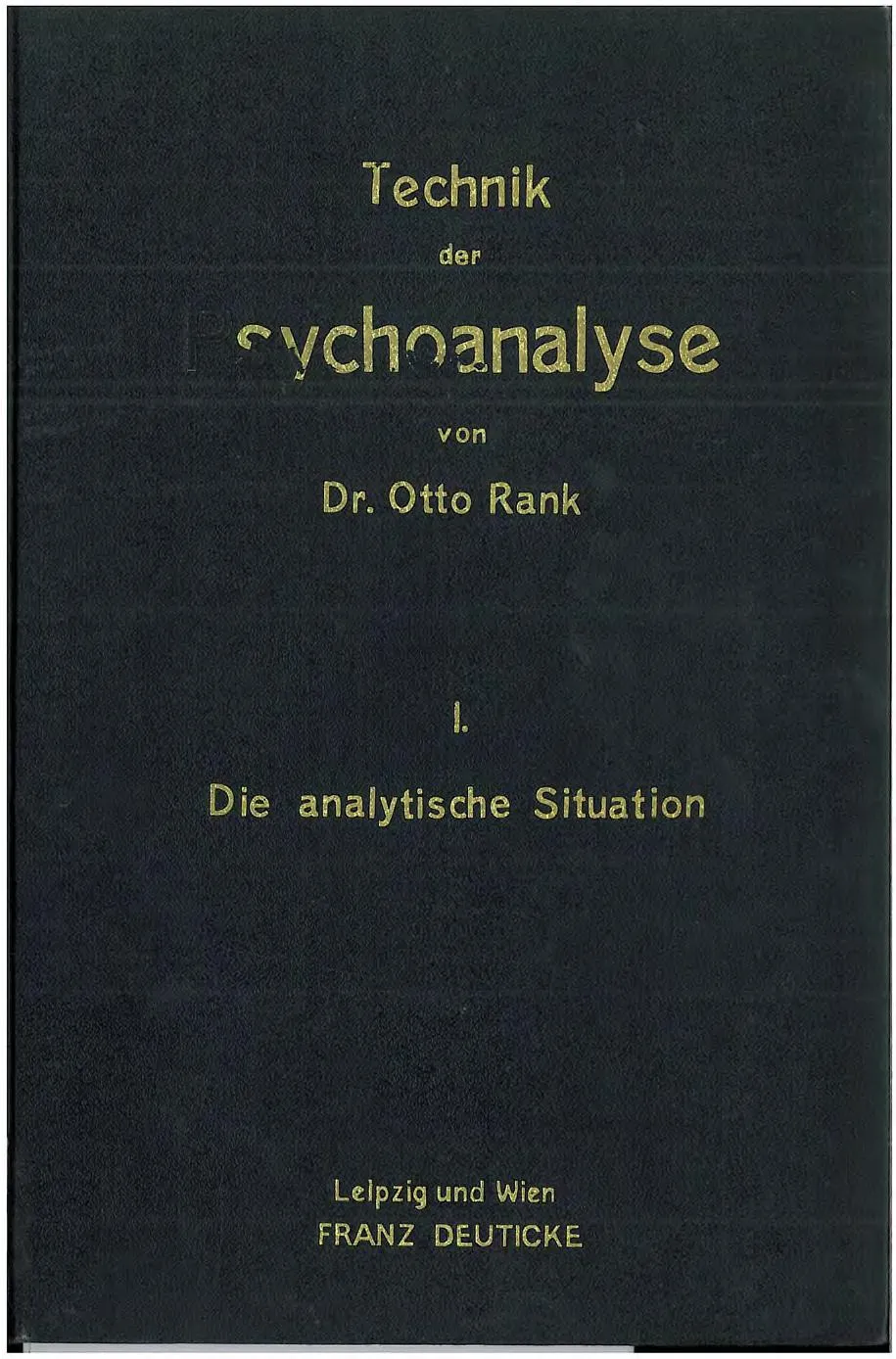
Cloth binding of Volume I of Otto Rank's Technik der Psychoanalyse, Die analytische Situation, lettered in gilt (Leipzig and Vienna: Franz Deuticke, 1926) 
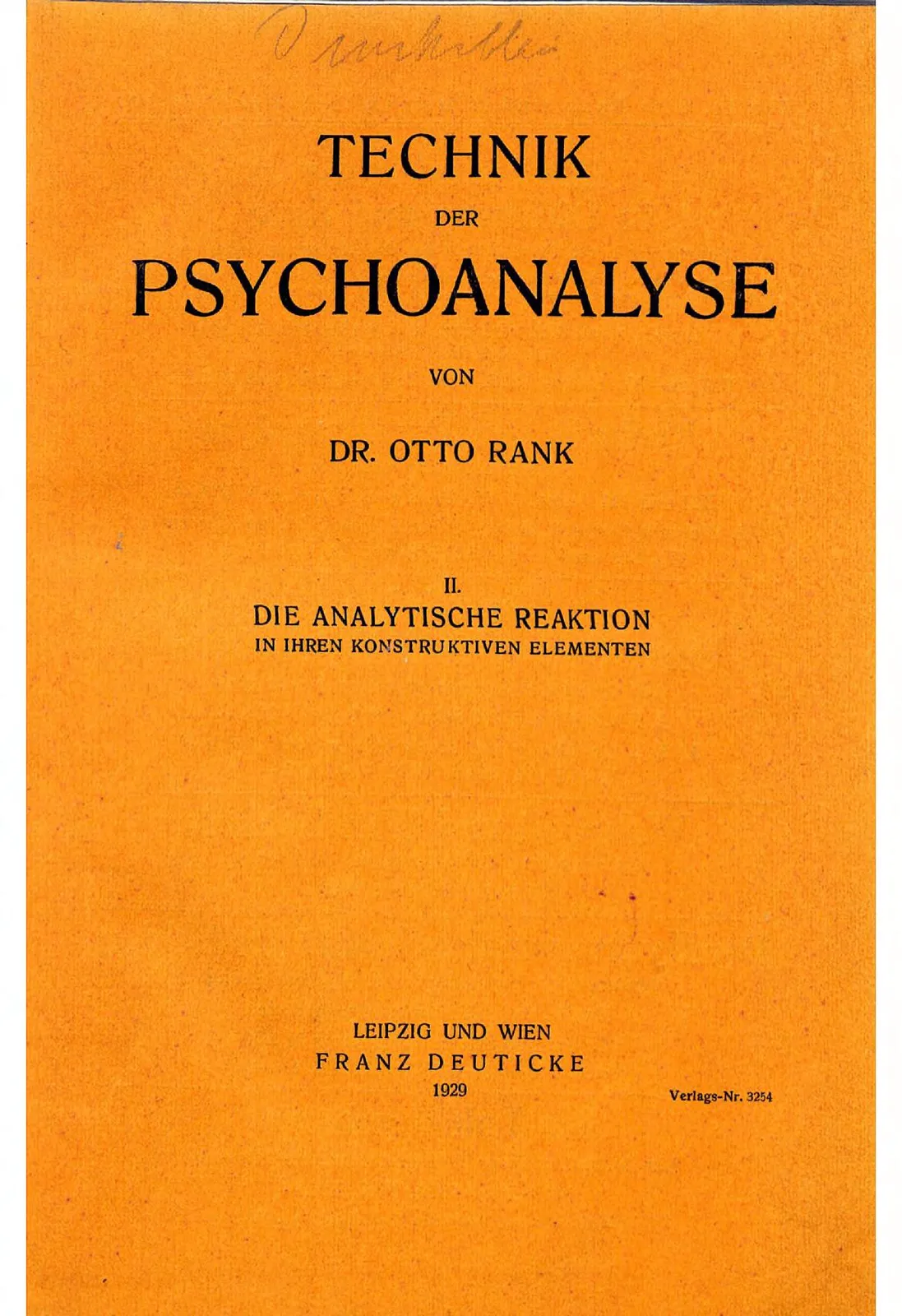
Publisher's paper wrapper of Volume II of Otto Rank's Technik der Psychoanalyse, Die analytische Reaktion in ihren konstruktiven Elementen (Leipzig and Vienna: Franz Deuticke, 1929) 
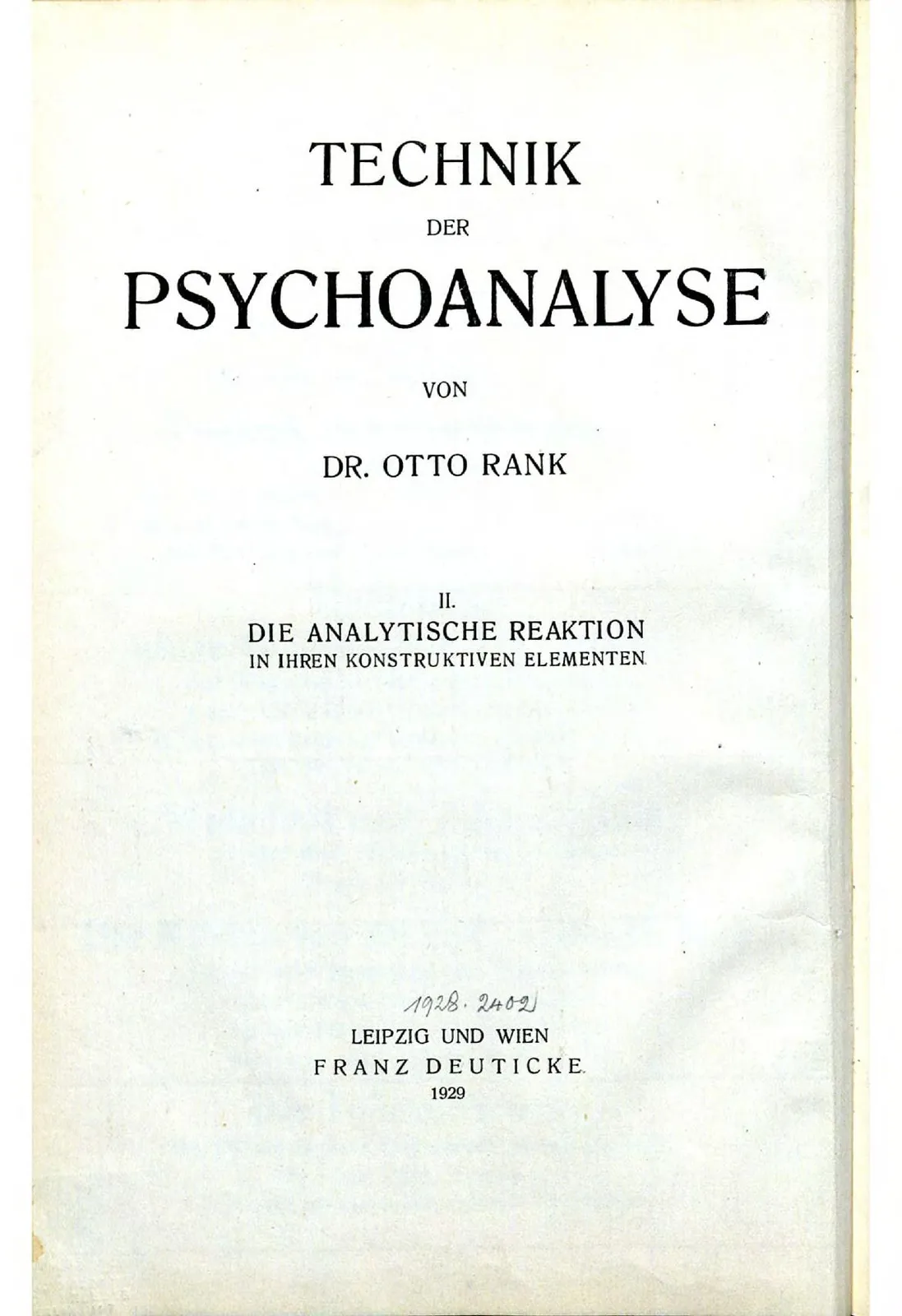
Title page of Volume II of Otto Rank's Technik der Psychoanalyse, Die analytische Reaktion in ihren konstruktiven Elementen (Leipzig and Vienna: Franz Deuticke, 1929)