Article
Observations on Transference-Love
Bemerkungen über die Übertragungsliebe
"Observations on Transference-Love" is the third of Freud's "Further Recommendations on the Technique of Psycho-Analysis", published in the Internationale Zeitschrift für ärztliche Psychoanalyse in 1915. It takes up a situation that Freud counts among the only really serious difficulties of analytic work: a woman patient declares that she has fallen in love with her analyst. Freud sets aside the layman's solutions, marriage, an end to the treatment or a secret affair, and argues that the analyst must neither return the love nor suppress it with moral appeals or demands for renunciation. The love is induced by the analytic situation, not by the analyst's personal qualities, a fact that should warn him against his own countertransference. It breaks out as a resistance, often just when a painful memory is drawing near; yet resistance does not create it, but finds it already present, exploits it and exaggerates it. Freud lays down the rule that the treatment must be carried out in abstinence: the patient's need and longing are to be left in place as forces that drive the work, not stilled by substitutes. The analyst holds on to the transference-love but treats it as something unreal, to be traced back to its unconscious and infantile origins, so that the patient can reveal her conditions for loving and the phantasies bound up with them. He then asks whether such love is genuine, and answers that it is: like all love it repeats infantile prototypes, and it differs from ordinary love only in being provoked by the analytic situation, intensified by resistance and heedless of reality. Because the analyst called it forth by beginning the treatment, he may draw no personal advantage from it, and here ethical and technical reasons coincide. The paper ends by likening the analyst to a chemist who works with explosive forces, and by defending psychoanalysis at full strength against milder methods.
Main ideas
- The only really serious difficulties of analytic technique lie in handling the transference, and one that is frequent and hard to avoid is a patient's declaration that she has fallen in love with her analyst.
- Transference-love is induced by the analytic situation, not by the analyst's personal merits: it returns with every new analyst the patient goes to, and this should warn the analyst against his own countertransference.
- The love breaks out as a resistance, often just when painful repressed material is drawing near; resistance does not create it, but uses and exaggerates a love already present to halt the work, divert the patient's interest and test the analyst.
- The analyst may neither suppress the love nor feign to return it: moral preaching or a demand for renunciation would call the repressed into consciousness only to repress it again, and a pretended response would betray the truthfulness on which analysis rests.
- The treatment must be carried out in abstinence: the patient's need and longing are to be kept as forces that drive the work and bring about change, not appeased by substitutes.
- Were the analyst to yield, the patient would act out in life what she ought to remember, would repeat her inhibitions and pathological reactions without the chance of correcting them, and the treatment would fail.
- The analyst holds on to the transference-love but treats it as something unreal, to be traced to its unconscious and infantile origins; the method fails only with women of an elemental passionateness who will accept no substitute for material satisfaction.
- Transference-love is genuine love: all love repeats infantile prototypes, and this love differs from the ordinary kind only in being provoked by the analytic situation, intensified by resistance and less concerned with reality.
- Since the analyst called the love forth by beginning the treatment, he may take no personal advantage of it, however willing the patient; ethics and technique coincide, and her capacity to love is to be freed for real life once the treatment ends.
- The analyst works with the most explosive forces and needs a chemist's care, but that is no reason to give up psychoanalysis at full strength for milder methods, which underestimate the psychoneuroses.
What it shows
- 1915
Sigmund Freud developed Transference
Treats the patient’s love for the analyst as transference, to be neither gratified nor suppressed.
- 1912
Sigmund Freud developed Acting out
In the technical papers Freud places acting out within the transference: the unconscious impulses seek to be reproduced rather than remembered, the patient wants to act on them in the relation to the analyst, and the treatment must bring them back to remembering and psychic working over.
Gallery
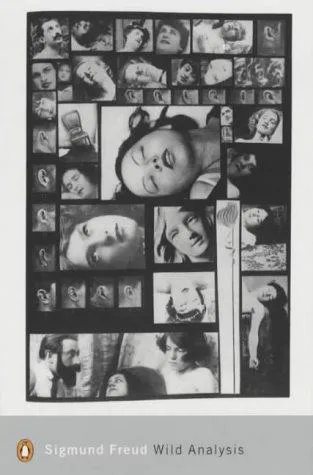
Cover of Wild Analysis, the Penguin Modern Classics volume of Freud's papers on technique, translated by Alan Bance, which includes "Observations on Love in Transference"; Penguin Books, 2002
External links
In English
- W. W. Norton(opens the store’s page in a new tab)
- Penguin Random House(opens the store’s page in a new tab)
- Routledge(opens the store’s page in a new tab)