Person
Lou Andreas-Salomé
Russian-born German writer and psychoanalyst, born in St Petersburg and known before psychoanalysis for her book on Nietzsche and her friendships with Nietzsche, Paul Rée and Rilke. She met Freud at the Weimar congress of 1911, studied with him in Vienna in 1912–13, opened the first psychoanalytic practice in Göttingen in 1915 and was admitted to the Vienna Psychoanalytic Society in 1922. Her papers in Imago, notably on anal erotism (1916) and on narcissism as a double movement of self-assertion and fusion with the whole (1921), gave the drive theory a philosophical and poetic turn that Freud valued.
Ideas
- 1916 developed Anal erotism
In »Anal« und »Sexual« (1916) Andreas-Salomé reads the training of excretion as the child’s first prohibition, through which the ego forms and the anal becomes the model of what is rejected and disgusting; she describes the female genital as ‘leased’ from the cloaca, a phrase Freud adopted in 1917.
- 1921 introduced Dual orientation of narcissism
In ‘Narzißmus als Doppelrichtung’ (Imago, 1921) Andreas-Salomé argues that narcissism moves at once toward the self-assertion of a bounded ego and back toward an undivided unity with the whole, and follows this double movement through object love, art, religion, ethics and illness.
- 1921 reworked Narcissism
Taking up Freud’s ‘On Narcissism’ (1914), Andreas-Salomé treated narcissism not as a phase to be left behind or as mere self-love but as a lasting accompaniment of every libidinal investment, at once self-assertion and a dissolving of the self back into what is not yet bounded.
Influence
Affinity
- 1912 influenced by Sigmund Freud
After meeting Freud at the Weimar congress of 1911, Andreas-Salomé spent 1912–13 in Vienna attending his lectures and the Wednesday meetings, recorded in her diary In der Schule bei Freud; her open letter of 1931 for his seventy-fifth birthday sets out what she took from his work.
- 1917 influenced Sigmund Freud
In ‘On Transformations of Instinct as Exemplified in Anal Erotism’ (1917) Freud adopted Andreas-Salomé’s image of the vagina as ‘leased’ from the rectum and cited her »Anal« und »Sexual« (Imago, 1916) in a footnote.
Conflict
- 1916 disputed with Carl Gustav Jung
In »Anal« und »Sexual« Andreas-Salomé criticises Jung’s desexualised libido: by placing the essence of sexuality outside sexuality itself, she argues, he lets the old dualism back in and sides with the older theory that condemned sex.
- 1916 disputed with Alfred Adler
In »Anal« und »Sexual« Andreas-Salomé argues that Adler, like Jung, loses Freud’s conception of sexuality, so that for him neurosis becomes little more than an unfavourable course of the psyche itself, and holds that Freud and Adler must be kept apart even more firmly than Freud and Jung.
Works
- 1894
Friedrich Nietzsche in His Works
Andreas-Salomé’s study of Nietzsche, written from her close acquaintance with him in 1882, in three parts: his nature (“Sein Wesen”), his transformations (“Seine Wandlungen”) and the “Nietzsche system”. It reads the philosophy through the psychology of its author, as the work of a self-divided, suffering personality, an approach Anna Freud later called a forerunner of psychoanalysis.
- 1910
A short monograph for Martin Buber’s series of social-psychological studies, written before Andreas-Salomé turned to psychoanalysis. Starting from sexuality as a bodily need, it follows erotic love into the lover’s overvaluation of the beloved, which it treats as a creative act of idealisation rather than mere illusion, and compares love with artistic creation and religious fervour, which share its roots. It ends with love’s return into social life.
- 1916
Andreas-Salomé argues that the training of excretion is the child’s first prohibition: for the first time the infant must turn against its own impulse, and the ego takes shape as mediator between outer restraint and inner urge. The anal comes to stand for everything rejected and dead, the model of all disgust, while remaining bodily close to the genital, which in women is as if “rented” from the cloaca. Confusing the two meanings lets disgust seep into sexuality. The paper also criticises Jung’s and Adler’s revisions of the libido theory, and Freud took up its image of the vagina in 1917.
- 1921
The Dual Orientation of Narcissism
An essay in four parts that reads narcissism as running in two directions at once: toward the assertion of a bounded self, and back toward an undivided state in which self and world are not yet separate. Narcissism is thus not a stage that is left behind but a lasting accompaniment of all libidinal life, at work in object love, in sublimation, in art and in religious feeling. Published in English as “The Dual Orientation of Narcissism” (Psychoanalytic Quarterly, 1962).
- 1931
My Thanks to Freud: Open Letter to Professor Sigmund Freud on His Seventy-Fifth Birthday
An open letter written for Freud’s seventy-fifth birthday on 6 May 1931, in which Andreas-Salomé reviews psychoanalysis as she had come to know it: Freud’s self-analysis as its starting point, the analytic situation and transference, narcissism as a bond with the whole that is more than self-love, the infantile phases of sexuality and the Oedipus complex, and sublimation. She accepts Freud’s dualism of the drives but doubts that aggression and the death drive are autonomous. Freud replied that it was the finest thing of hers he had read.
- 1958
The Freud Journal of Lou Andreas-Salomé
The journal Andreas-Salomé kept during her stay in Vienna from October 1912 to April 1913, edited after her death by Ernst Pfeiffer. It records Freud’s lectures and the Wednesday meetings of his circle, her parallel attendance at Alfred Adler’s discussion evenings, and her conversations with Freud, Viktor Tausk and others. It is a first-hand source on the psychoanalytic movement after the break with Adler. English translation: The Freud Journal of Lou Andreas-Salomé (1964).
Gallery
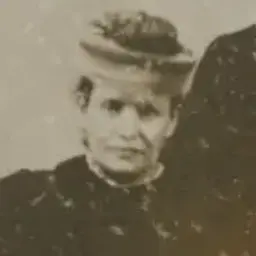
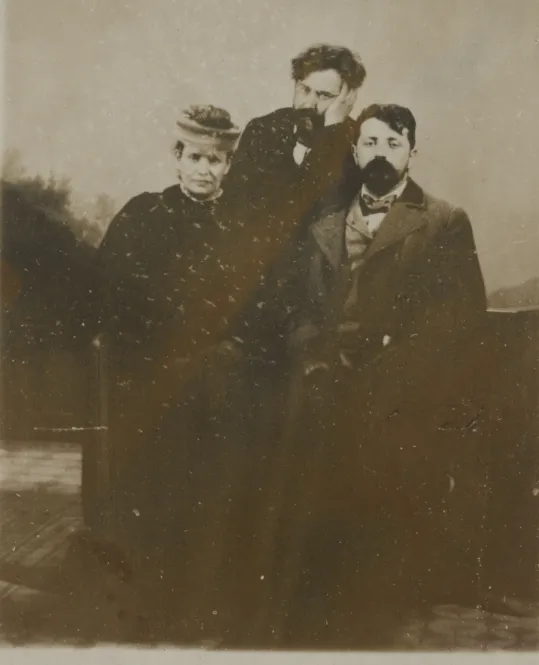
Lou Andreas-Salomé (left) with Arthur Schnitzler and Richard Beer-Hofmann in the Prater, Vienna, c. 1895; photographer unknown (Austrian National Library) 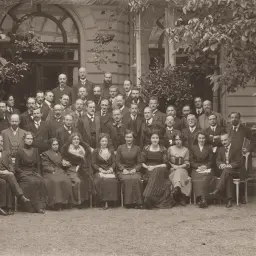
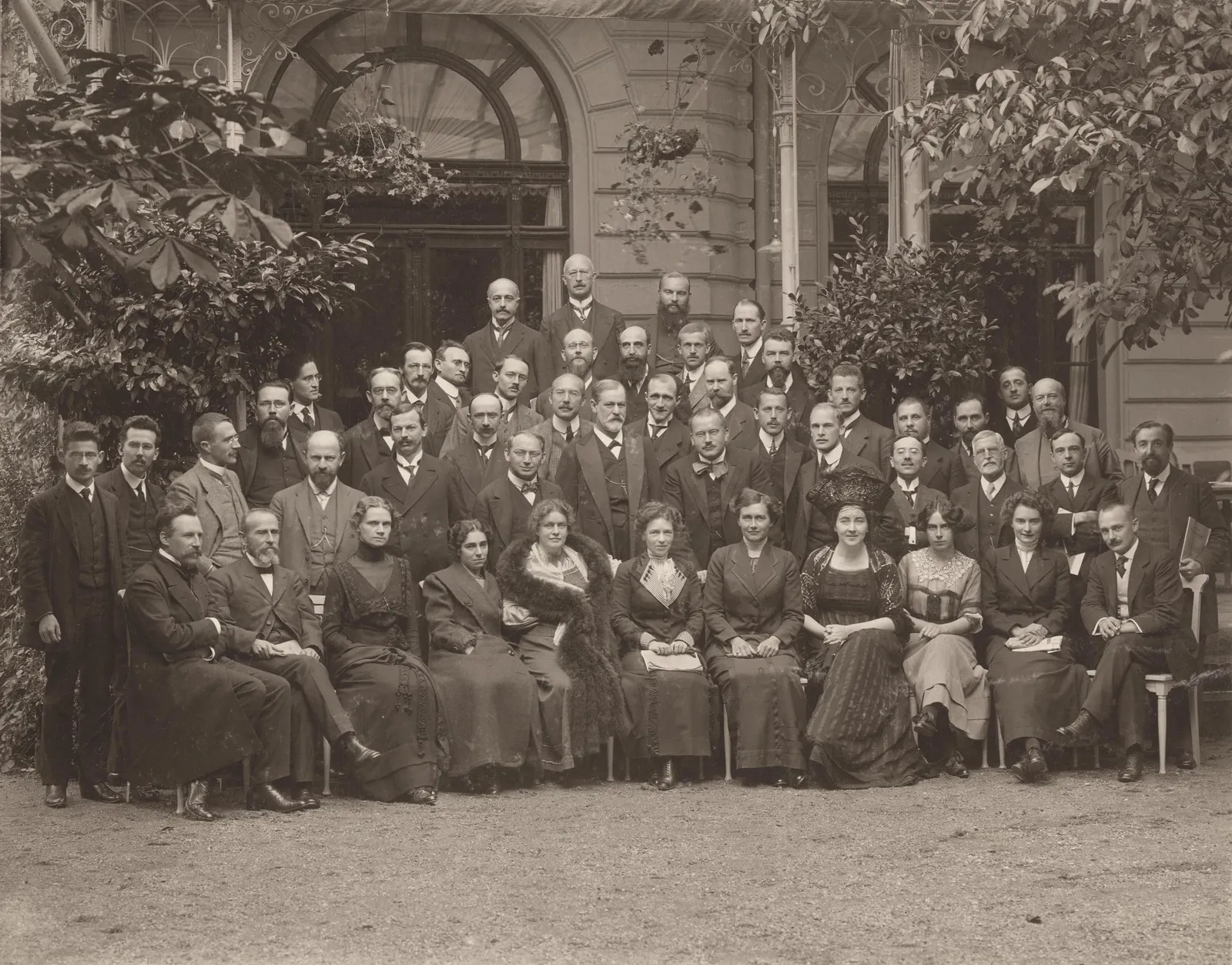
International Psychoanalytic Congress, Weimar, 21 September 1911; Lou Andreas-Salomé is fifth from left in the seated front row, in a fur stole. Photograph by Franz Vältl 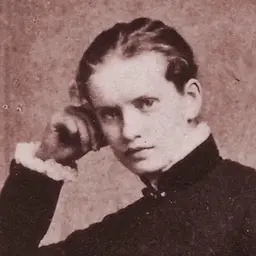
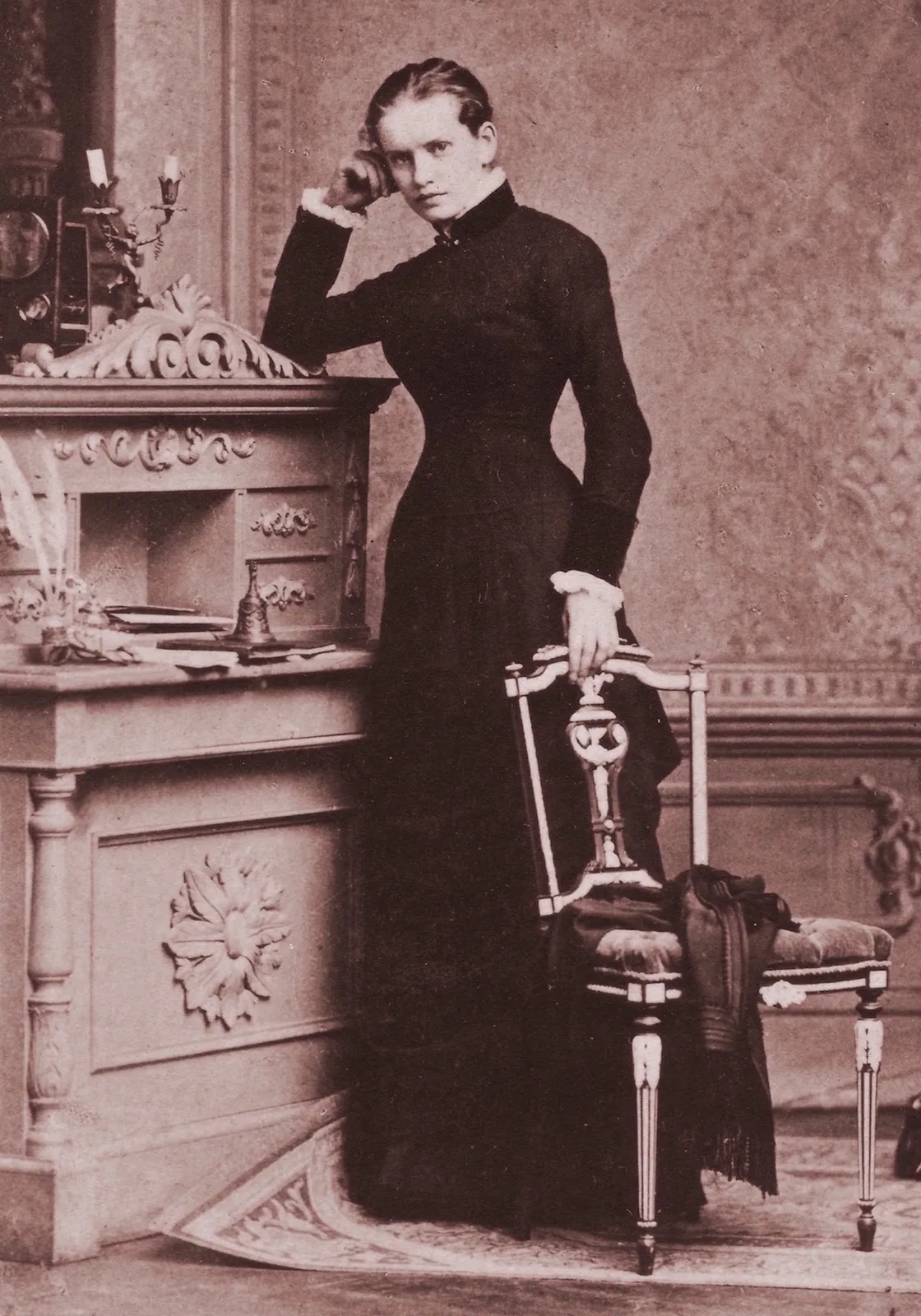
Louise von Salomé (later Lou Andreas-Salomé), full-length studio portrait, c. 1880; reproduction by Frank Beck, 2016
References
- The Dual Orientation of Narcissism1921Evidence for a relation
- “Anal” and “Sexual”1916Evidence for a relation
- On Transformations of Instinct as Exemplified in Anal Erotism1917Evidence for a relation
- The Freud Journal of Lou Andreas-Salomé1958Evidence for a relation
- My Thanks to Freud: Open Letter to Professor Sigmund Freud on His Seventy-Fifth Birthday1931Evidence for a relation