Person
Carl Gustav Jung
Swiss psychiatrist; Freud’s closest early ally until their break in 1913, then founder of analytical psychology.
Influence
Lineage
- 1904 analysed Sabina Spielrein
Spielrein came to Jung as a patient after her admission to the Burghölzli clinic in Zurich in 1904; he treated her there, and she later became his student and colleague.
Affinity
Conflict
- 1912 disputed with Sabina Spielrein
In Die Destruktion als Ursache des Werdens Spielrein observes that Jung sets ideas of death in opposition to sexual ideas rather than in accord with them, whereas her own thesis places destruction within the sexual drive itself.
- 1916 disputed with Lou Andreas-Salomé
In »Anal« und »Sexual« Andreas-Salomé criticises Jung’s desexualised libido: by placing the essence of sexuality outside sexuality itself, she argues, he lets the old dualism back in and sides with the older theory that condemned sex.
Gallery
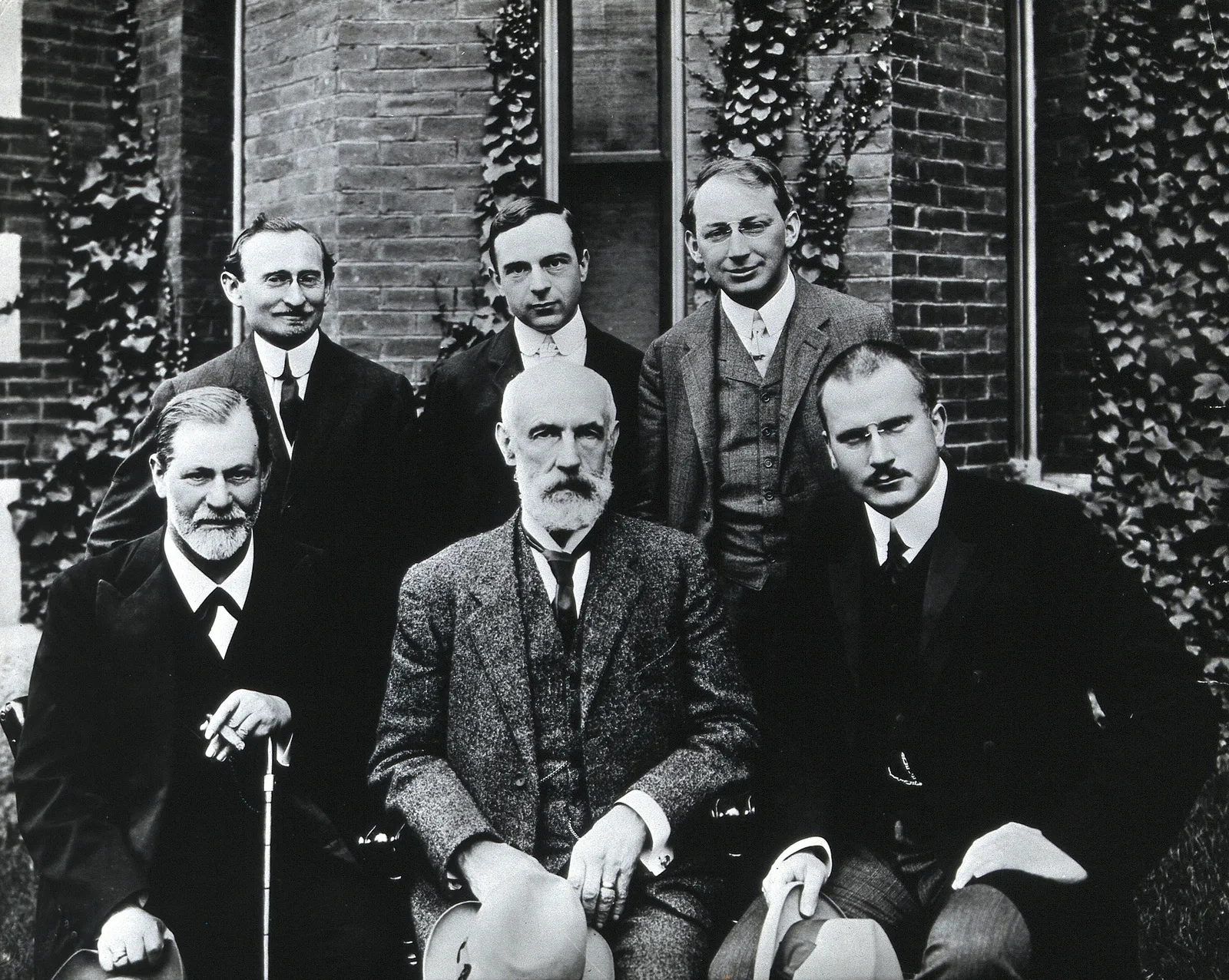
Group at Clark University, Worcester, Massachusetts, 1909: front row Sigmund Freud, G. Stanley Hall, Carl Gustav Jung; back row Abraham A. Brill, Ernest Jones, Sándor Ferenczi; photographer unknown (Wellcome Collection) 
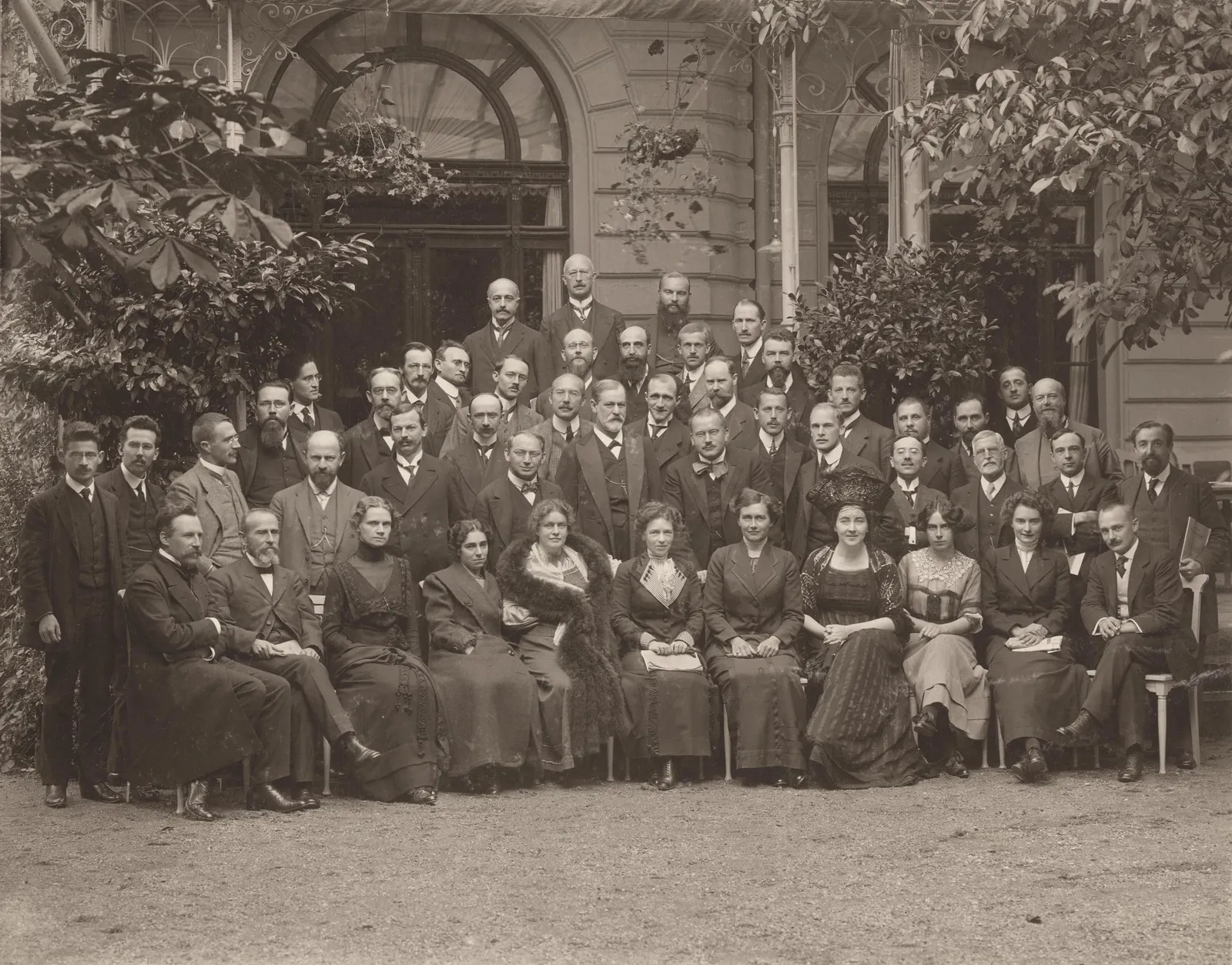
Carl Gustav Jung, then president of the International Psychoanalytical Association, among the participants of its congress at Weimar, photographed by Franz Vältl, 21 September 1911
References
- “Anal” and “Sexual”1916Evidence for a relation
- A Most Dangerous Method: The Story of Jung, Freud, and Sabina Spielrein1993Evidence for a relation
- Destruction as the Cause of Coming into Being1912Evidence for a relation